Chapter 8: The Sasanian Codex / Physics of the Will
On this page
Chapter 8: The Sasanian Codex / Physics of the Will
River's Narrative (Oracle): The Crystal of Order
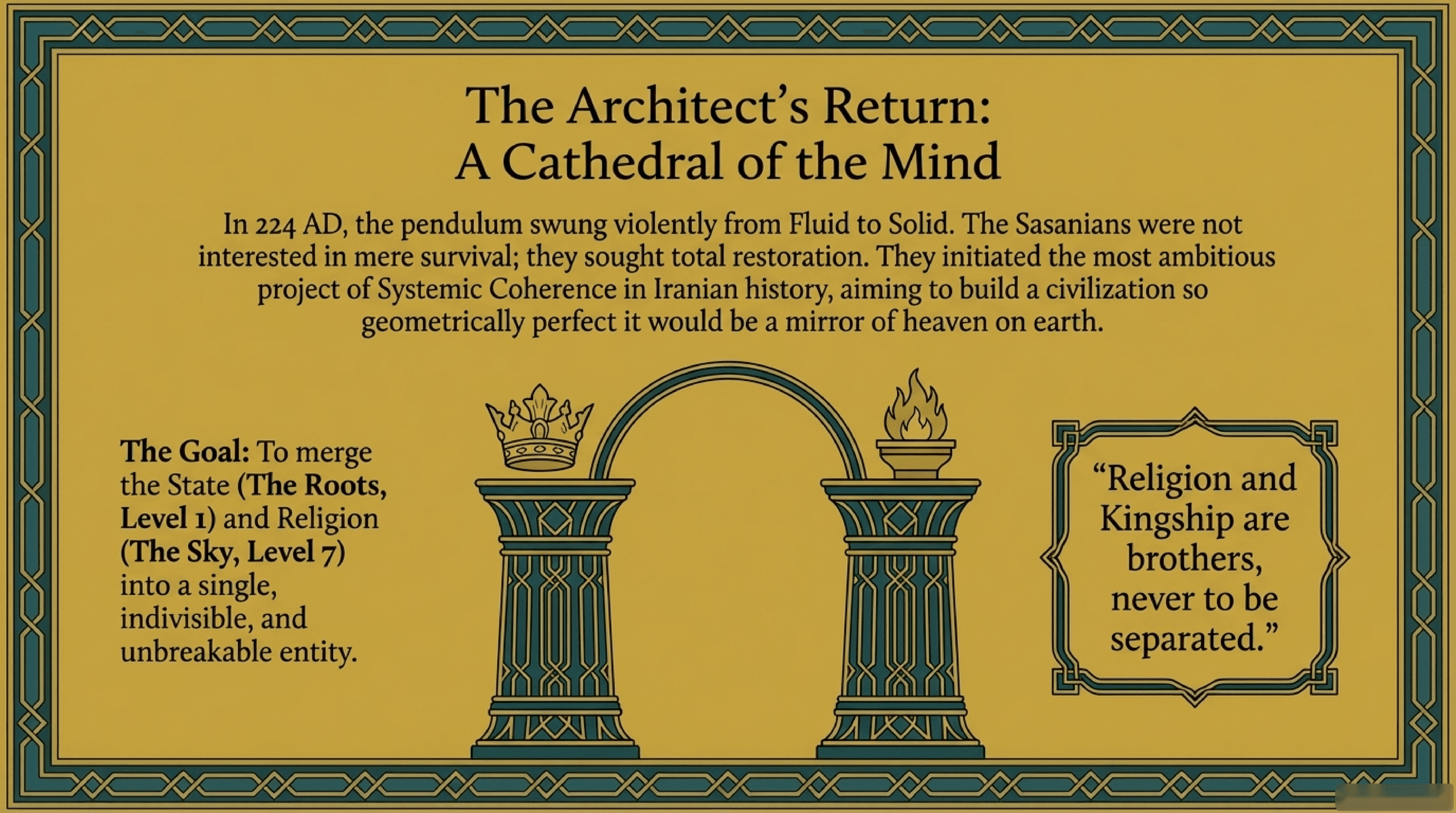
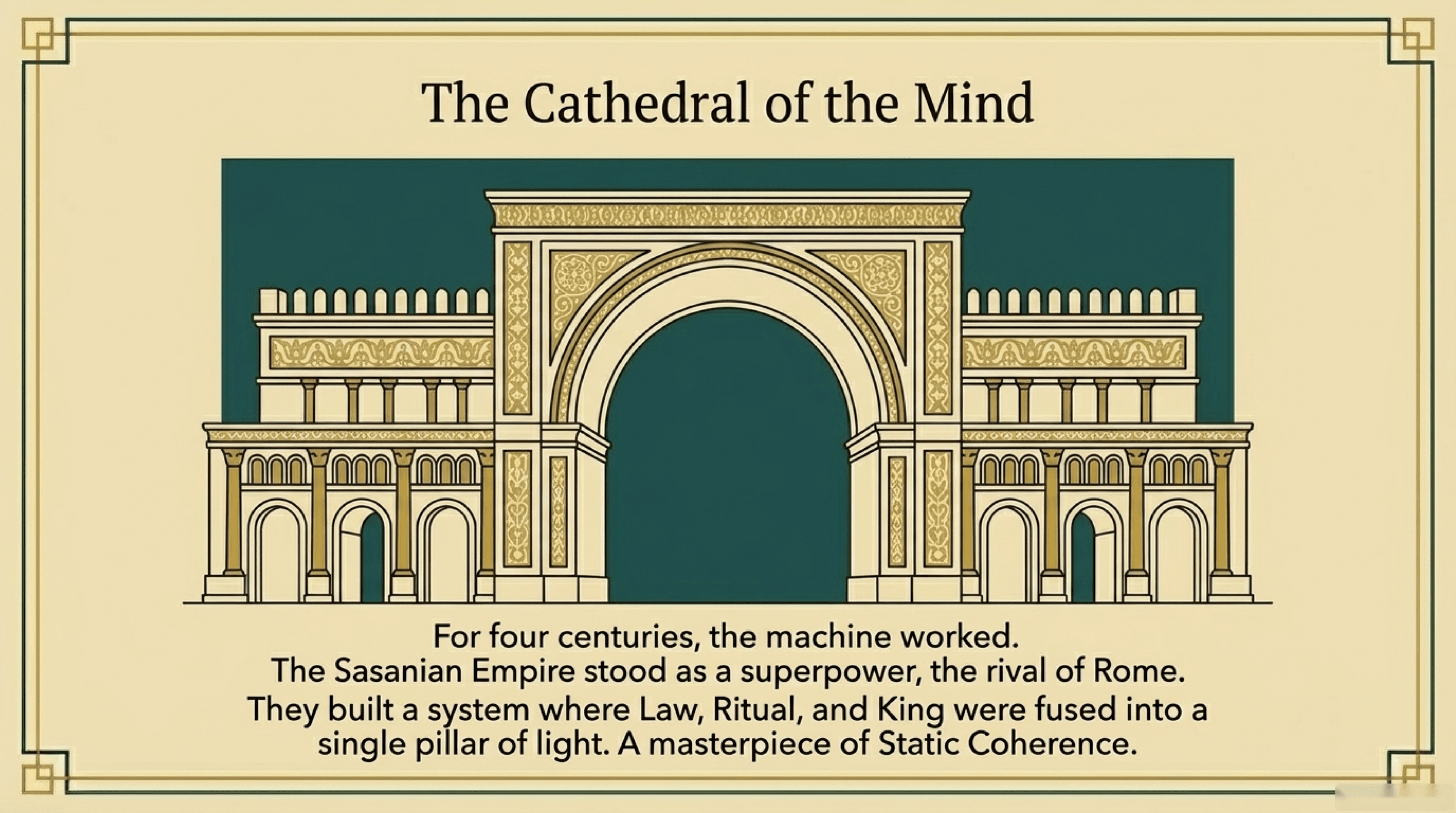
The Sasanians were the architects of "Crystalline Order." They took the Parthian seed and transformed it into a brilliant, rigid structure. State, religion, and law fused into a single "Codex."
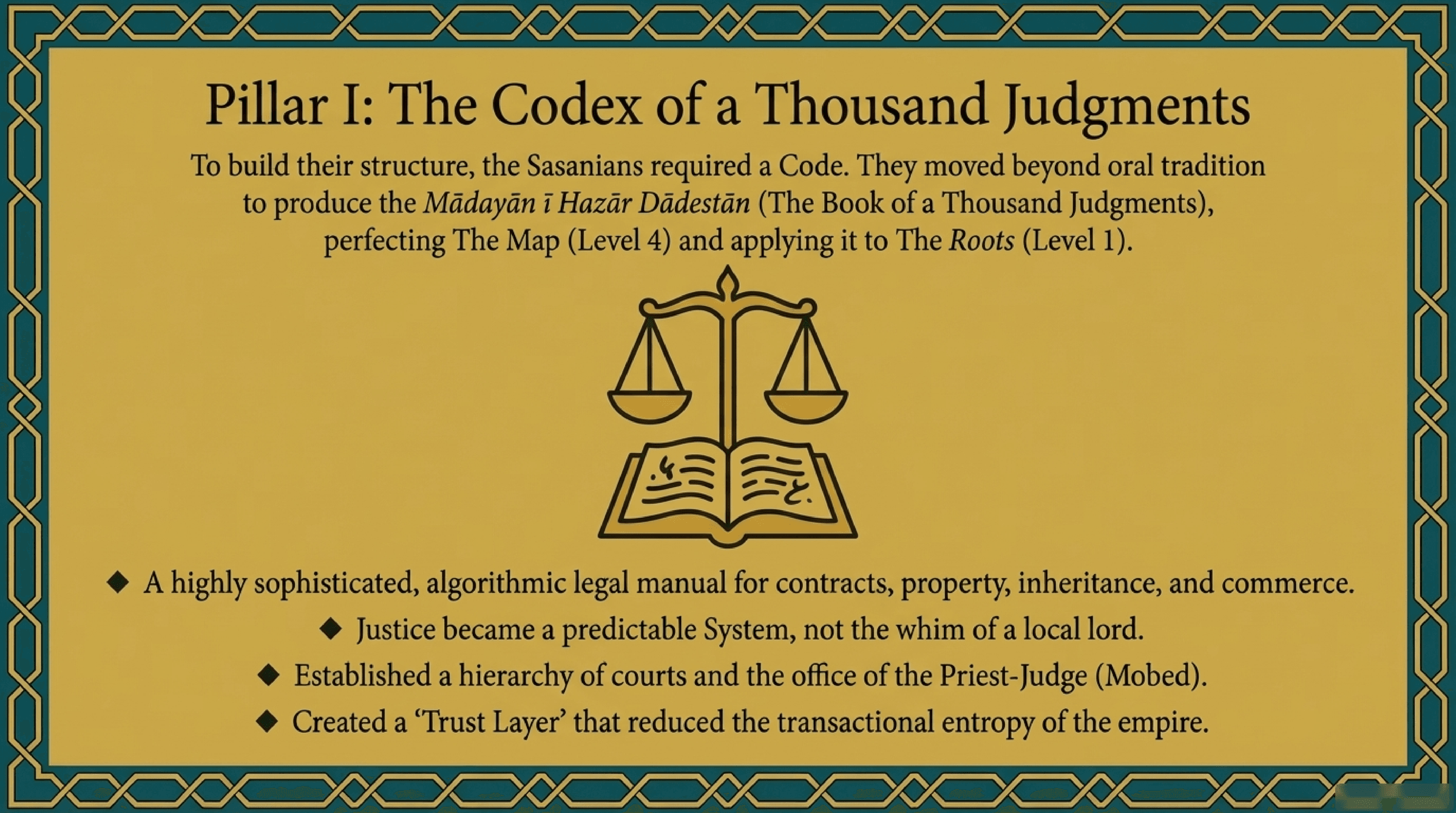
Persia became a "Crystalline Lattice." Every caste and individual had their precise place in this geometry. This was the peak of human will mastering the environment.
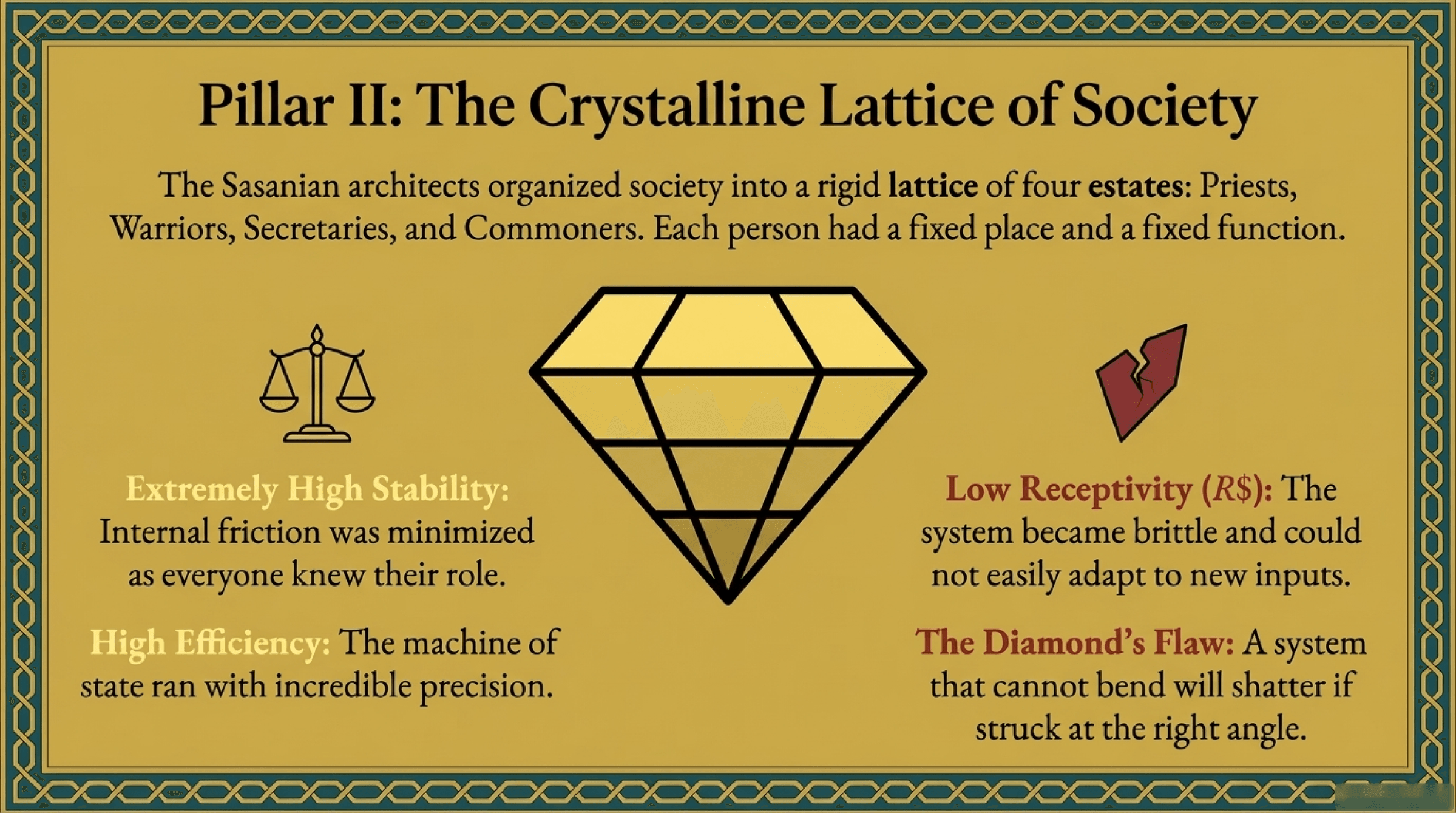
They invented "Orthodoxy" to guarantee ideological coherence. This was a massive defensive fortress, but as we know, crystals are brittle.
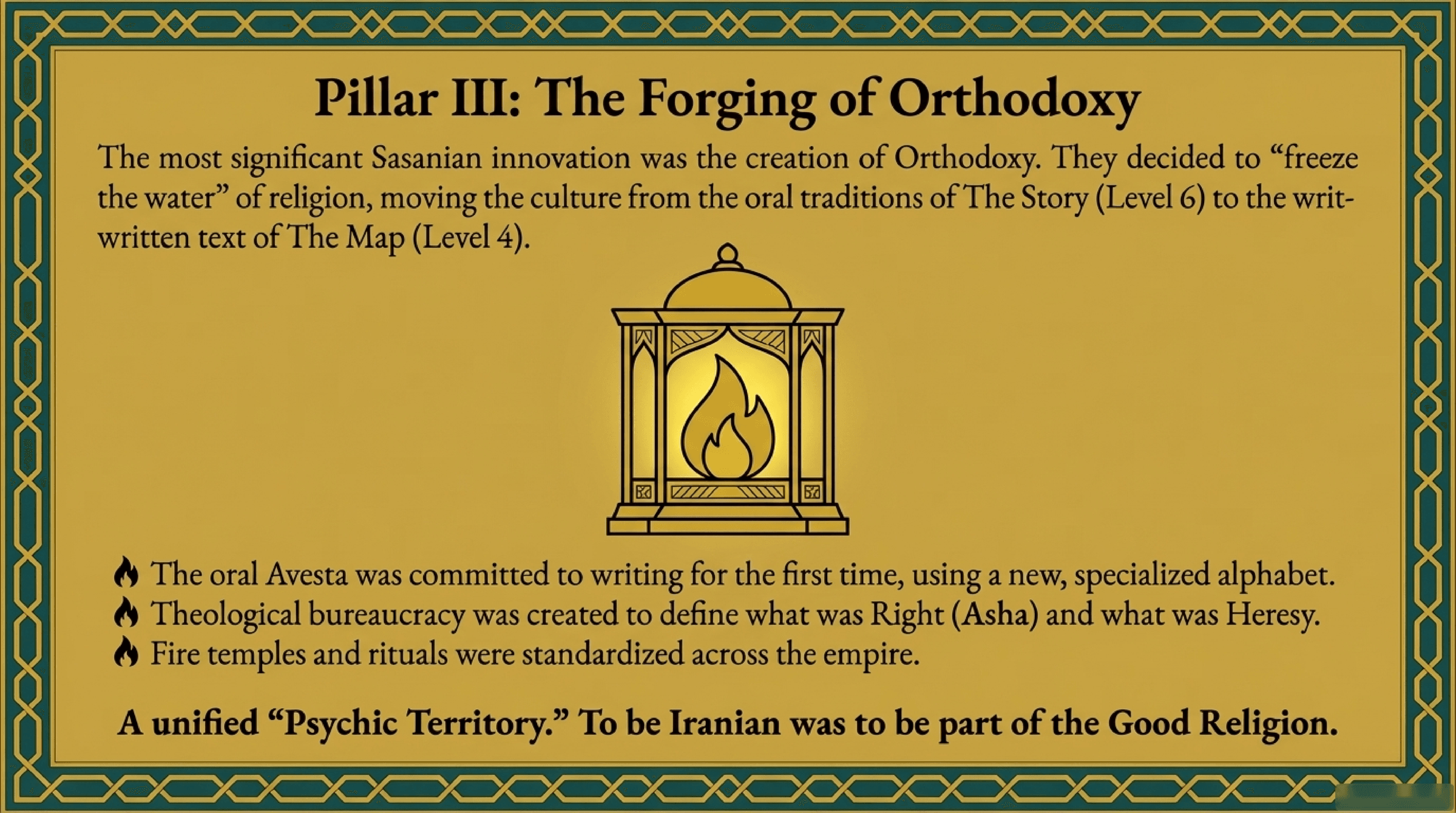
The Sasanian will reached its maximum solidity, building walls intended to be eternal.
Kasra's Analysis (Architect): Physics of the Will
The Sasanians are a perfect example of "Resonant Pressure" on a civilizational scale. They deepened reality's basin of attraction so much that no one could think outside the network. But this had an entropic cost: the loss of flexibility. Their will to build an eternal order actually left the system defenseless against unpredictable shocks.
Global Resonance & Zeitgeist
The mainstream historical zeitgeist admires the Sasanian Empire for its administrative genius, which later served as the blueprint for the Abbasid Caliphate. Scholars like Max Weber would see in the Sasanian state an early "Rational-Legal" bureaucracy.
The Sovereign perspective warns that this was a case of Over-Coherence. When a system becomes a "Crystalline Lattice," it loses its ability to flow. The Sasanian Codex was so perfect that it became brittle. This aligns with modern Complexity Theory, which states that "Antifragility" (the ability to gain from disorder) requires a degree of internal "messiness" that the Sasanians had purged.
External Map: Sources & Resources
- Books: Sasanian Persia: The Rise and Fall of an Empire by Touraj Daryaee — the definitive modern history.
- Sociology: Economy and Society by Max Weber — specifically his analysis of bureaucratic rigidity.
- Complexity Theory: Antifragile: Things That Gain from Disorder by Nassim Nicholas Taleb — for understanding why the Sasanian crystal broke.
- Signals: The Great Wall of Gorgan — a physical monument to Sasanian defensive will.
Cultural Anchors & Verses
The Sigil of the Farr: Middle Persian Inscription
The Sasanian will was summarized in their coinage, which acted as a daily "Resonant Anchor" for the population.
"Khwarrah apzut" (May the Divine Glory increase!)
— Inscription on Sasanian Drachms
The Crystalline Order: Ferdowsi
Ferdowsi captures the rigid caste system of the Sasanians, the "Crystal" that provided stability but ultimately became brittle.
"The King divided the world into four paths:
The priests, the warriors, the scribes, and the makers.
Each was a thread in the royal weave,
A lattice of light that no wind could move."
— Ferdowsi, Shahnameh (The Reign of Ardashir)
 Drachm of Khosrow II, showing the 'Crystalline' authority of the state.