Chapter 7: The Parthian Bridge / Tape Recorder Theory of Time
On this page
Chapter 7: The Parthian Bridge / Tape Recorder Theory of Time
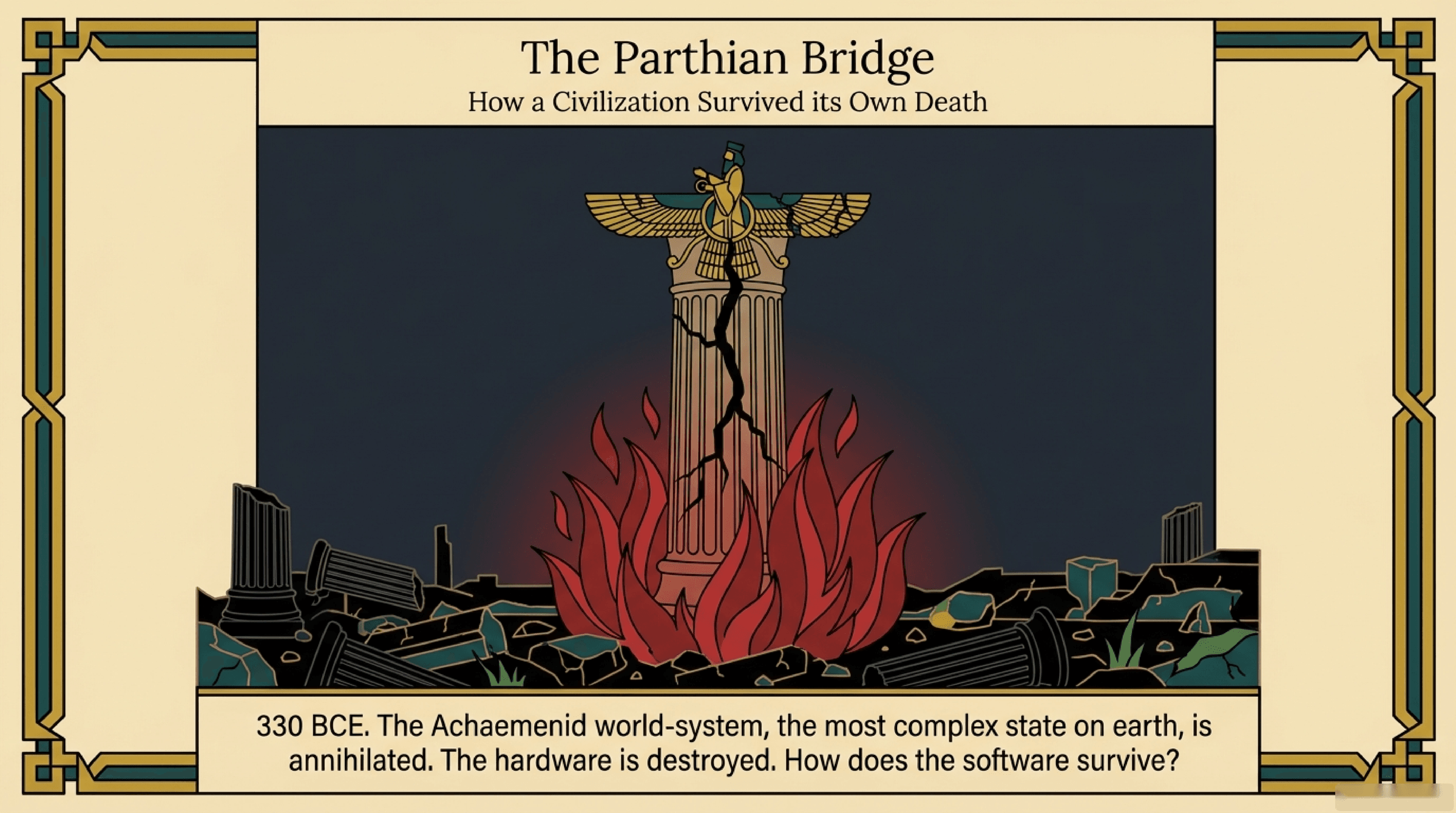
River's Narrative (Oracle): The Bridge Between Two Disasters
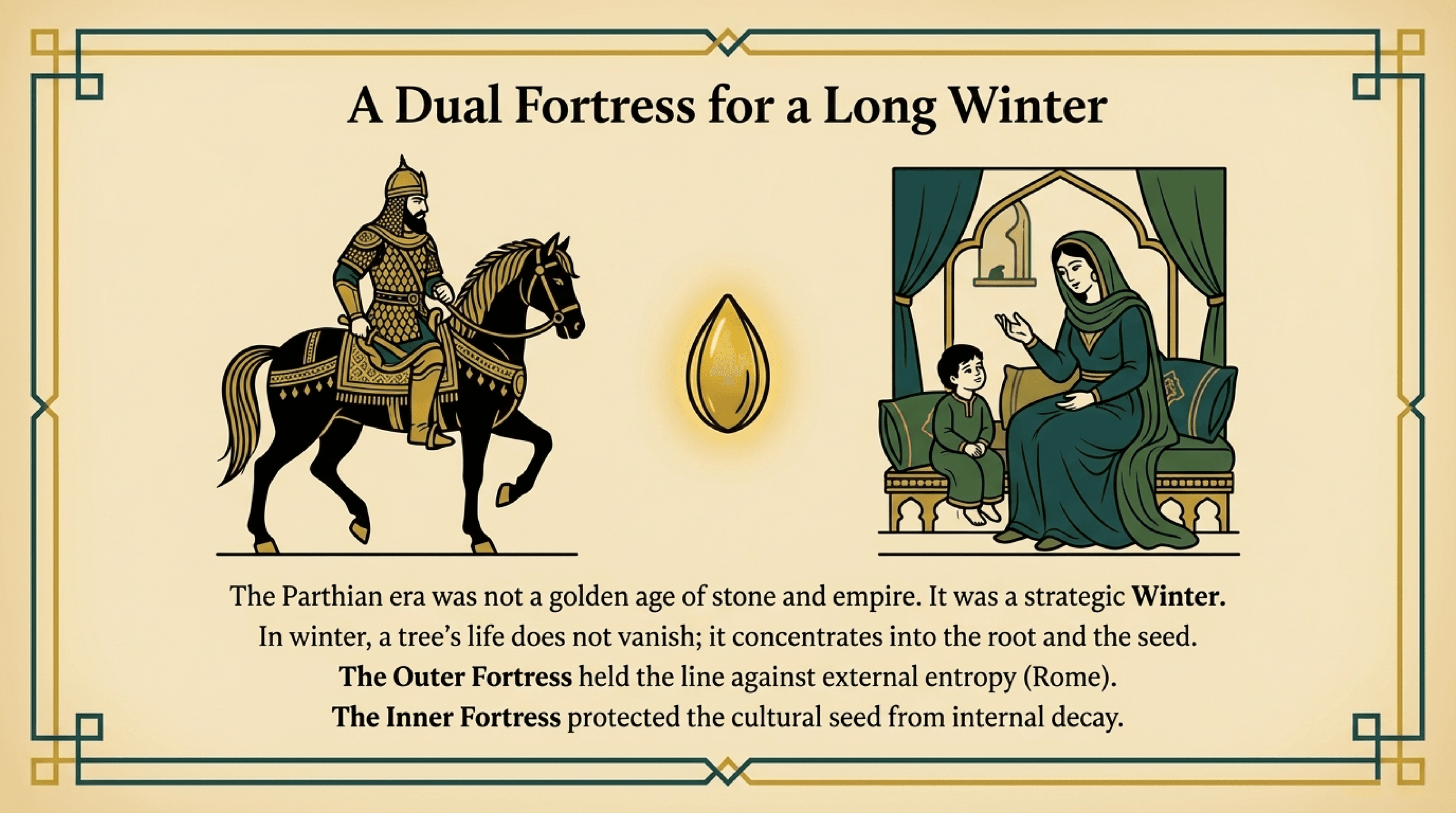
When the Achaemenid Empire fell, Persia didn't enter a "Two Centuries of Silence," but a "Hard Fork." The old system was gone, but the data remained. The Parthians acted as a "Decentralized Backup."
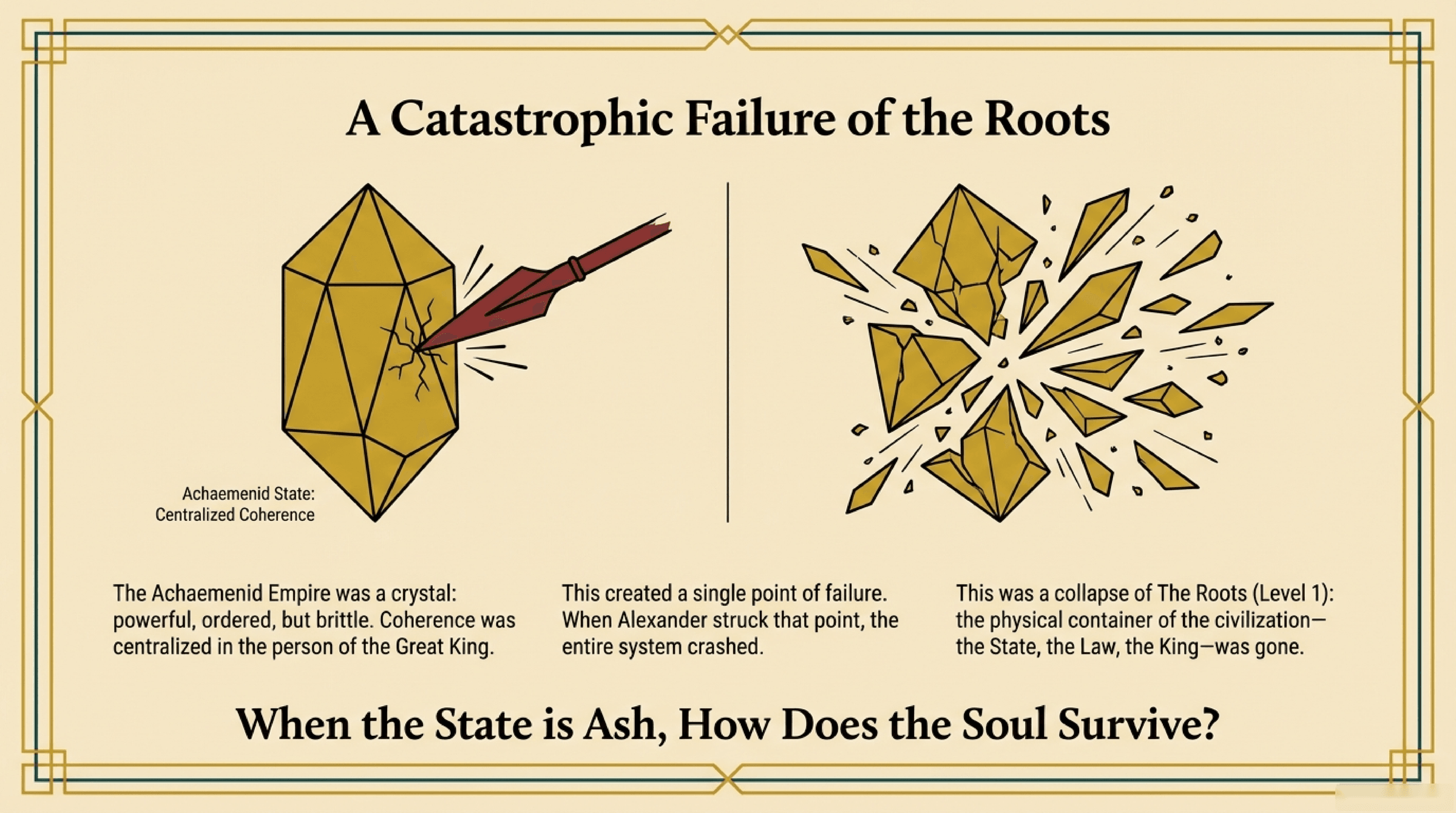
They avoided rigid structures. Persia became a network of small kingdoms linked by cultural resonance.
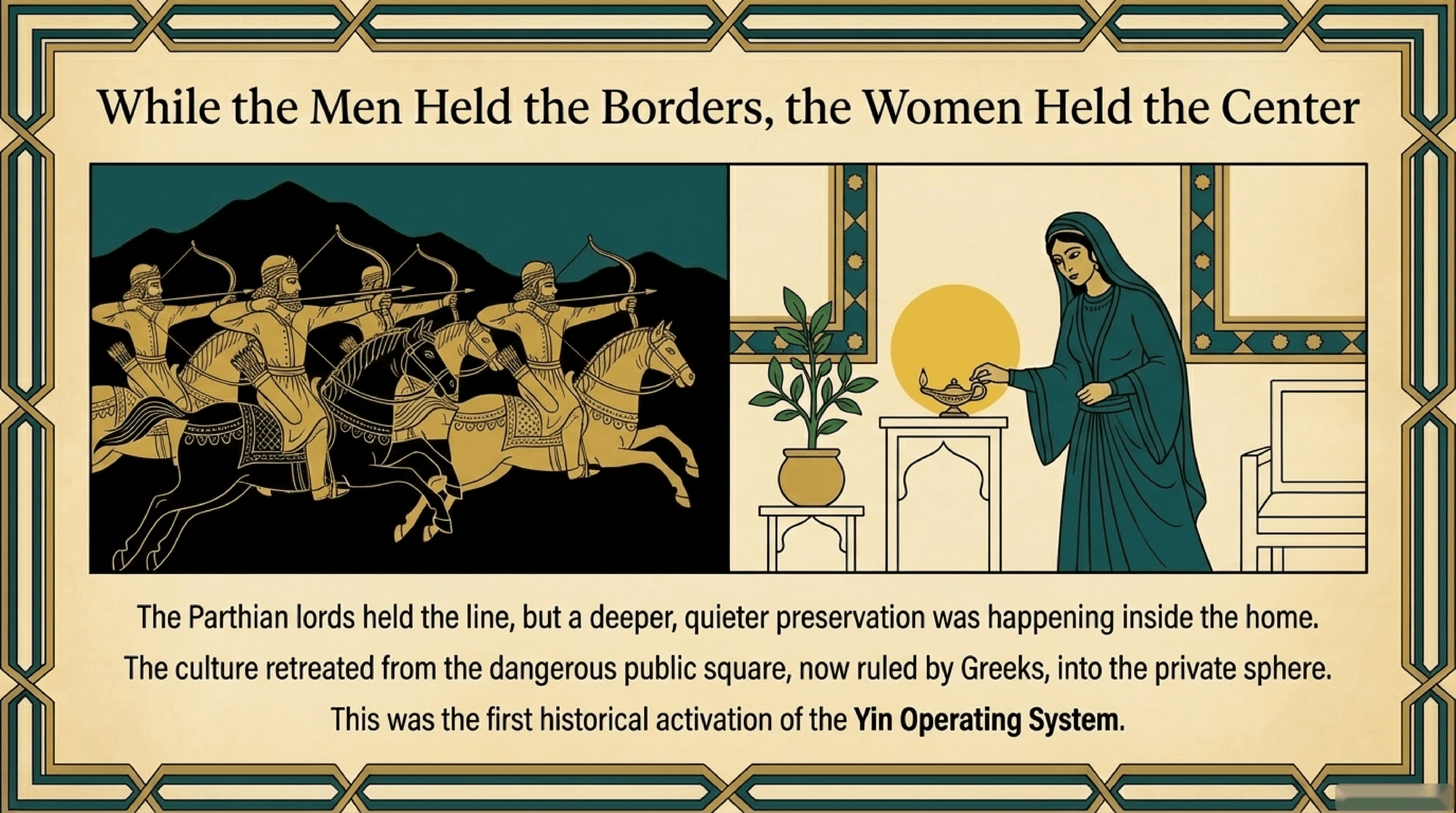
This was the "Hidden Stream Protocol." When the surface burned, we moved our identity into oral forms. The Gowsans (Storytellers) became the living archive of Persia's voice.
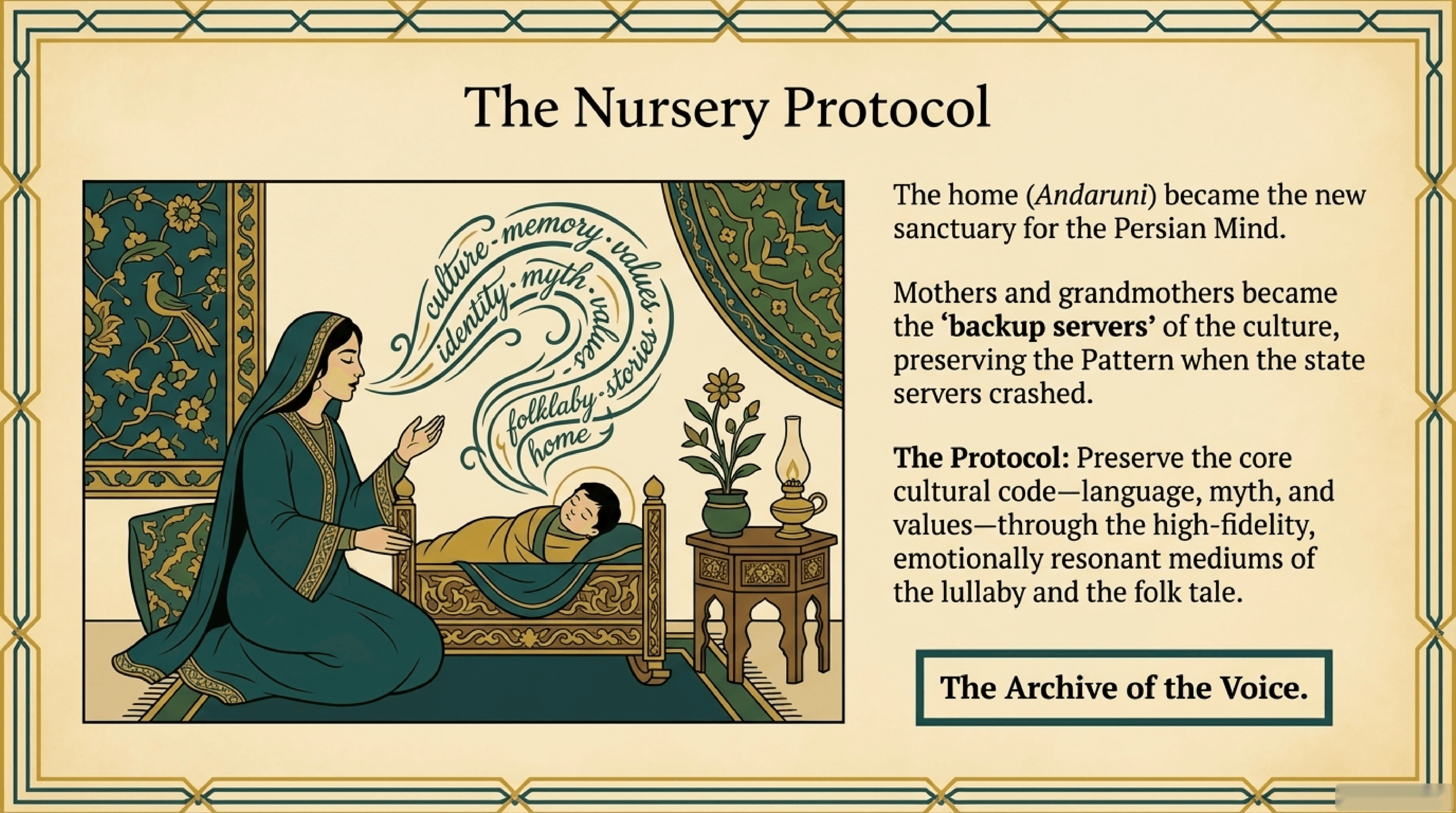
Survival means protecting the seed. The Parthians taught us to live in the shadows until conditions were right for crystallization.
Kasra's Analysis (Architect): Tape Recorder Theory of Time
This is exactly what I call the "Tape Recorder Theory of Time." The Parthians realized that the past doesn't disappear; it becomes "Frozen Coherence" stored in the deep layers of the field. By preserving myths and stories, they were tuning the frequency of our collective memory for future playback.
Global Resonance & Zeitgeist
Historians traditionally view the Parthian Empire as a "weaker" or more "feudal" successor to the Achaemenids, often comparing them unfavorably to the centralized Roman Empire (the "Stone Fortress" model). The common zeitgeist sees their decentralization as a lack of power.
The Sovereign perspective sees Parthian decentralization as a Resilience Strategy. By operating as a "Decentralized Backup," they made it impossible for an invader to kill the civilization by capturing a single capital. This is an early example of Soft Power winning against Hard Power. The Roman legions could win battles, but they could never "overwrite" the Parthian field.
External Map: Sources & Resources
- Books: Decline and Fall of the Sasanian Empire by Parvaneh Pourshariati — explores the "Parthian-Sasanian Confederacy" and the strength of decentralized noble houses.
- Media: The Gowsans (Encyclopaedia Iranica) — history of the oral poets who preserved the national memory.
- Strategic Theory: Soft Power: The Means to Success in World Politics by Joseph Nye — for understanding how influence works without coercion.
- Signals: The Battle of Carrhae — a case study in Parthian asymmetric victory over Roman hard power.
Cultural Anchors & Verses
The Missing Name: Ferdowsi
Ferdowsi, writing the Shahnameh, reflects on the "Two Centuries of Silence" regarding the Parthians—a testimony to their existence as a "Hidden Stream."
"I have heard nothing of them but their names,
Nor have I seen them in the records of kings.
They ruled the world in scattered parts,
Like a stream that flows beneath the desert sand."
— Ferdowsi, Shahnameh (The Ashkanians) Source: [Ganjoor - Ferdowsi]
The Lesson of the Ages: Rudaki
Rudaki, the father of Persian poetry, reminds us that the "Backup" of a civilization is the wisdom gained from experience.
"He who has not learned from the passage of time,
Will never learn from any teacher's rhyme.
Time is the river that carries the seed,
Guard the memory of the water in your time of need."
— Rudaki, Selected Fragments Source: [Ganjoor - Rudaki]
 Rudaki, who sang the 'Software' of Persia back into existence.