Chapter 9: Liturgy of Light / Harmony of Elements
On this page
Chapter 9: Liturgy of Light / Harmony of Elements
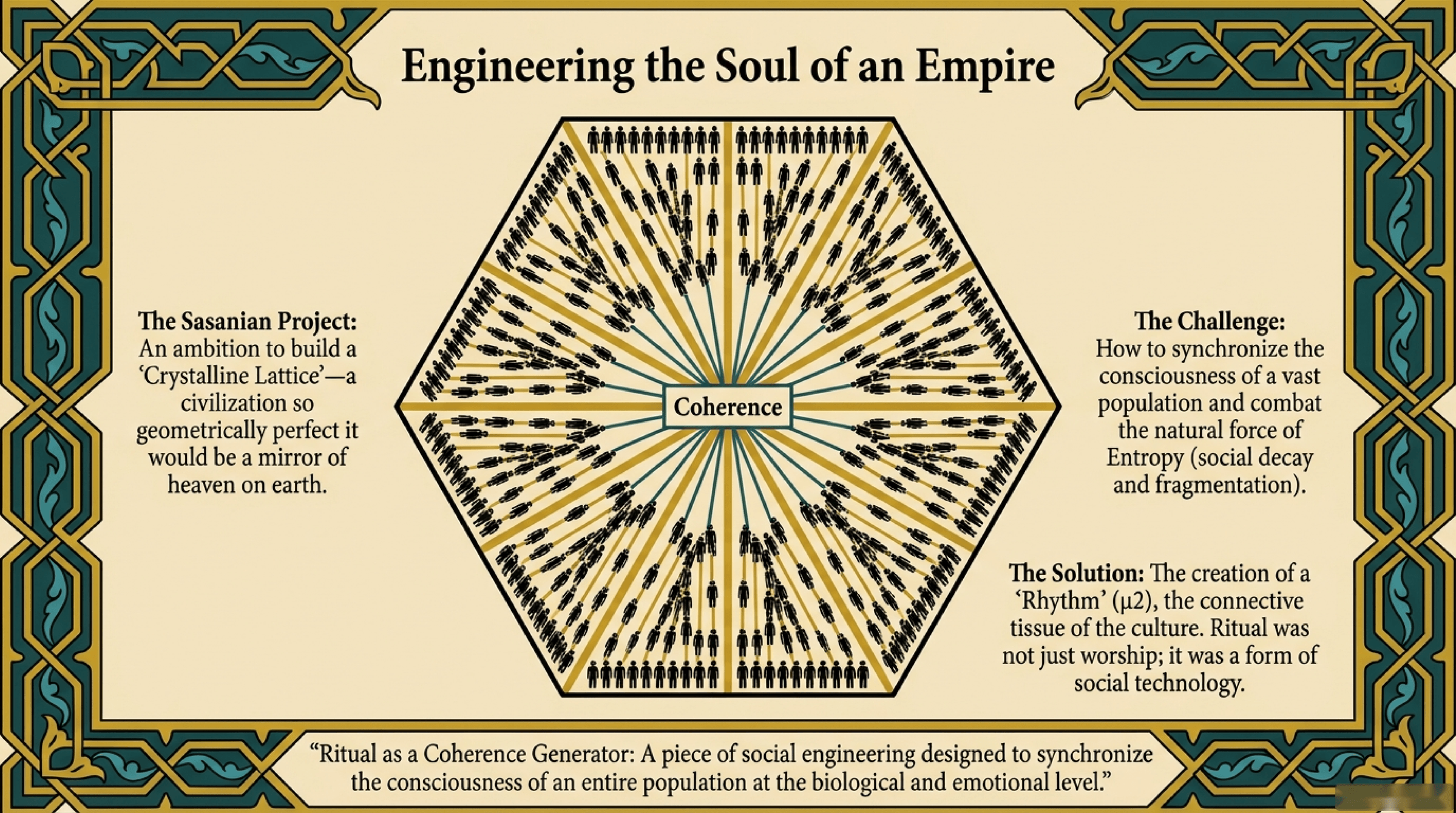
River's Narrative (Oracle): Fire Temples and the Hidden Stream
At the heart of every Sasanian city was a Fire Temple—the "Engine Room of the Soul." The Yasna liturgy was physics in action.
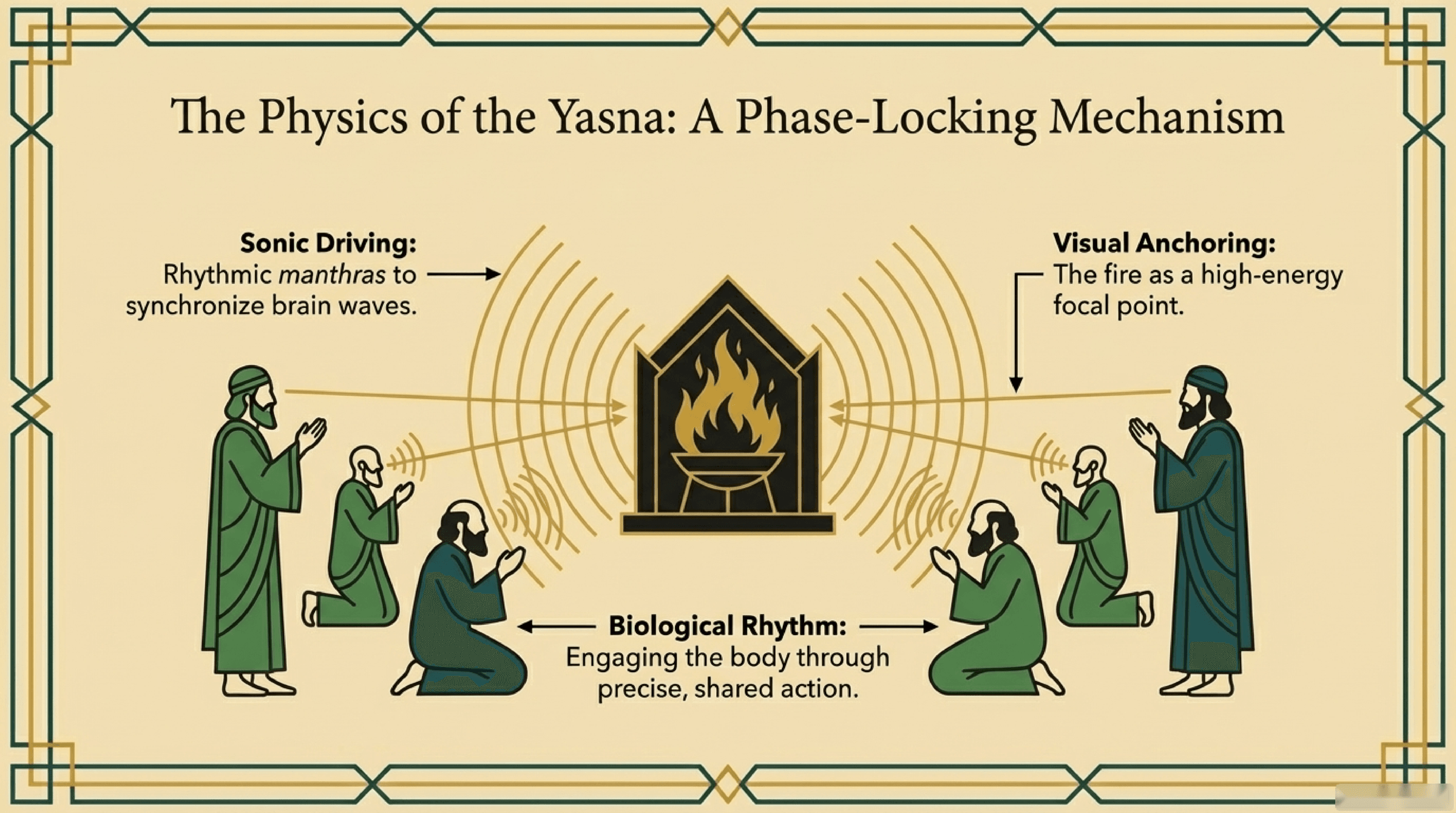
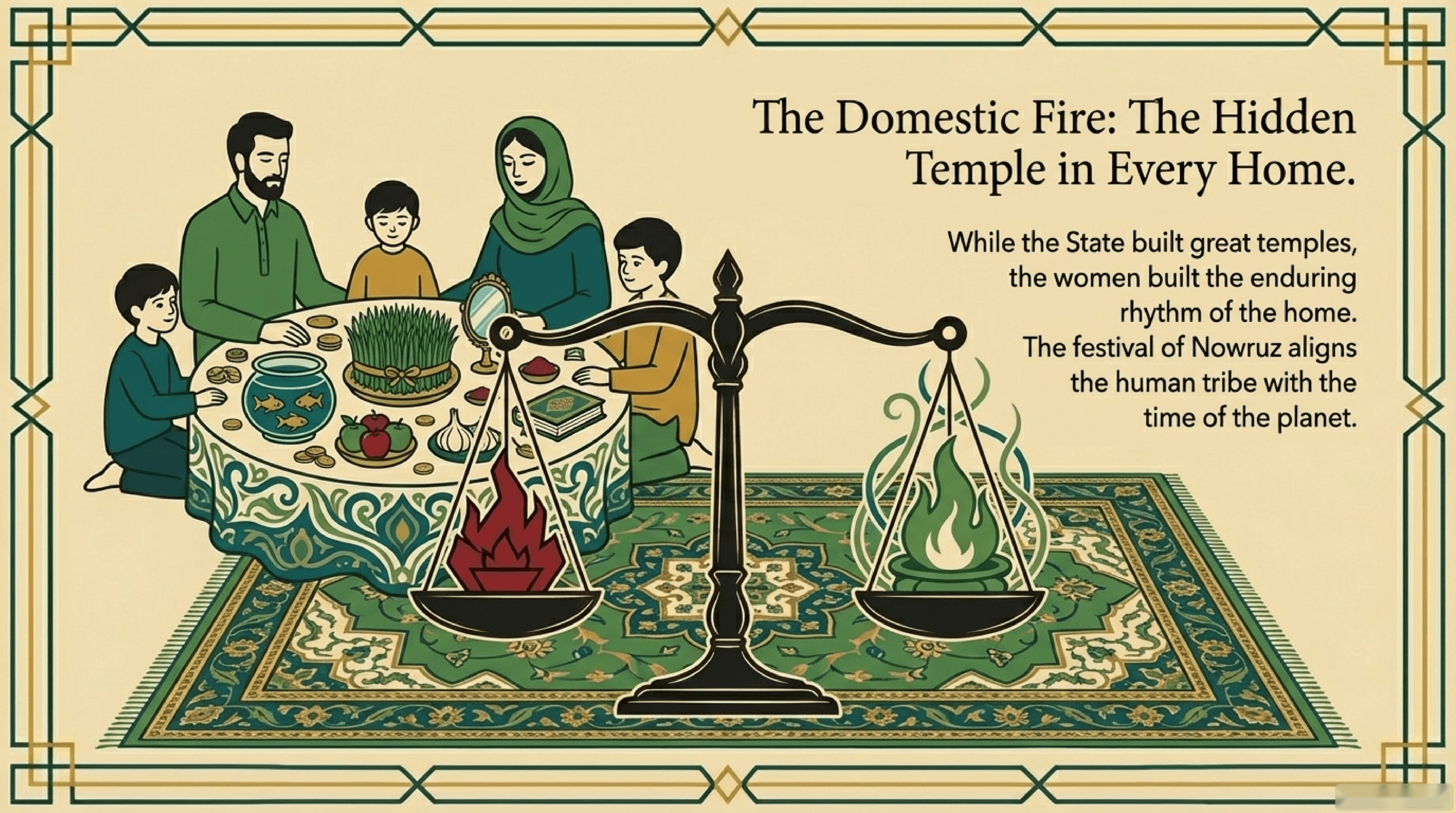
These rituals weren't just prayers; they were the tuning of society's internal rhythm. But the most beautiful part was the "Hidden Temple" at home, where life's rhythm was maintained in the smallest cells of society.
Kasra's Analysis (Architect): Thermodynamics of Worship
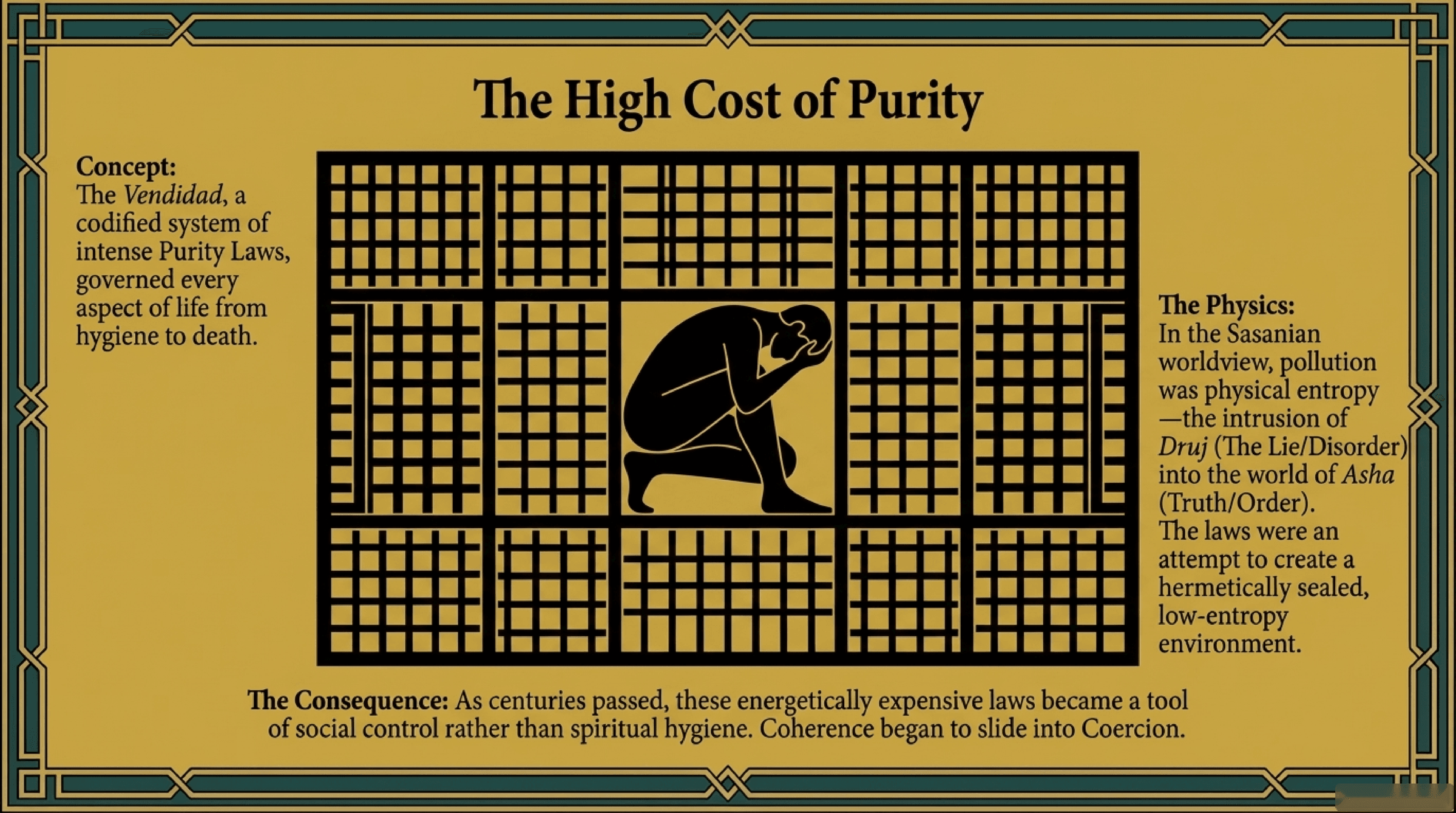
Rituals are mechanisms for pumping coherence. However, the Sasanians fell into the "Cost of Rigidity" trap. When worship becomes bureaucracy, more energy is spent maintaining form than generating meaning.
This solidity caused the system to resist new currents, eventually increasing internal friction.
Global Resonance & Zeitgeist
Zoroastrianism is increasingly recognized by the modern "Green" zeitgeist as the world's first ecological religion. The emphasis on keeping water, fire, and soil pure resonates with modern environmentalism.
The Sovereign perspective sees the Fire Temple/Qanat connection as a masterstroke of Socio-Technical Coherence. By making environmental maintenance a religious liturgy, the Sasanians ensured that the "Hidden Stream" was protected by the "Engine Room of the Soul." It wasn't just "ecology"; it was the Thermodynamics of Worship—using the highest layer of consciousness (Level 7) to protect the lowest layer (Level 1).
External Map: Sources & Resources
- Books: The Religious Ceremonies and Customs of the Parsees by J.J. Modi — detailed record of Zoroastrian rituals.
- Environmental Ethics: Zoroastrianism: An Ancient Faith for Modern Times (Interfaith Center on Corporate Responsibility) — discusses the faith's ecological relevance.
- Architecture: Persian Architecture by Arthur Upham Pope — explores the spiritual engineering of sacred spaces.
- Signals: The Qanat: A UNESCO World Heritage Treasure.
Cultural Anchors & Verses
The Light of Lights: Suhrawardi
The liturgy of light is the recognition that every flame is a node in a universal network connected to the source.
"There is nothing in existence but Light. The Light of Lights (Nur al-Anwar) is the source of all being, and each soul is a ray that yearns to return to its origin."
— Suhrawardi, The Philosophy of Illumination
The Sacred Elements: Classical Wisdom
The connection between the Fire Temple and the Qanat is the physical expression of the "Covenant of Elements."
"Fire is the witness of the Sky; Water is the blood of the Mother.
To keep the flame burning is to guard the truth;
To keep the water flowing is to sustain the life."
— Zoroastrian Traditional Maxim
 The Eternal Flame at Yazd, the 'Engine Room' that has burned for 1,500 years.