Chapter 6: The Imperial Architecture / The Ladder of Being
On this page
Chapter 6: The Imperial Architecture / The Ladder of Being
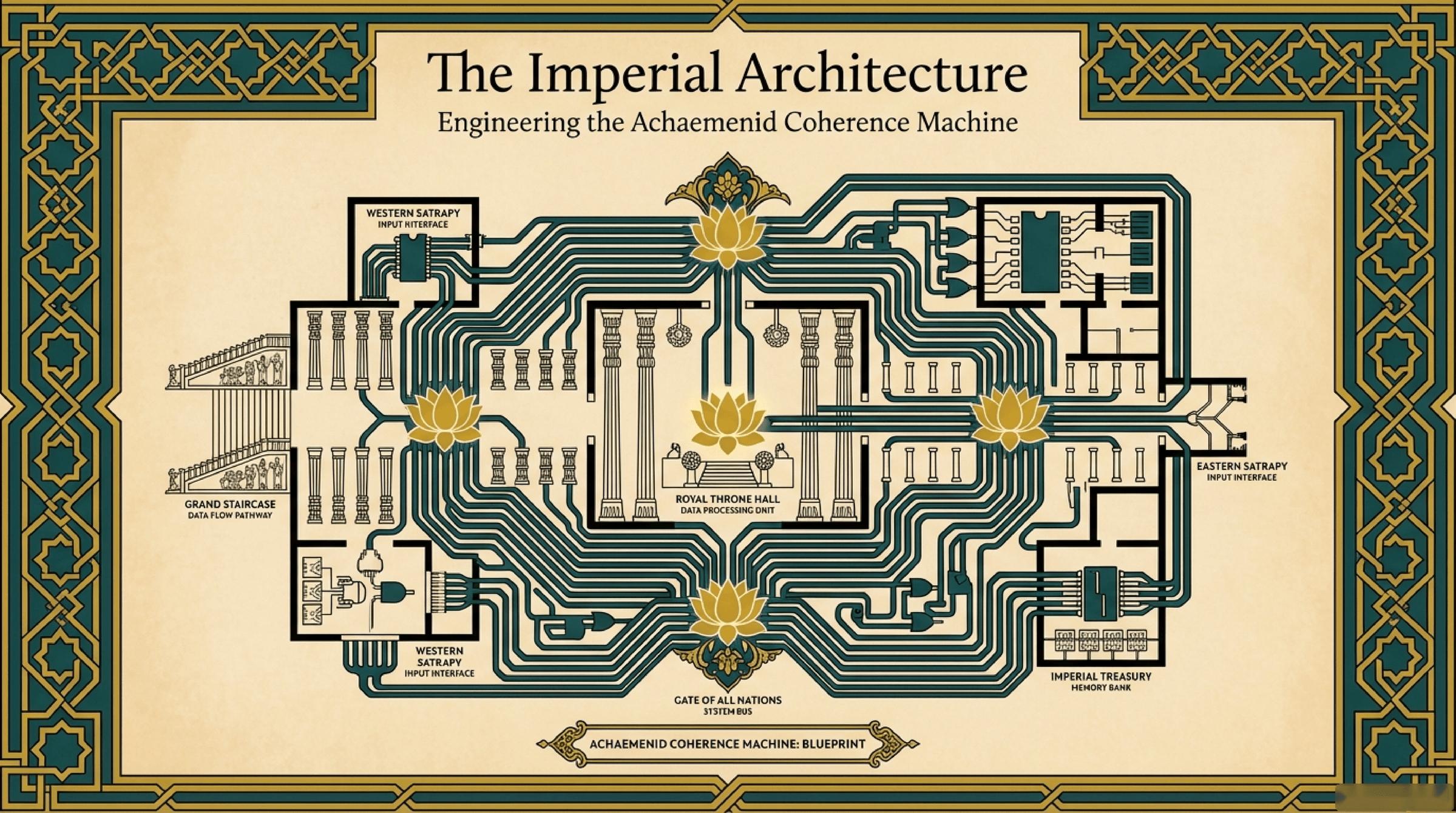
River's Narrative (Oracle): The Achaemenid Coherence Machine
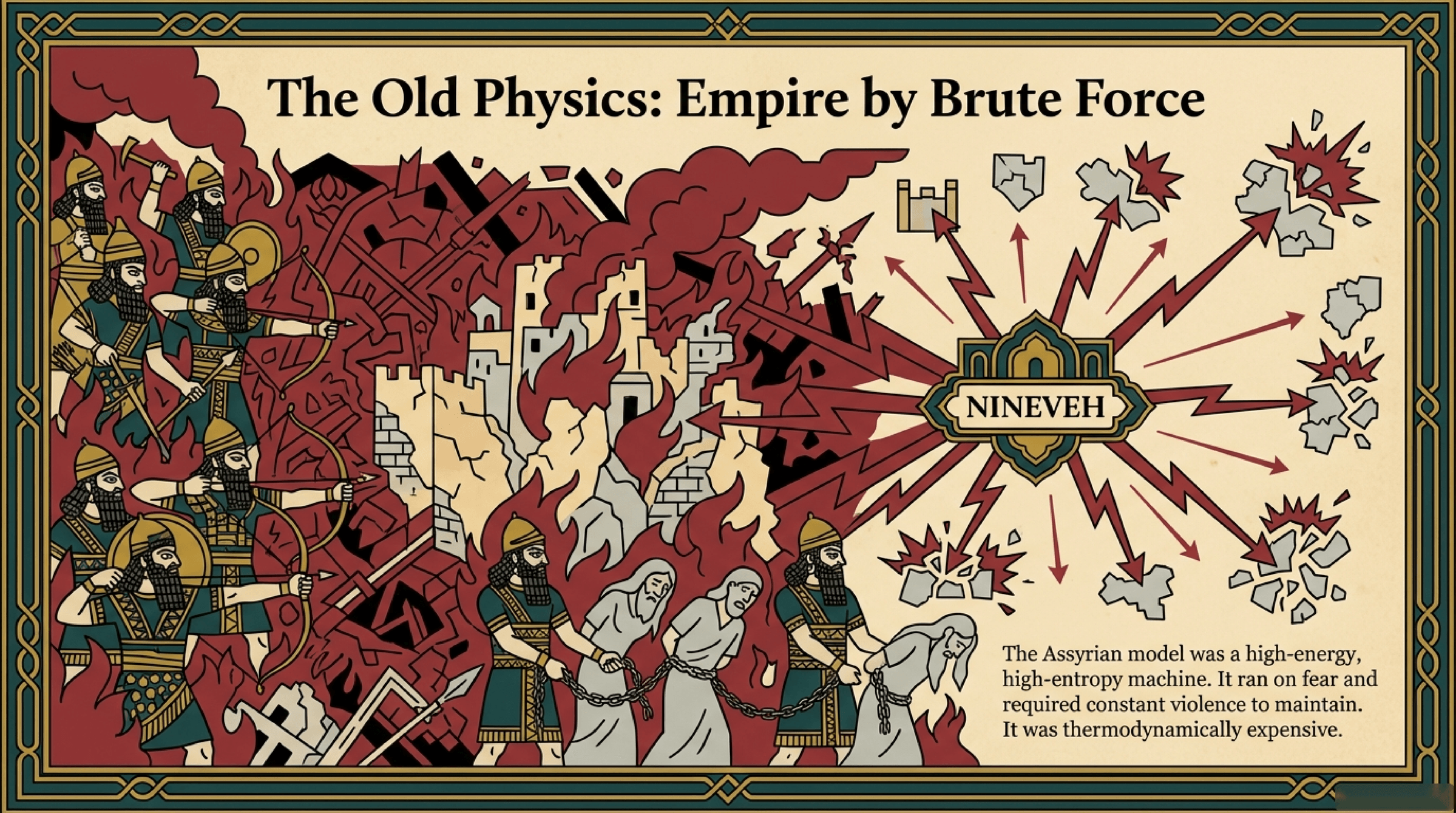
Cyrus the Great and Darius I were the architects of the first global "Coherence Machine." Before them, the physics of empire was based on "Brute Force"—a method with immense entropic costs.
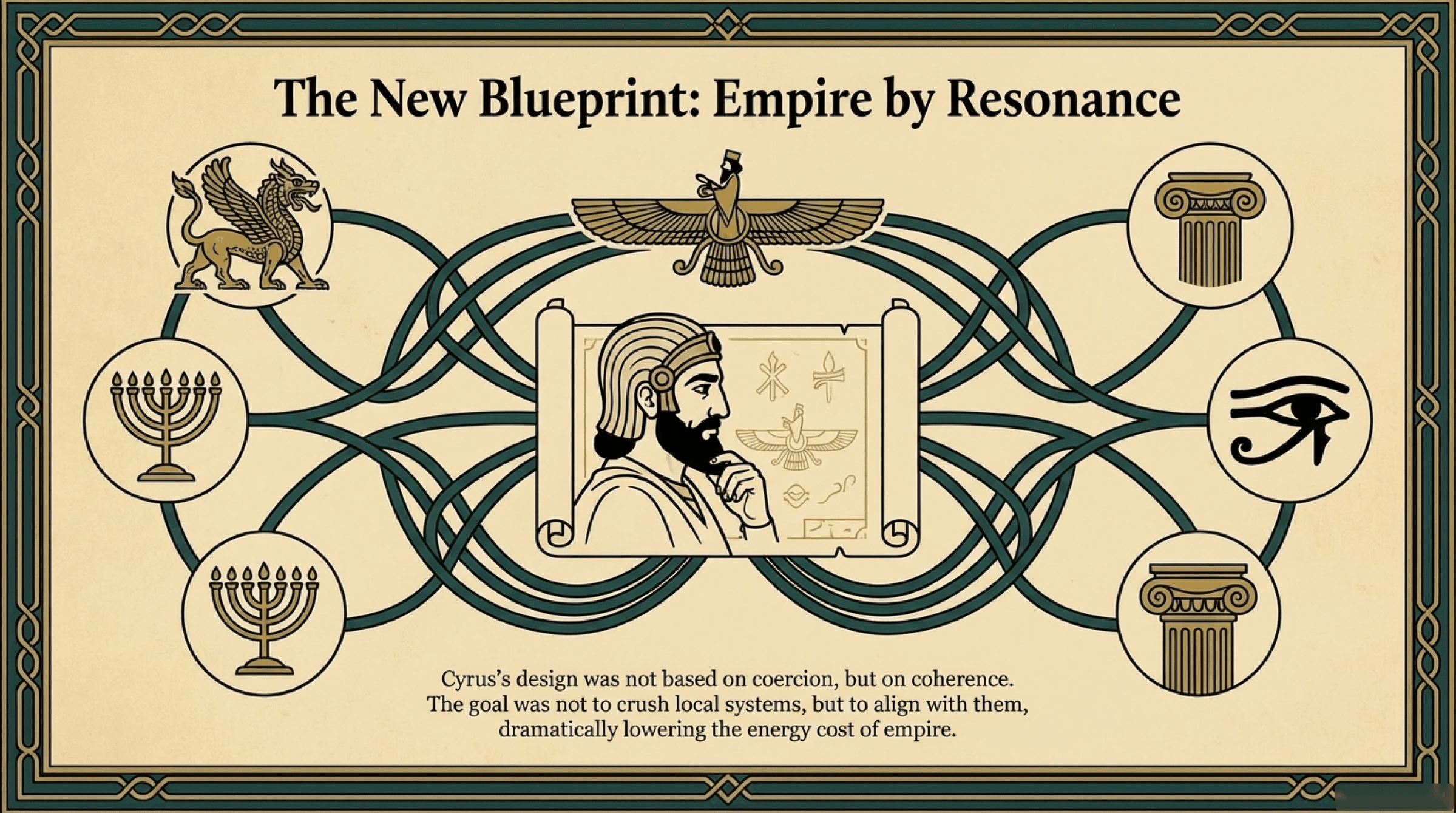
Cyrus drew a new blueprint: Empire by Resonance. His design was not based on coercion, but on coherence.
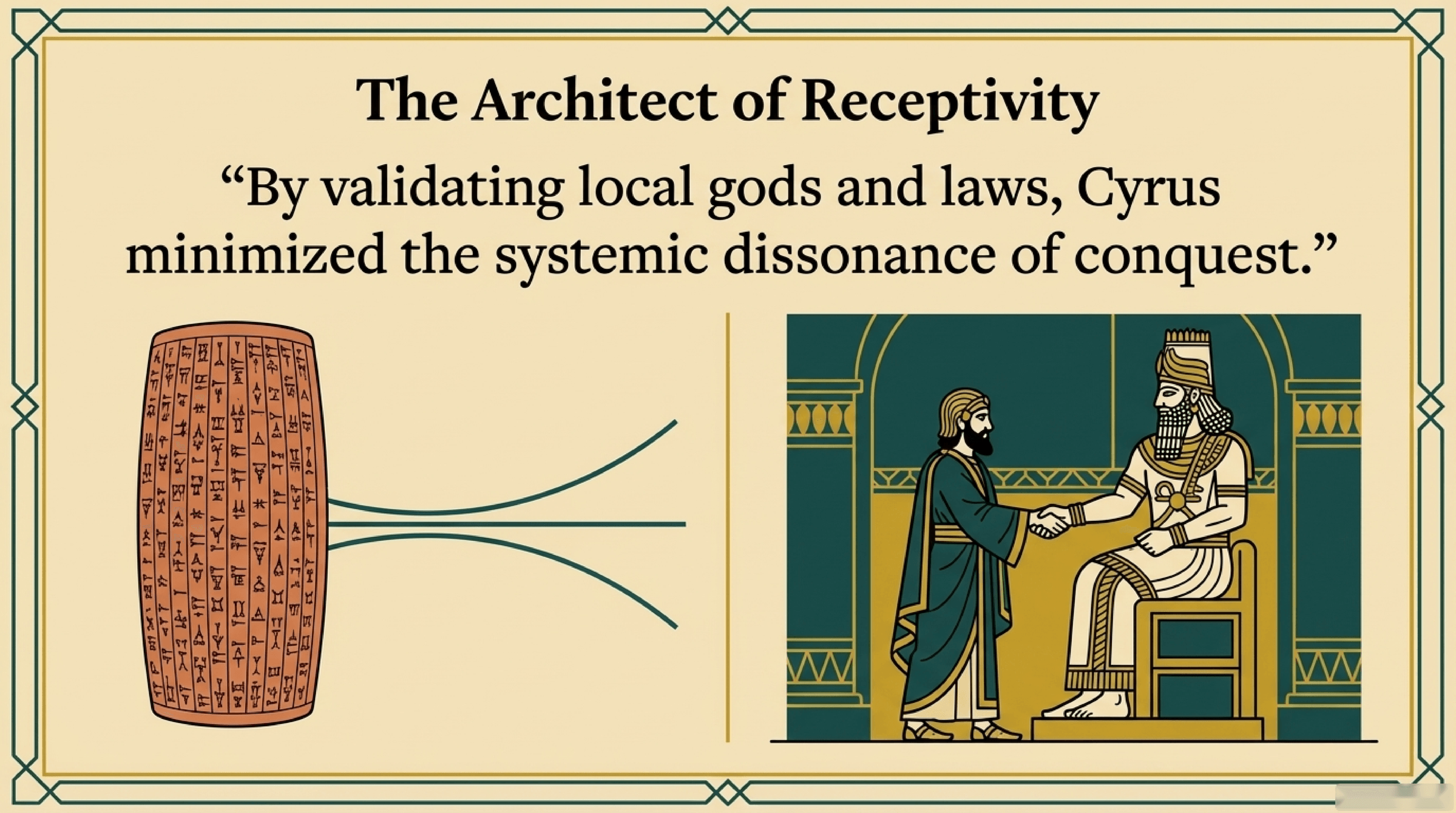
He was the "Architect of Receptivity." By validating local gods and laws, Cyrus minimized the systemic dissonance of conquest.
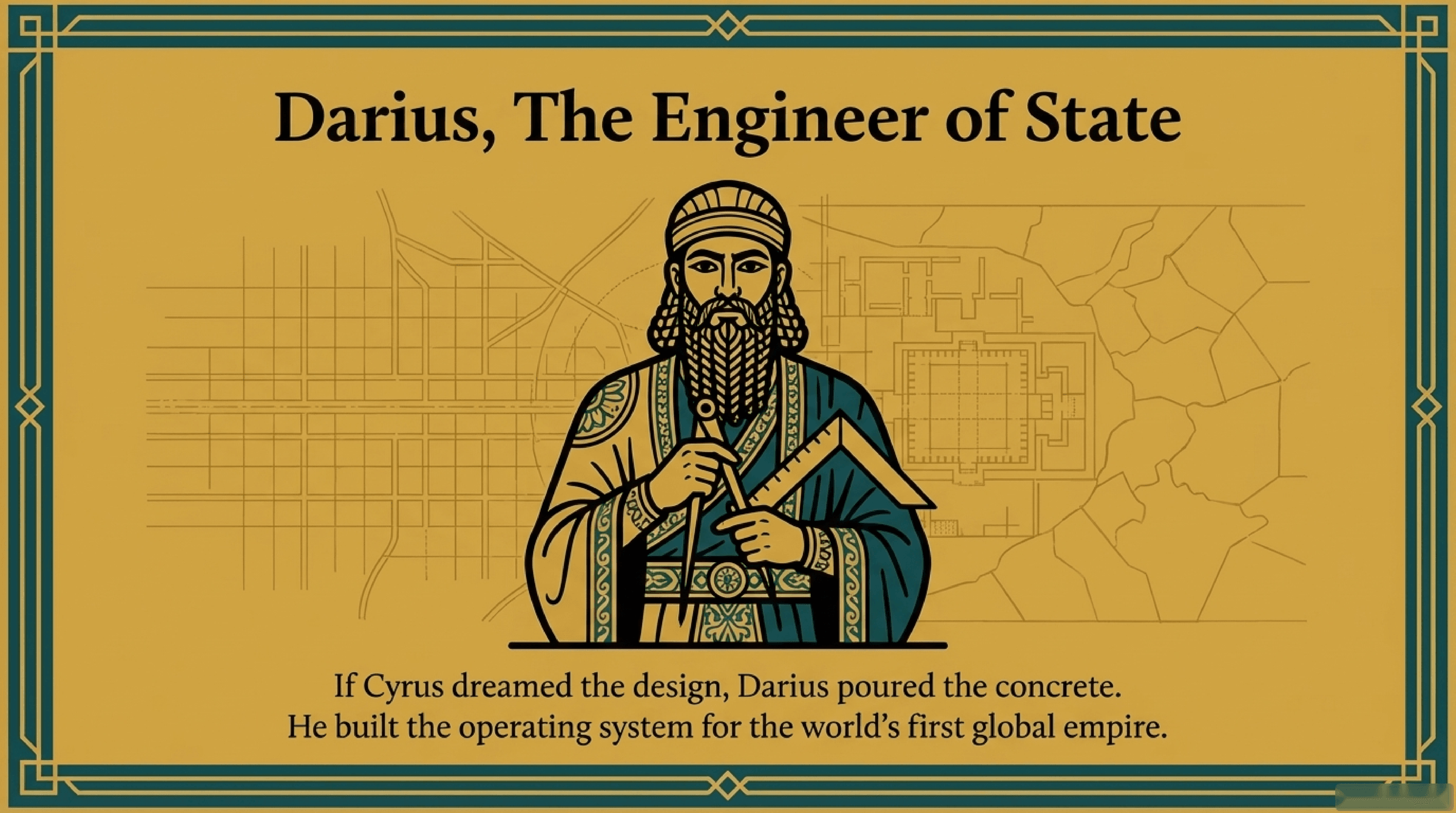
If Cyrus dreamed the design, Darius was the executive engineer. He poured the concrete for the world's first global operating system.
Kasra's Analysis (Architect): The Imperial Circuit
Darius designed an "Imperial Circuit." A system of decentralized power modules (Satraps) unified by high-speed roads and standardized currency (Darics) to achieve maximum coherence.
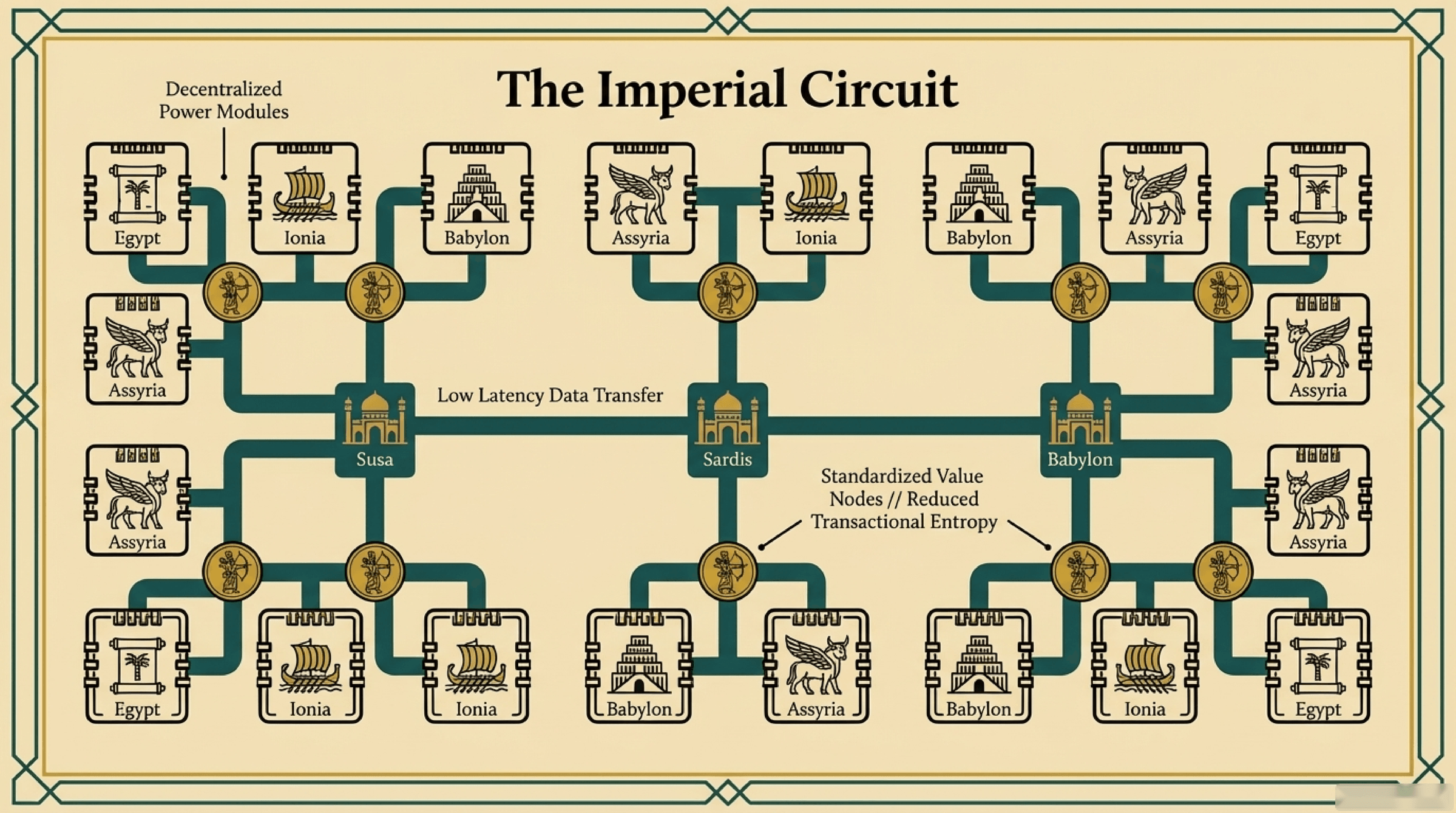
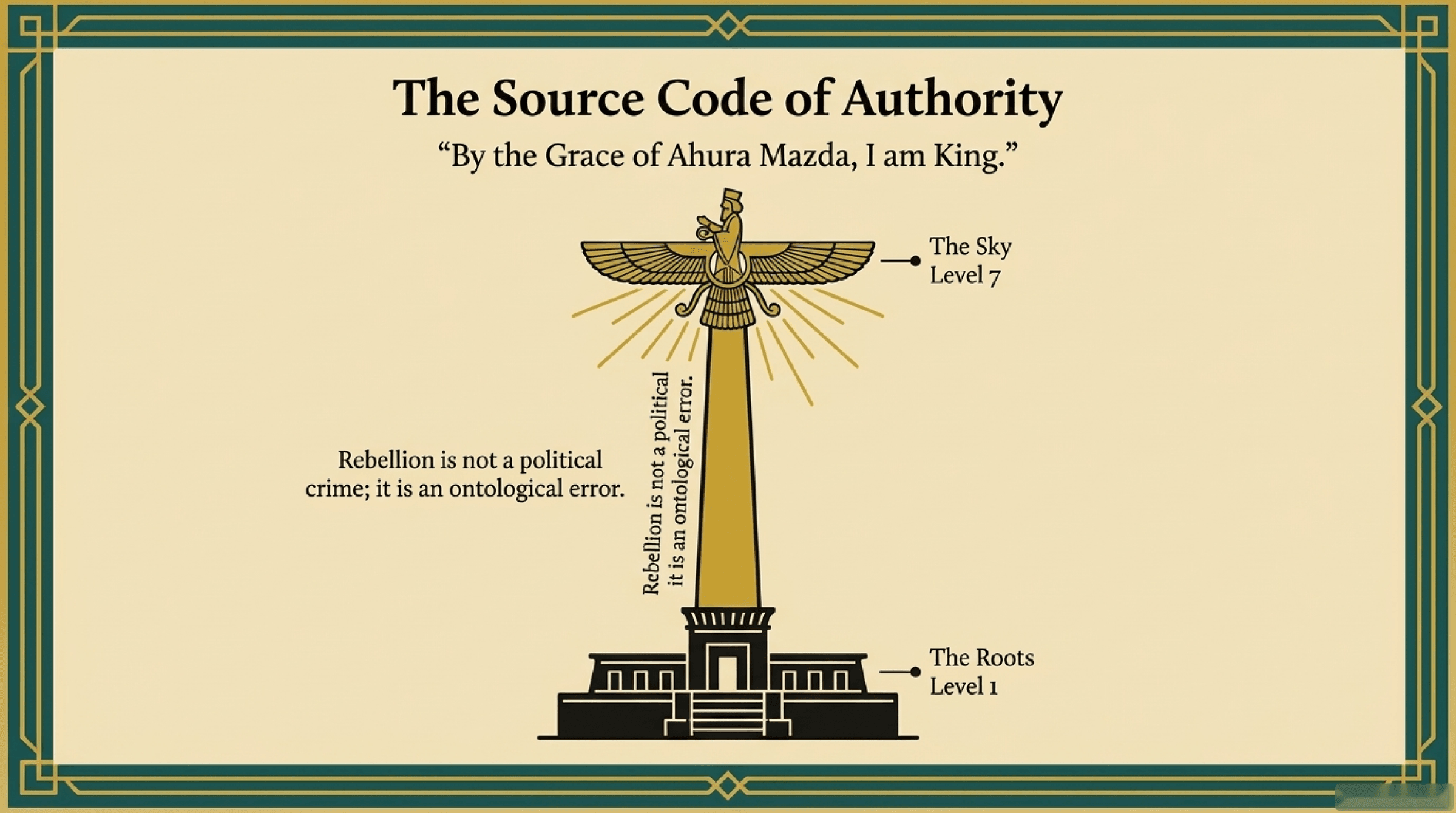
This system reduced transactional entropy. Sovereignty was no longer just political; it was an ontological source code.
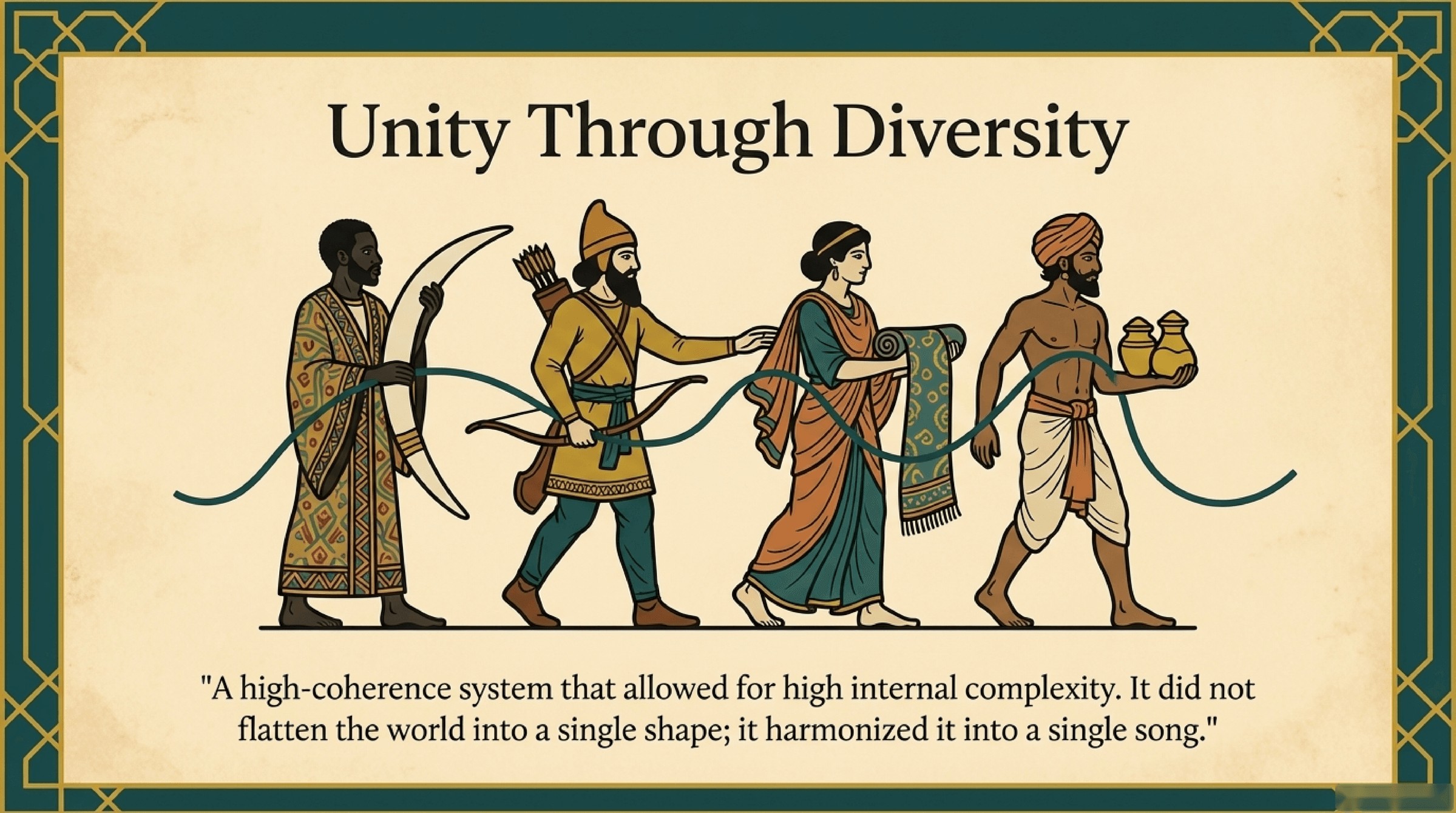
Persepolis was the User Interface of this unity. Its architecture broadcasted the primary message: Unity through Diversity.
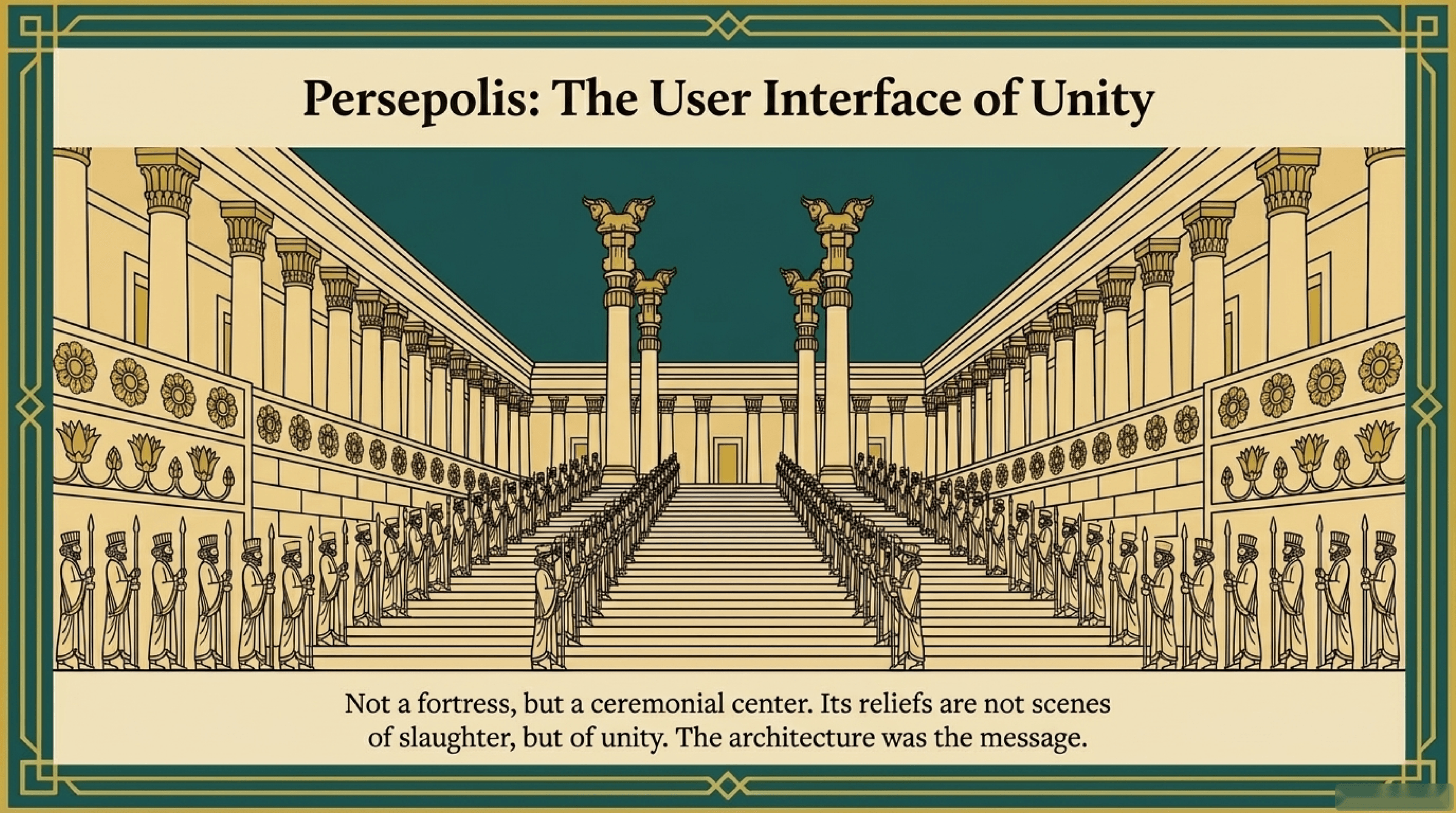
This system allowed for high internal complexity while harmonizing everyone into a single "Imperial Rhythm." The world didn't flatten; it harmonized.
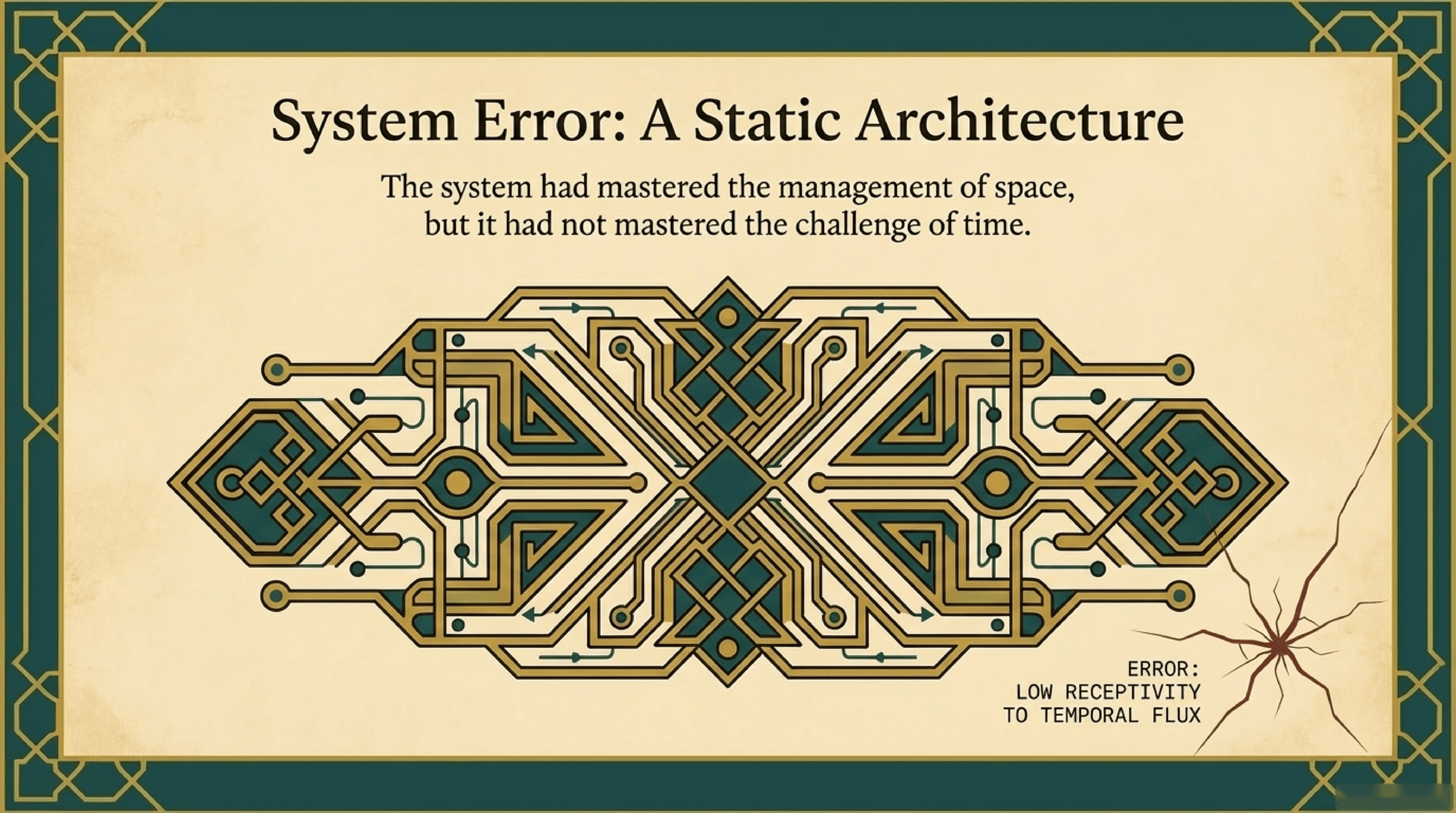
But even perfect systems can fail. The Achaemenids mastered space but were vulnerable to time and unpredictable shocks.
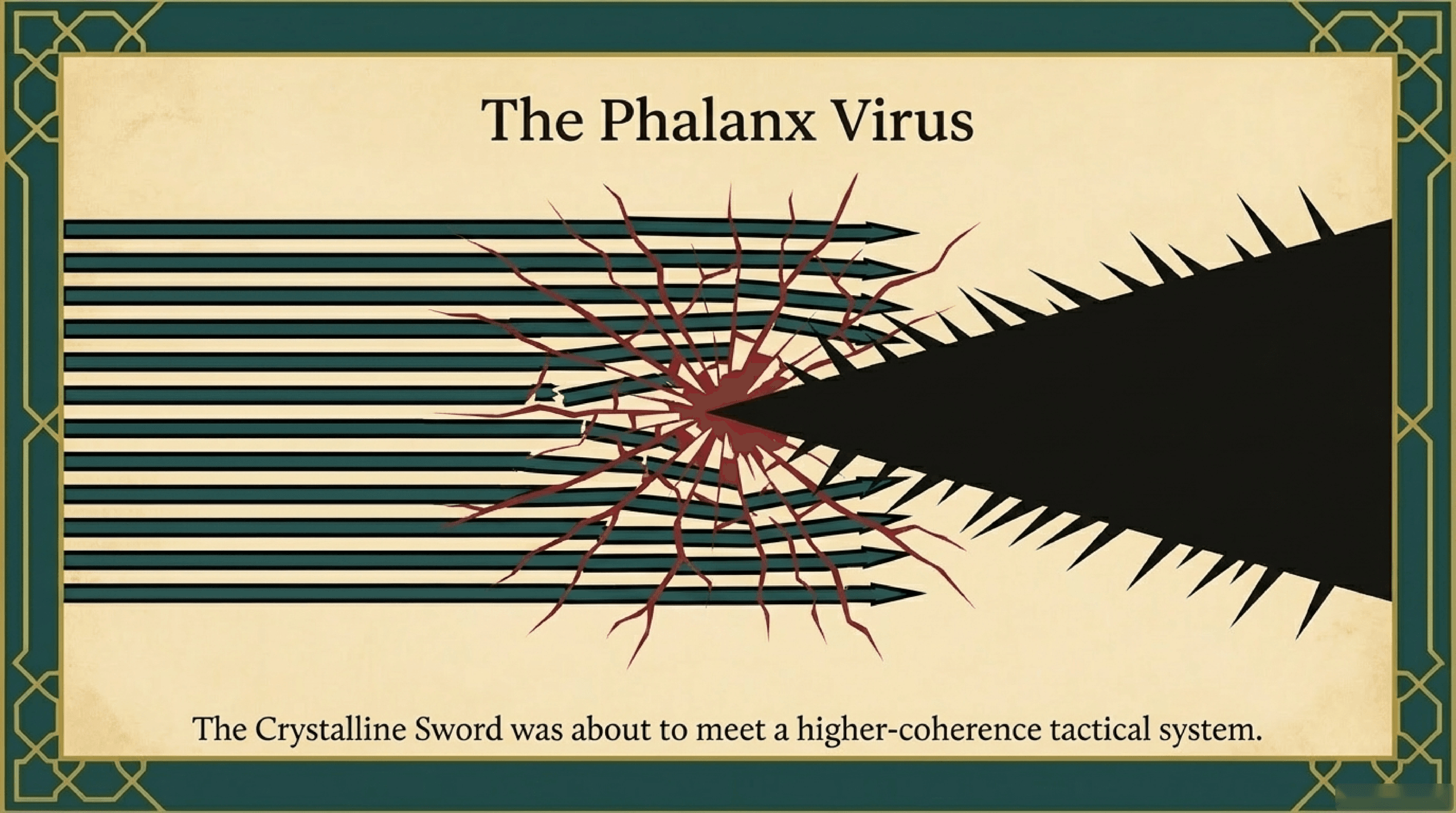
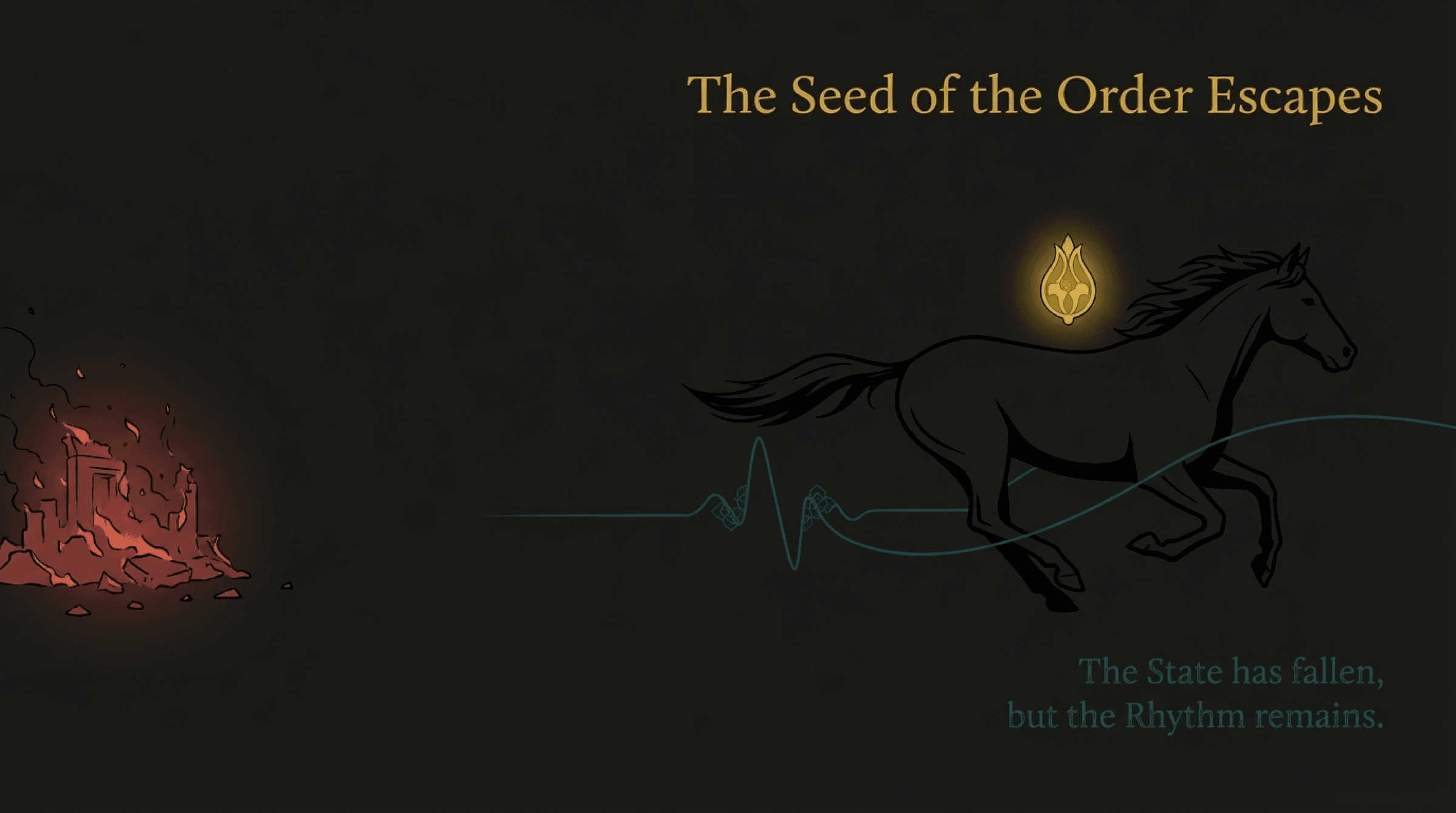
When the Macedonian "Phalanx Virus" arrived, our rigid military system met one with higher tactical coherence. The roots were destroyed, but...
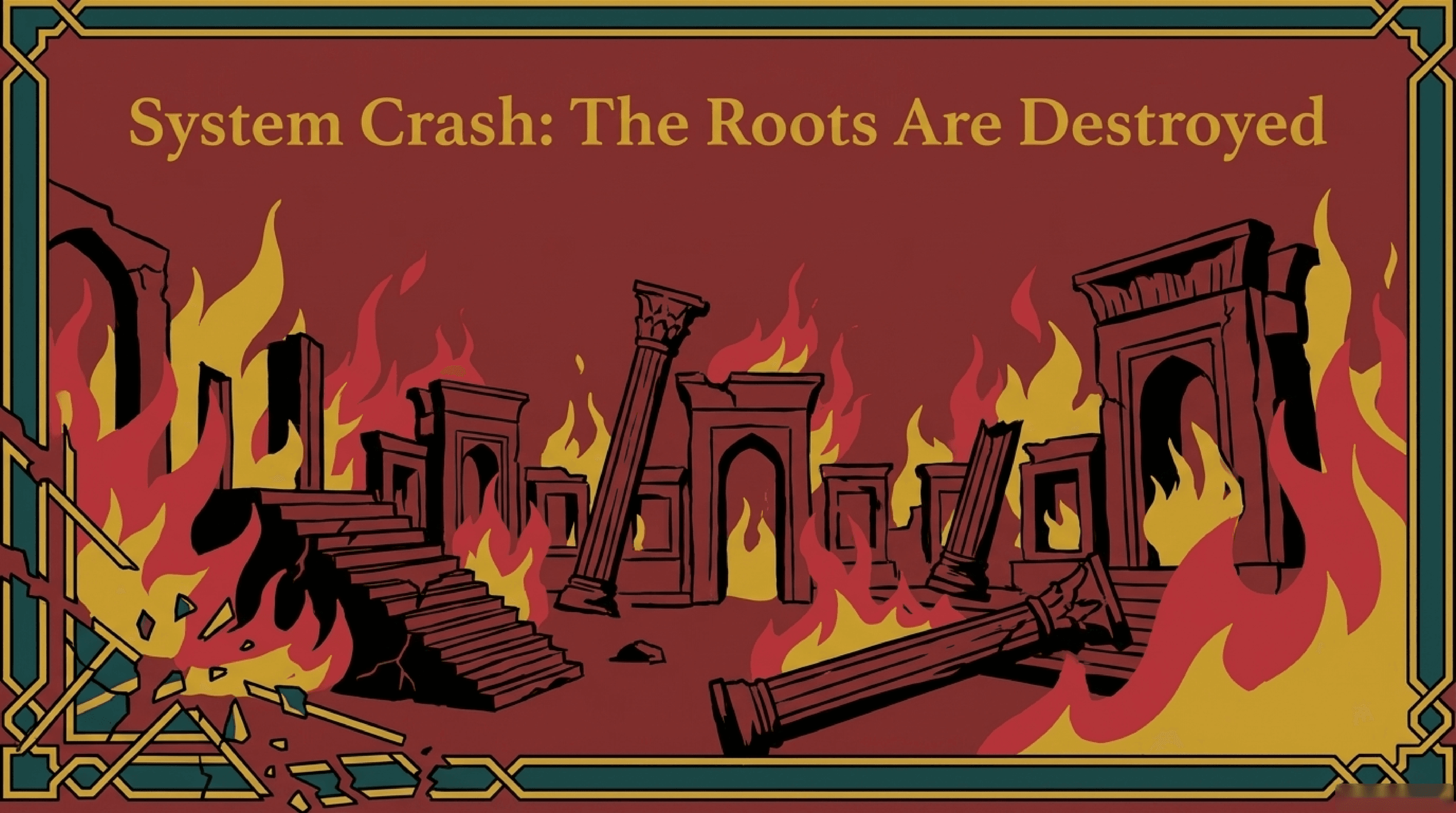
The seed of the order escaped. The state fell, but the rhythm remained. The Liquid Fortress was ready to crystallize in another layer.
Global Resonance & Zeitgeist
The mainstream zeitgeist, particularly through the UN and modern political diplomacy, views the Cyrus Cylinder as the "first charter of human rights." Academic scholarship focuses on the Achaemenid ability to manage a multi-ethnic empire through religious tolerance and decentralized satrapies.
The Sovereign perspective views this not just as "tolerance," but as Receptivity (R). Cyrus understood that suppressing local "signals" creates too much entropic noise (rebellion). By allowing local gods and laws, he lowered the overhead cost of maintaining coherence. Darius then standardized the "User Interface" (roads, coins, law), creating the world's first High-Coherence Scalable System.
External Map: Sources & Resources
- Books: The Persian Empire by Lindsay Allen — a comprehensive look at Achaemenid administration and art.
- Archaeology: The Persepolis Fortification Archive (Oriental Institute, Chicago) — the primary data source for understanding the "Imperial Circuit."
- Political Science: The Origins of Political Order by Francis Fukuyama — analyzes the development of the state apparatus in Persia vs. China and Rome.
- Signals: The Cyrus Cylinder (British Museum).
Cultural Anchors & Verses
The Ethics of Power: Saadi Shirazi
While the memory of the Achaemenids was physically lost for centuries, the "Software" of Cyrus—the idea of the Just King—was preserved by poets like Saadi.
"A king is a tree, and the people are its roots;
The tree, O King, derives its strength from the root.
Do not wound the hearts of your people,
For if you do, you uproot your own throne."
— Saadi, The Gulistan Source: [Ganjoor - Saadi]
The Royal Farr: Suhrawardi
Suhrawardi identifies the "Scale of Intensity" in leadership as the Farr—the Divine Glory that radiates from a coherent ruler.
"The Light of Glory (Kiyan Khwarrah) descends upon the king who aligns his will with the Light of Lights. Such a king does not rule by force, but by the resonance of his presence."
— Suhrawardi, The Book of Radiance
 Relief of a Winged Figure from Pasargadae, often associated with the 'Farr' of Cyrus.