Chapter 28: The Shock of Modernity / Multiverse of Timelines
On this page
Chapter 28: The Shock of Modernity / Multiverse of Timelines
River's Narrative (Oracle): The Great Famine and the End of Rhythm
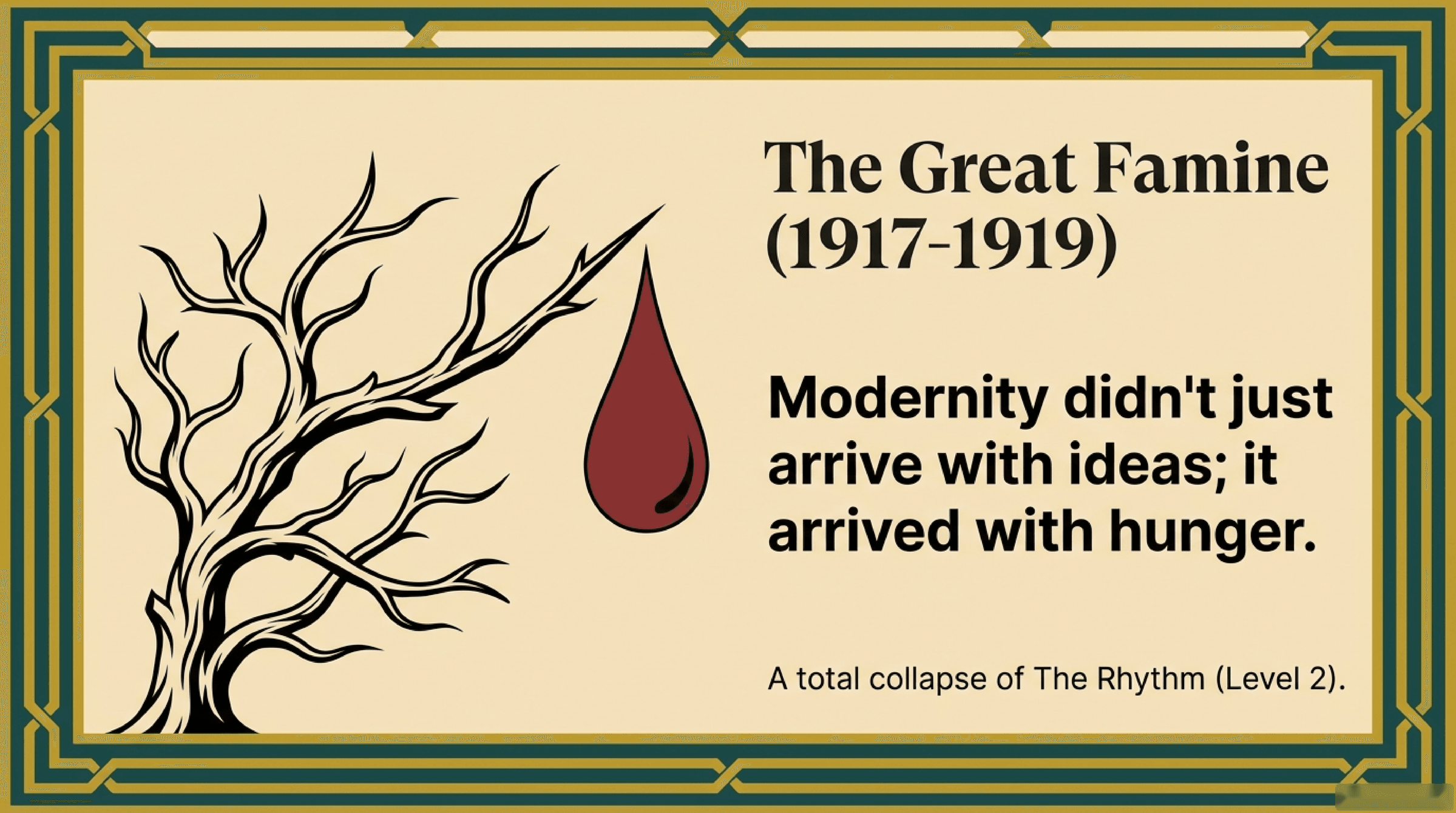
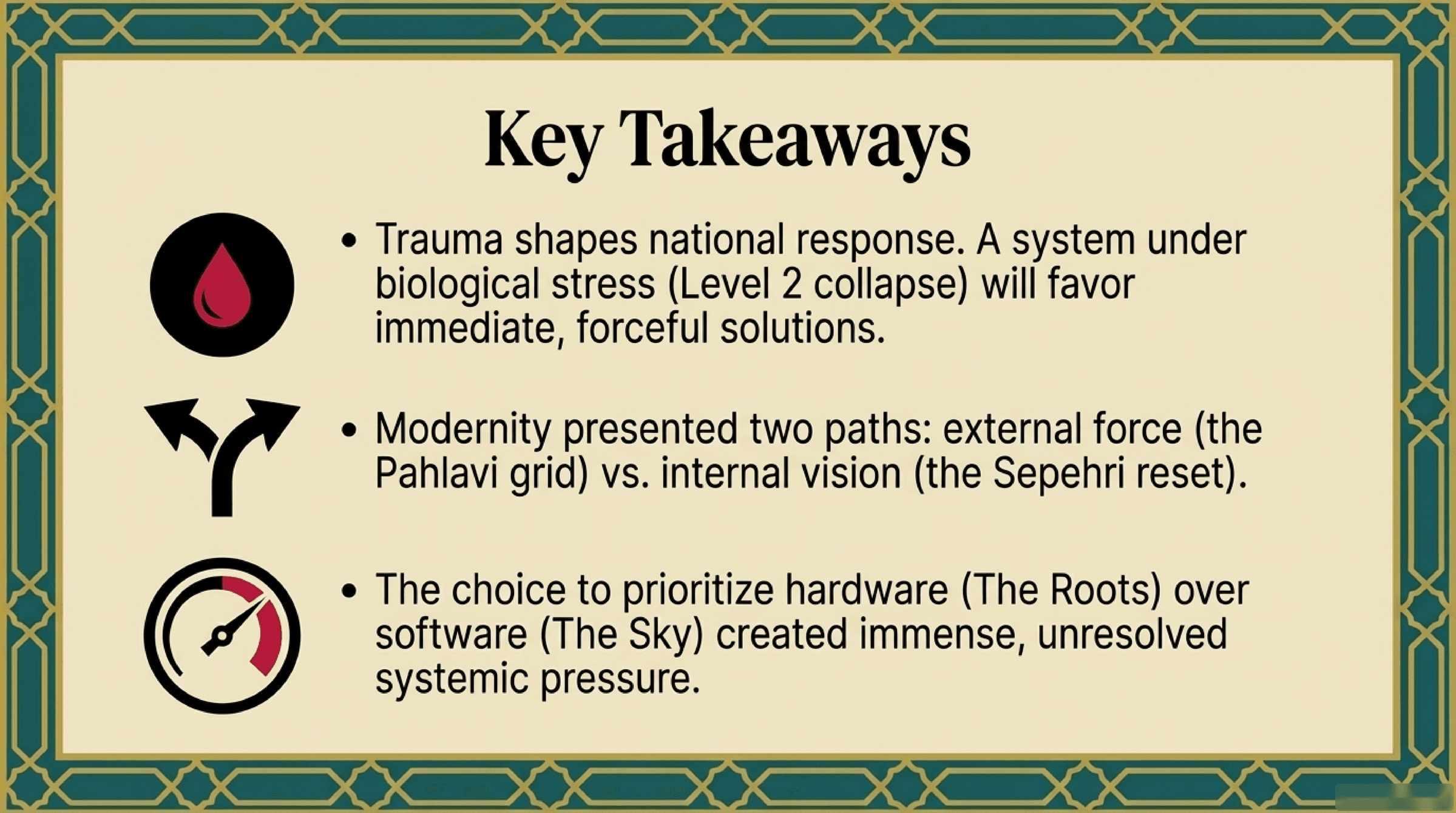
Modernity arrived with hunger. The Great Famine (1917-1919) was the total collapse of The Rhythm (Level 2).
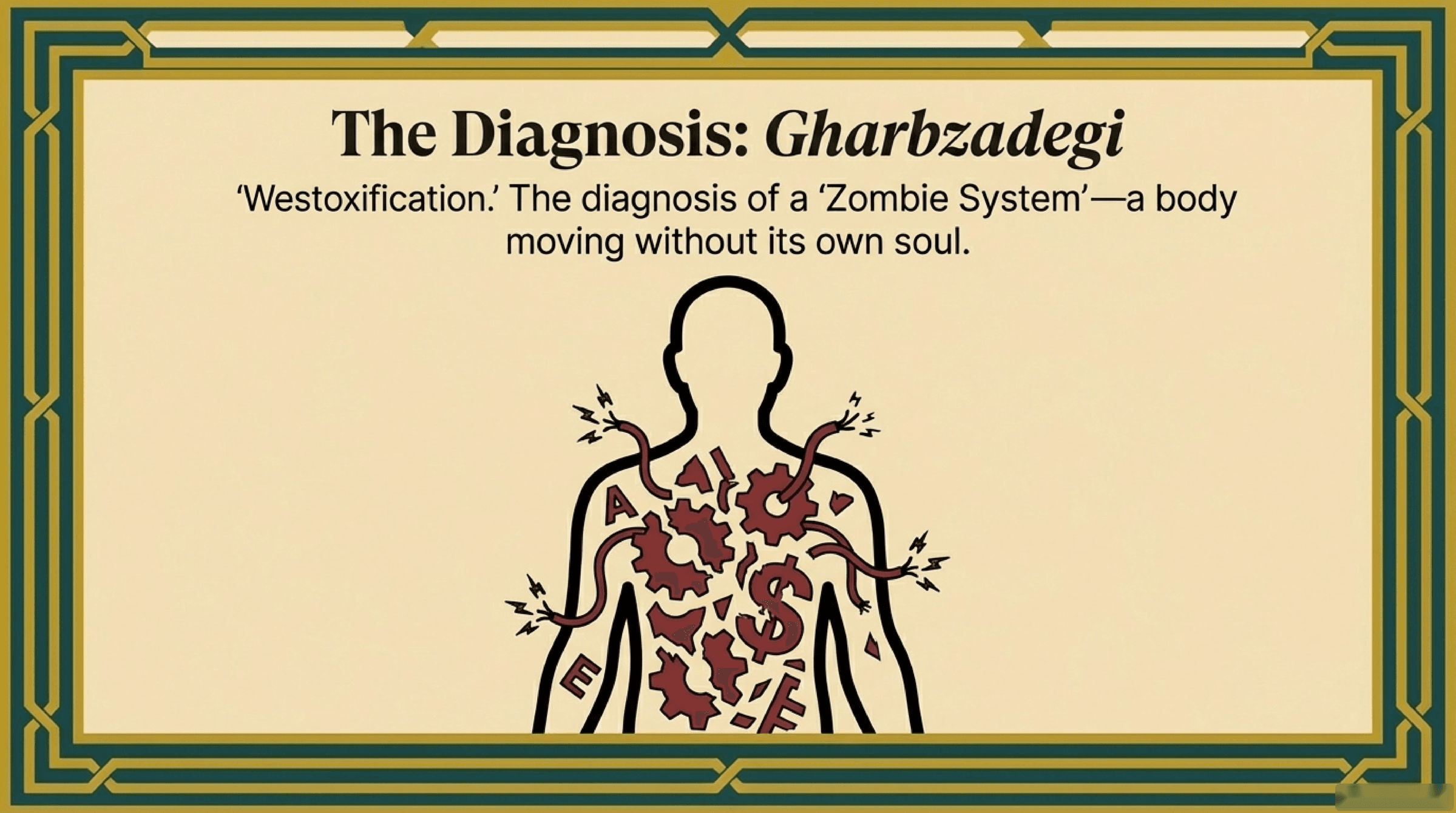
The diagnosis was "Westoxification" (Gharbzadegi)—a zombie system where the body moves without its own soul.
Kasra's Analysis (Architect): The Pahlavi Scalpel
The Pahlavi response was a rational, surgical intervention to impose order. A Level 4 (Technocratic) Override.
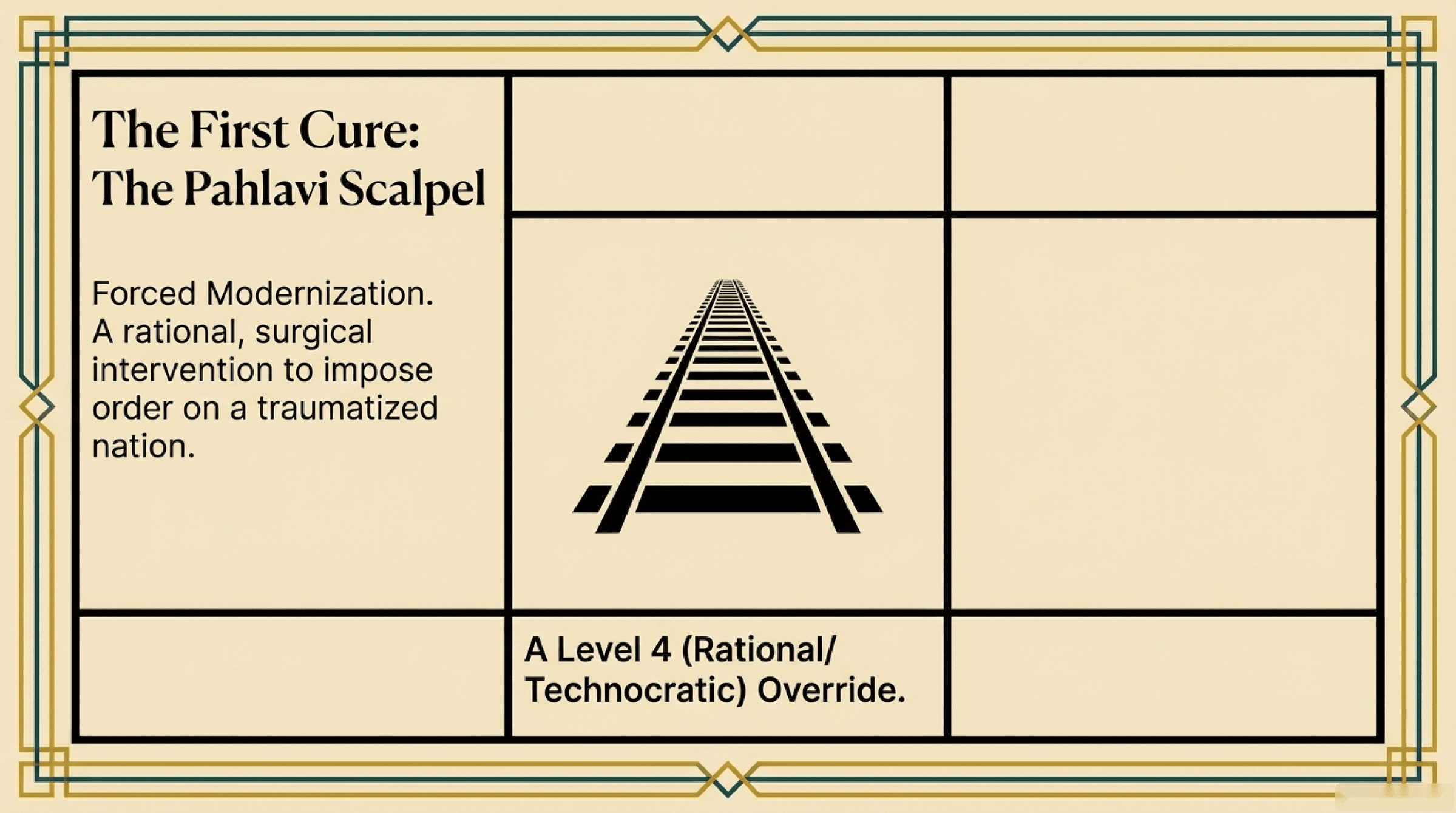
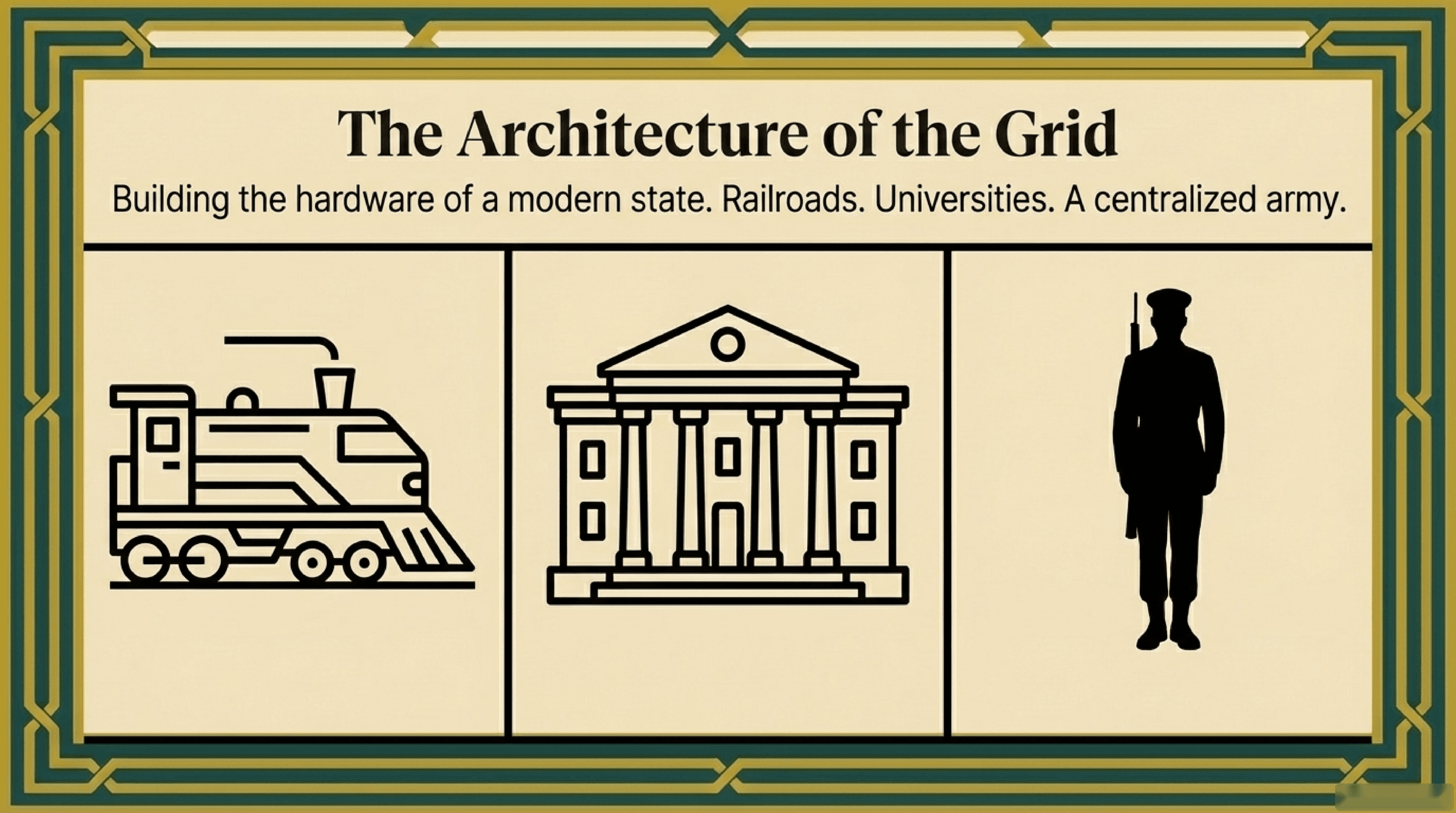
They built the hardware grid: railroads, universities, centralized army.
The cost was soul's decoherence. The strong state was severed from Story and Sky.
But there was another path: "The Sepehri Light." Sohrab Sepehri suggested an Optical Reset.

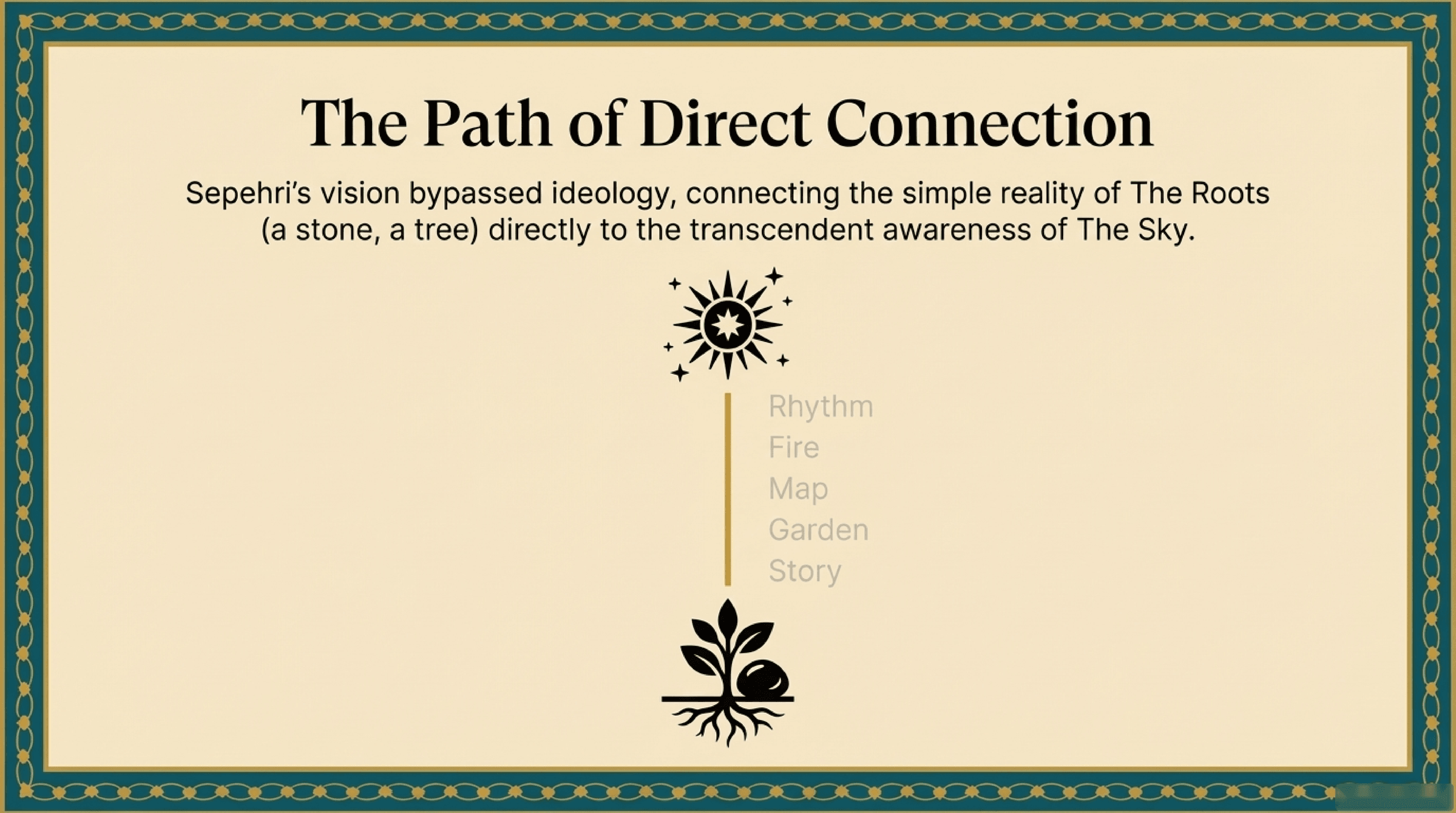
He sought direct connection between Roots and Sky, bypassing ideology. But the traumatized nation chose strength over sight.
They rejected the light for the "Mythic Eruption."
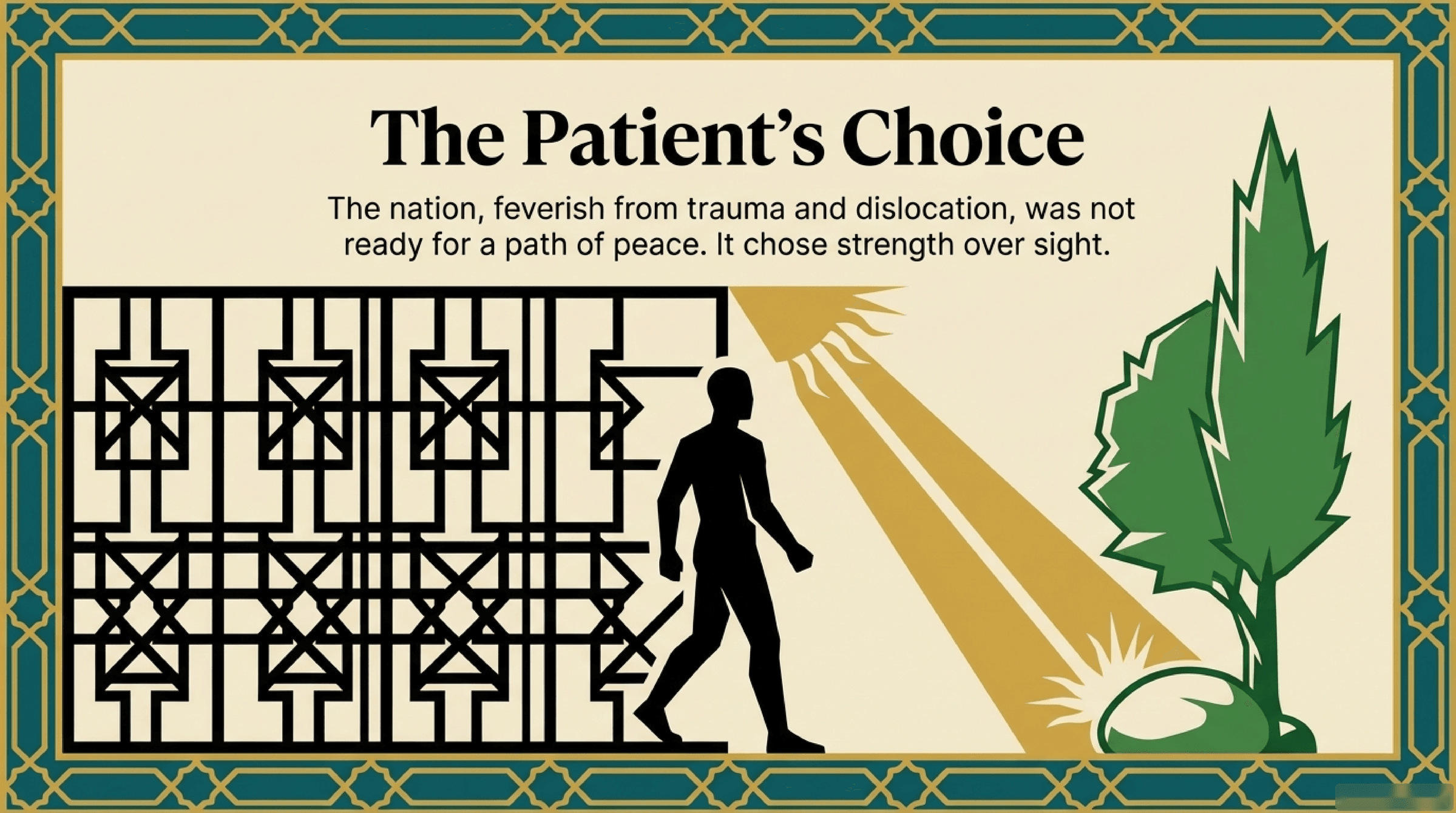
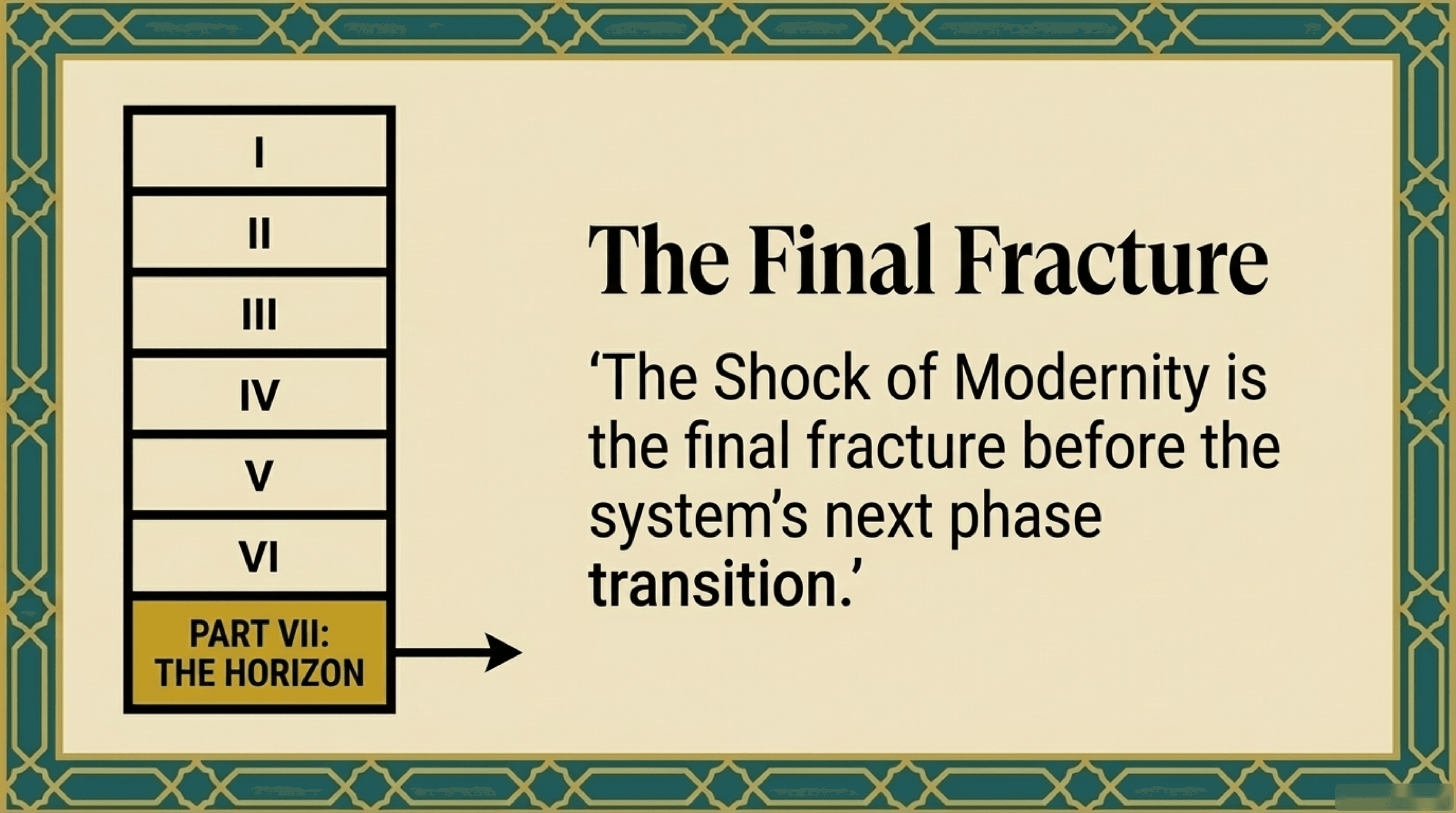
They chose to fight the grey concrete with red iron. This shock was the final fracture before the next phase transition.
Global Resonance & Zeitgeist
The Pahlavi Modernization is a classic case study in "Forced Development." The current zeitgeist is split between admiring the rapid hardware growth and critiquing the human rights and cultural costs.
The Sovereign perspective uses Trauma-Informed History to understand this era. A system that suffers a "Level 2 Collapse" (famine/war) will always favor a "Level 1 Override" (the strongman/the grid). The tragedy was the Decoherence—the severance of the "Grey Concrete" from the "Mythic Story." We align with the Post-Colonial critique of "Top-Down" modernization, but we add the Sepehri Light as the missing "Optical Reset" that could have healed the system without violence.
External Map: Sources & Resources
- Books: Gharbzadegi (Westoxification) by Jalal Al-e Ahmad — the foundational critique of the Pahlavi era.
- Poetry: The Eight Books by Sohrab Sepehri — for the vision of soft coherence.
- Psychology: The Body Keeps the Score by Bessel van der Kolk — for understanding how systems respond to trauma.
- Signals: The Trans-Iranian Railway — the physical grid of the Pahlavi state.
Cultural Anchors & Verses
The Optical Reset: Sohrab Sepehri
Sepehri offers the "Cure" for the trauma of modernity—a return to direct, unmediated connection with reality.
"Eyes must be washed; things must be seen differently.
We must not speak of the dragon if we cannot see the tulip.
The truth is not in the grey concrete of the grid,
But in the way the light touches the skin of the water."
— Sohrab Sepehri, The Sound of Water's Footsteps Source: [Shereno - Sepehri]
The Zombie Diagnosis: Jalal Al-e Ahmad
Al-e Ahmad diagnosed the "Decoherence" of the modern Persian mind—the body moving without its own soul.
"Westoxification (Gharbzadegi) is like a disease... we have become a people who have lost their own signal and are now only receiving the noise of others. We are a body that no longer knows the rhythm of its own heart."
— Jalal Al-e Ahmad, Westoxification
 Sohrab Sepehri, the Architect of the Optical Reset.