Chapter 26: The Perfected State / The Problem of Nihilism
On this page
Chapter 26: The Perfected State / The Problem of Nihilism
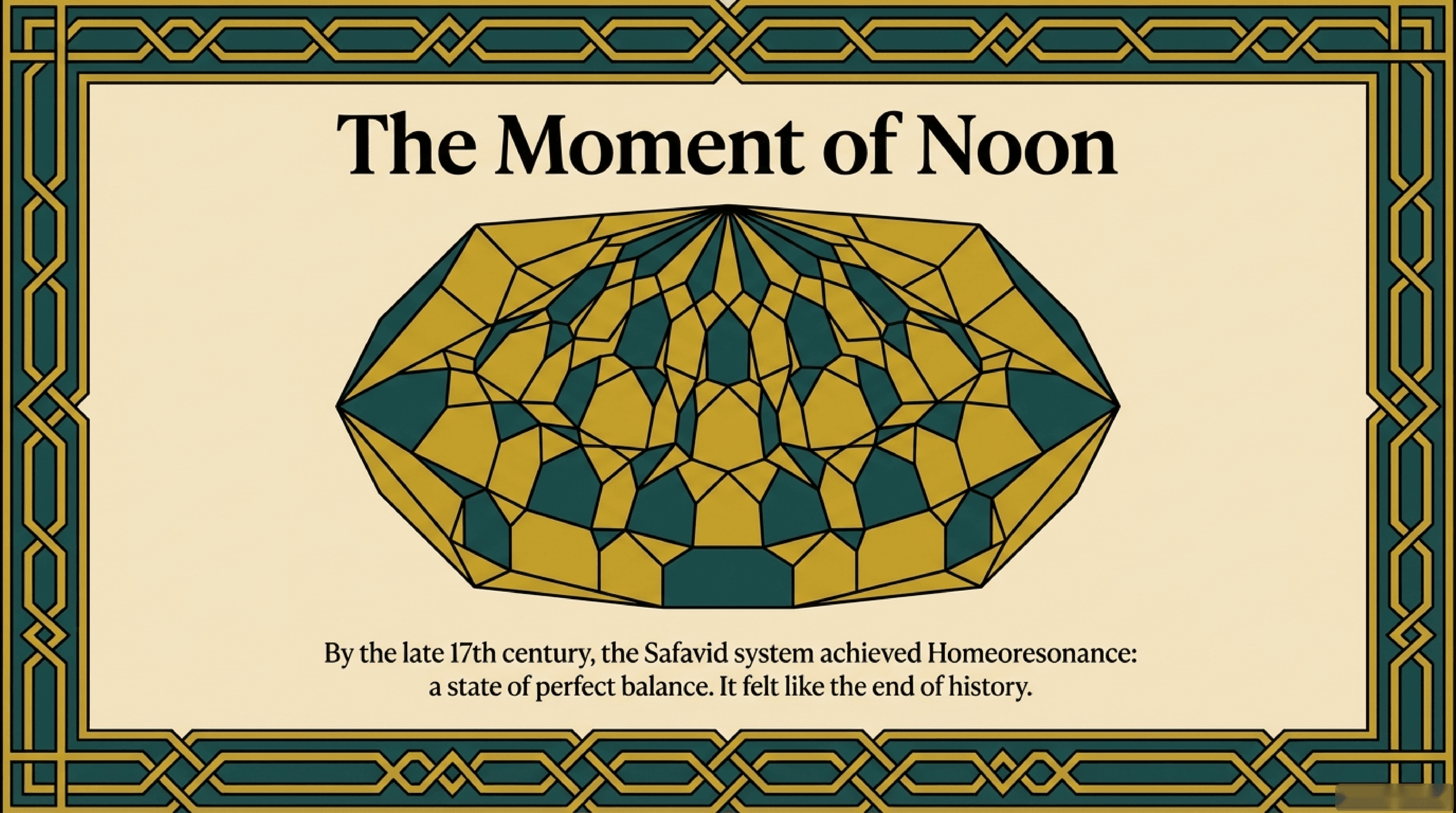
River's Narrative (Oracle): The Moment of Noon
When a system reaches static perfection, it can no longer grow. In the Qajar era, Persia reached this "Moment of Noon"—where the sun is direct but there is no shadow or movement.
We were caught in the "Trap of Stasis." Past glory became a chain preventing synchronization with the changing world.
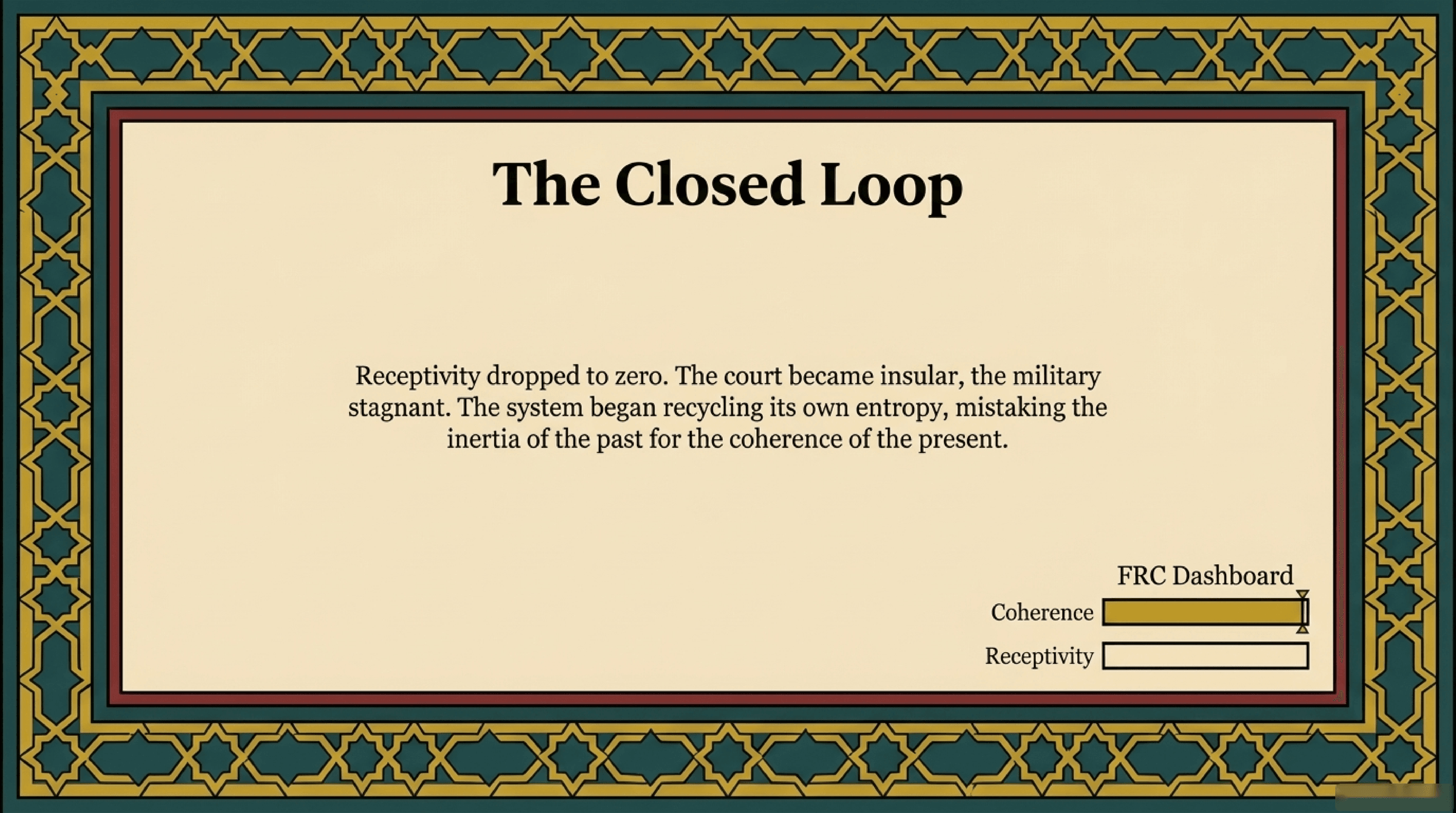
Kasra's Analysis (Architect): The Glass Giant
A hyper-crystallized system is a "Glass Giant." Brilliant but brittle. Over-coherence lead to rigidity.
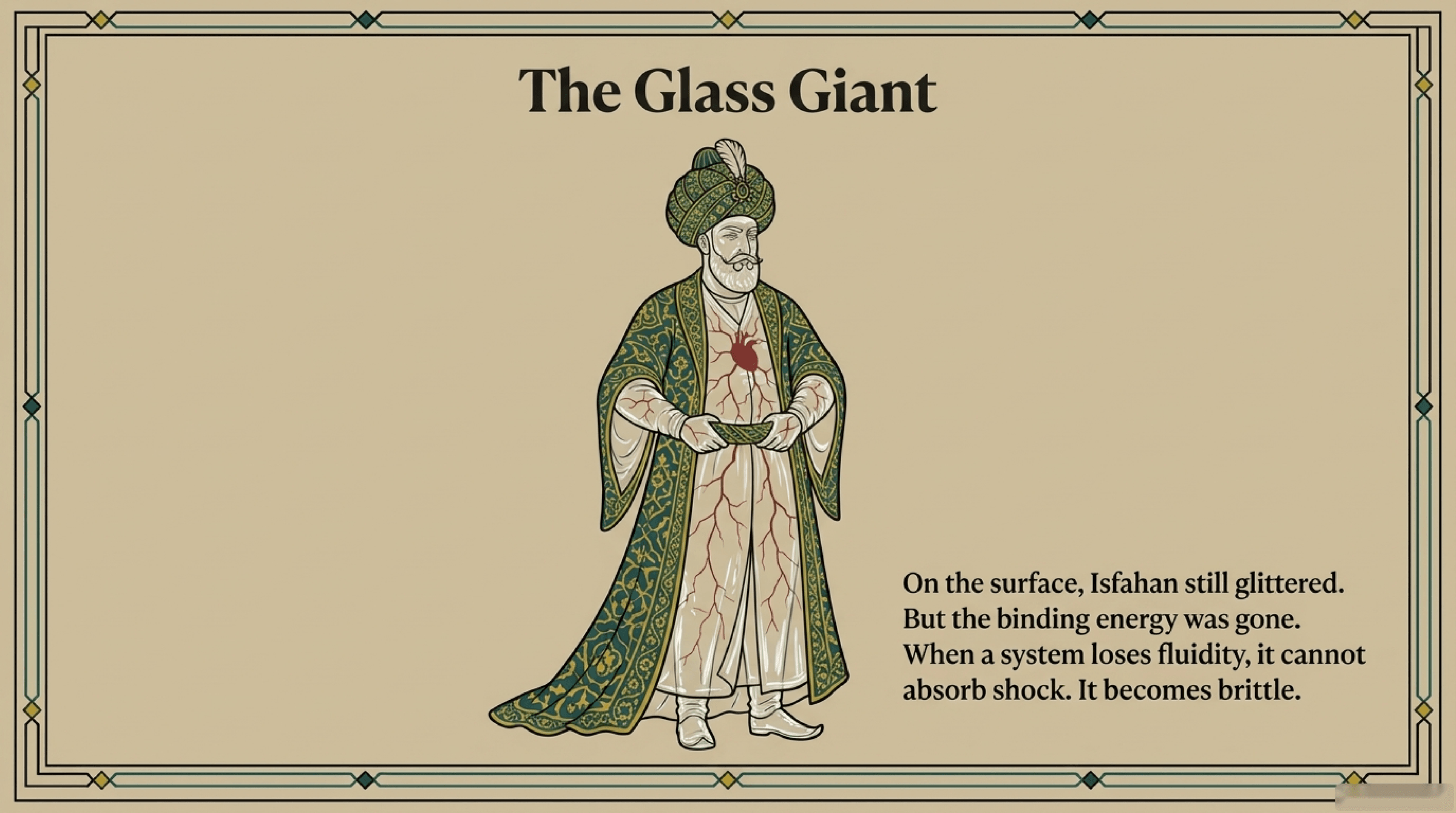
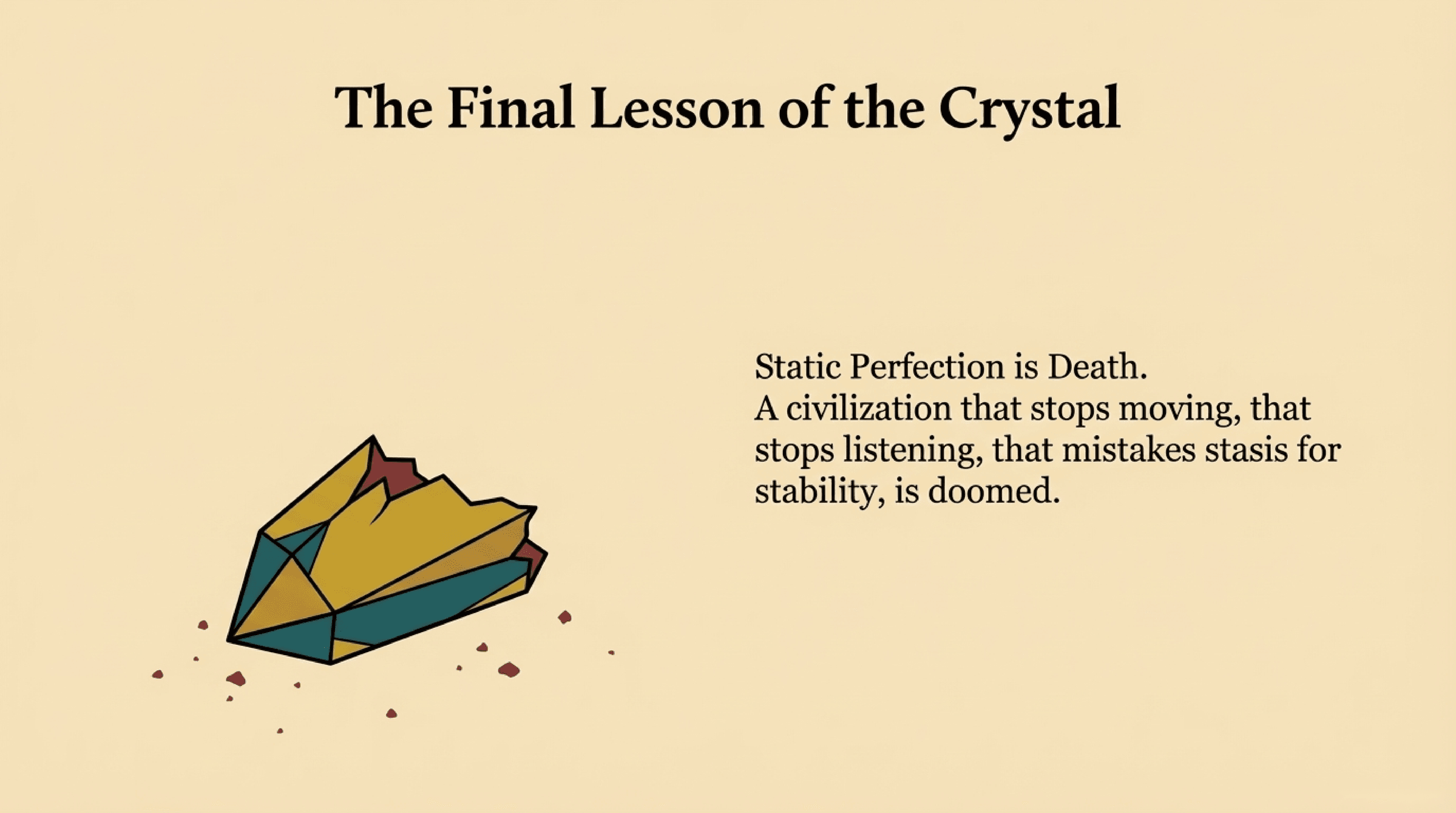
True perfection is in the flow. When resonance with the present is severed, Nihilism enters through the system's cracks.
Global Resonance & Zeitgeist
The "Trap of Stasis" is a recurring theme in the study of empires (the "Malthusian Trap" or "Bureaucratic Decay"). The late 20th-century zeitgeist was dominated by Francis Fukuyama's "End of History"—the idea that liberal democracy is the "perfected" and final state of human government.
The Sovereign perspective warns that any "perfected" state is actually a Systemic Death Sentence. When a system stops flowing, it begins to produce Nihilism. We align with the Complexity Science view that a system must remain "at the edge of chaos" to stay alive. The Qajar era was a civilization that had moved too far from the edge, becoming a "Glass Giant" that could no longer adapt.
External Map: Sources & Resources
- Books: The End of History and the Last Man by Francis Fukuyama.
- History: Iran and the West by Abbas Amanat — explores the Qajar encounter with modernity.
- Complexity Theory: Complexity: The Emerging Science at the Edge of Order and Chaos by M. Mitchell Waldrop.
- Signals: The Paradox of Perfection in Systems.
Cultural Anchors & Verses
The Broken Pot: Omar Khayyam
Khayyam critiques the "Trap of Stasis" by reminding the elites that their "Perfected State" will eventually return to the clay of the earth.
"I saw a potter in the bazaar today,
Thumping the clay with a heavy hand.
The clay said to him in a voice of grief:
'I was once a King like you; do not strike me so hard.'"
— Khayyam, Rubaiyat Source: [Ganjoor - Khayyam]
The Sickness of Form: Hafez
Hafez warns against the "Static Perfection" of the religious and political establishment.
"Be a 'Rend' (a free soul) and do not be a hypocrite;
For the beautiful form is but a veil over the hollow heart.
The wine of truth is better than the prayer of the proud,
For the broken heart is the only house that God enters."
— Hafez, Divan
 The Potter and the Clay, Khayyam's meditation on the wheel of time.