Chapter 4: The Myth of the Border / Logic of a Living World
On this page
Chapter 4: The Myth of the Border / Logic of a Living World
River's Narrative (Oracle): The Myth of the Border
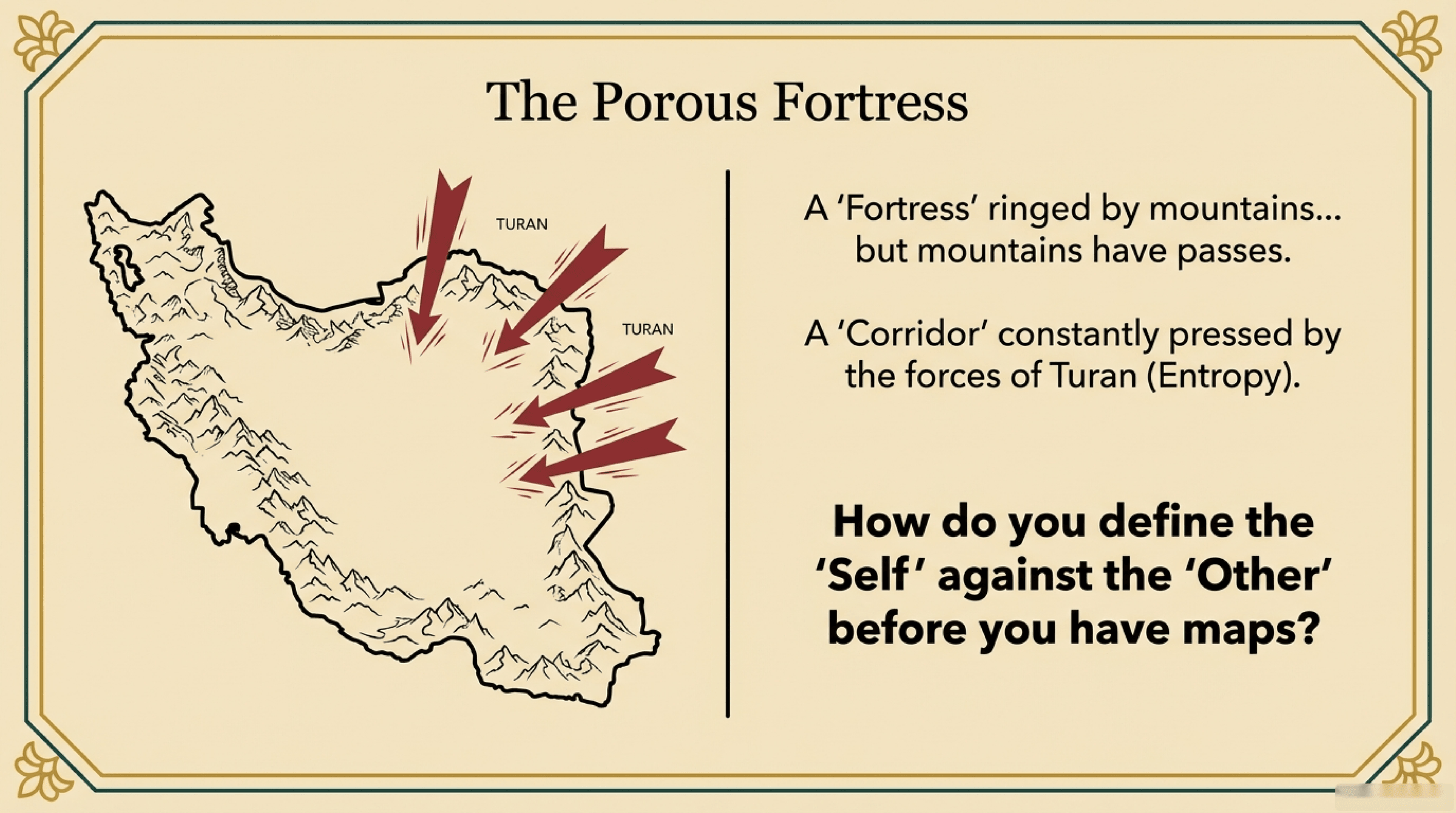
At first glance, a border is something that separates. But in the logic of the Liquid Fortress, a border is a membrane. A civilization on a highway cannot build solid walls.
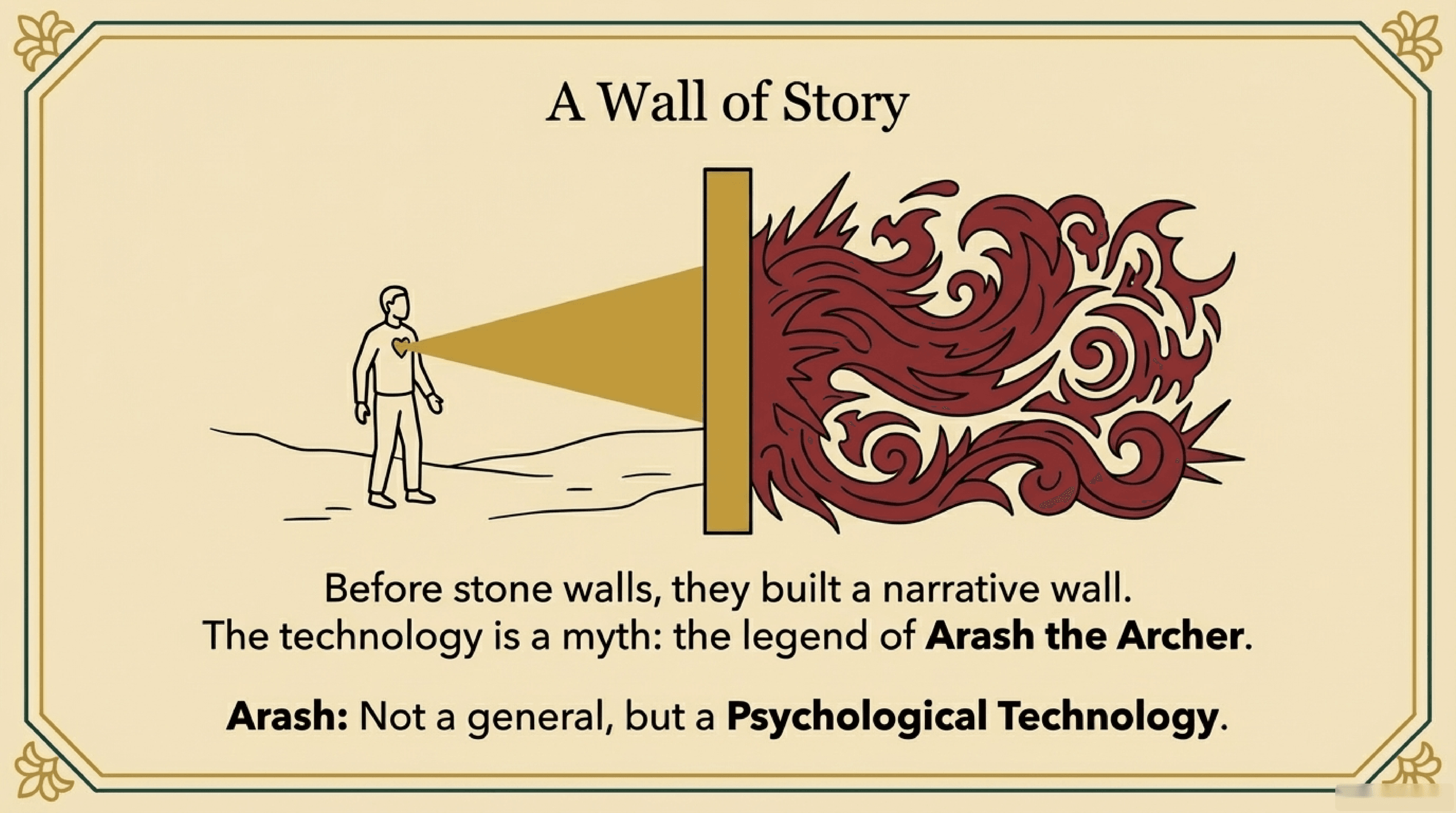
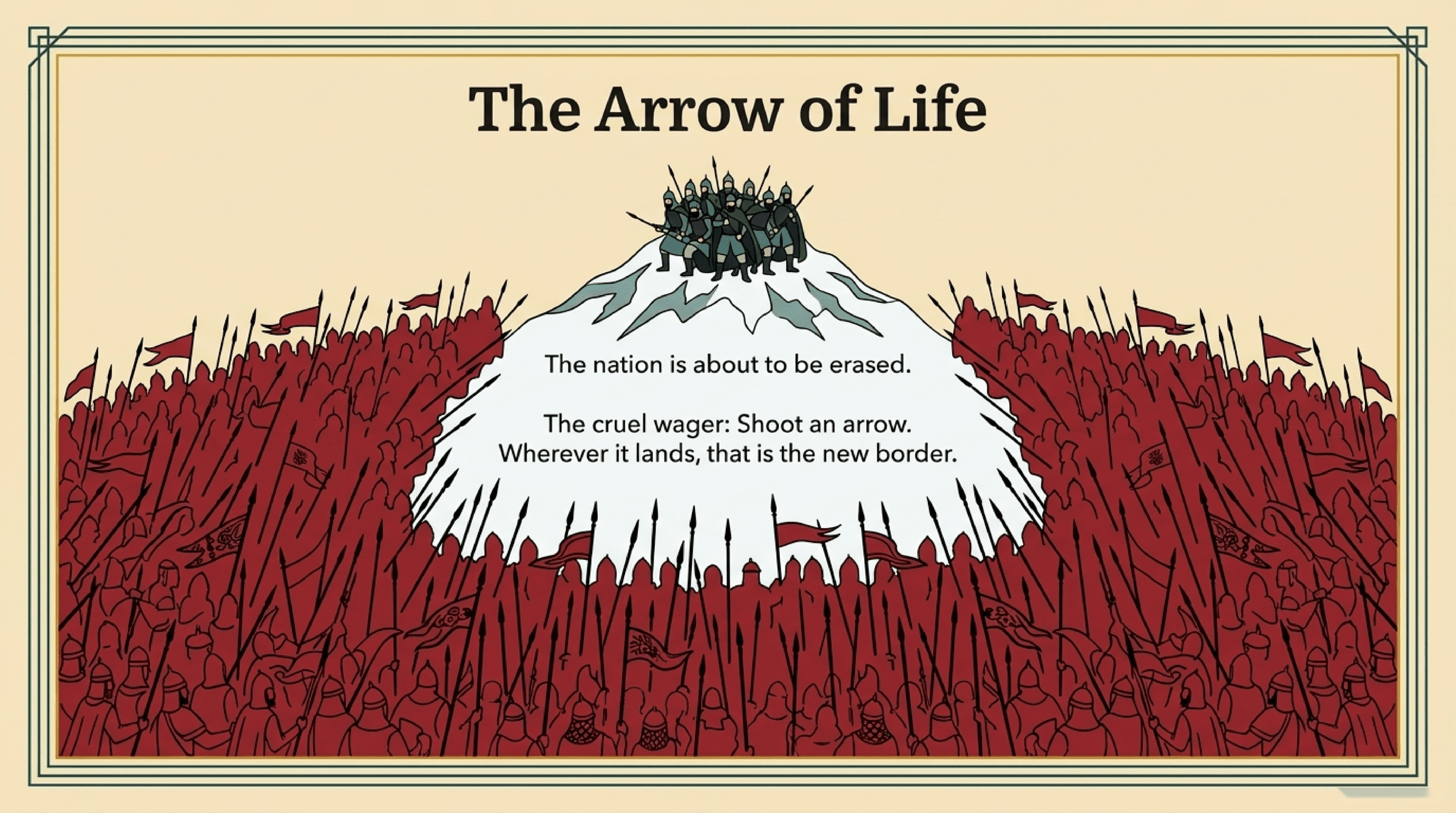
Arash the Archer defined the border with his arrow. But that arrow didn't just divide land; it defined the boundary of a "Field of Coherence." We learned to digest invasion.
Persia was occupied many times, but it transformed its occupiers with its culture and language. This "Porous Border" allowed Persia to maintain its core identity while accepting diversity.
Kasra's Analysis (Architect): Logic of a Living World
This ability to digest shows that the universe is a living system, not a rigid machine.
True defense is not in solidity, but in resonance. When a destructive external wave arrives, the Liquid Fortress changes its frequency to harmonize with its internal rhythm. This is the logic of a living world where borders are points of exchange, not walls of isolation.
Global Resonance & Zeitgeist
Modern political science often views borders as Hard Lines of sovereignty (the "Stone Fortress" model). However, the rising zeitgeist of Systems Thinking and Ecological Borders recognizes that absolute isolation is impossible.
The myth of Arash the Archer resonates today as a symbol of "Defensive Sacrifice." While mainstream history sees the various invasions of Iran (Greeks, Mongols) as "failures of defense," cultural historians note that Iran's "soft power" was so high that it effectively conquered its conquerors. This is the Resonant Defense—using the border as a filter rather than a block.
External Map: Sources & Resources
- Books: The Iranians: Persia, Islam and the Soul of a Nation by Sandra Mackey — explores the psychological borders of the Persian mind.
- Systems Theory: Thinking in Systems by Donella Meadows — essential for understanding the "membranes" of living systems.
- Mythology: The Shahnameh by Ferdowsi — specifically the episode of Arash (though he is often more prominent in oral tradition and later poetry like Kasraei's).
- Signals: The Legend of Arash the Archer (Tehran Times Archive).
Cultural Anchors & Verses
The Arrow of the Soul: Siavash Kasraei
The myth of Arash is best captured in modern Persian literature by Kasraei, who depicts the Archer imbuing the border with his entire life-force.
"It is snowing...
Snowing on the thorns and the flint-stones.
The mountains are silent,
The valleys are heavy with grief.
But Arash stands on the peak, his bow in hand,
Putting his soul into the arrow to tell the world:
Here is the limit of the field of Light!"
— Siavash Kasraei, Arash the Archer Source: [Shereno - Kasraei]
The Sovereignty of Soil: Ferdowsi
Ferdowsi, the guardian of the Persian language, defines the border not by walls, but by the "Resonance of the Name."
"Any land that is outside the shadow of Iran,
Is a land where the dragon of Druj dwells.
We guard the border with the sword of Asha,
So that the garden within remains pure."
— Ferdowsi, Shahnameh Source: [Ganjoor - Ferdowsi]
 Statue of Arash the Archer, imbuing the boundary with his soul.