Chapter 24: The Pattern of the World / Are Symbols Real?
On this page
Chapter 24: The Pattern of the World / Are Symbols Real?
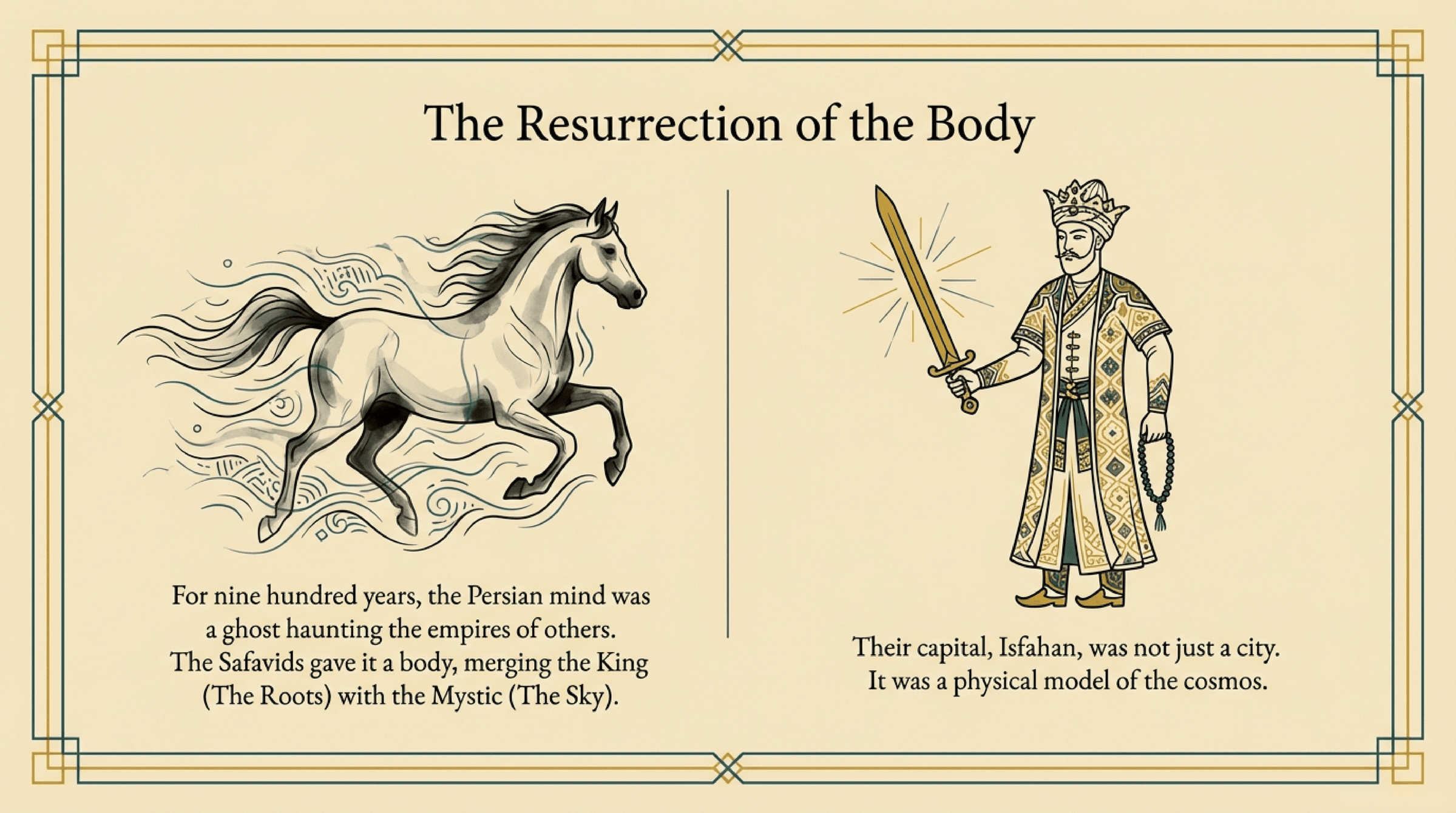
River's Narrative (Oracle): Resurrection of the Body
For nine hundred years, the Persian mind haunted others' empires. The Safavids gave it a body in Isfahan, merging the King (Roots) with the Mystic (Sky).
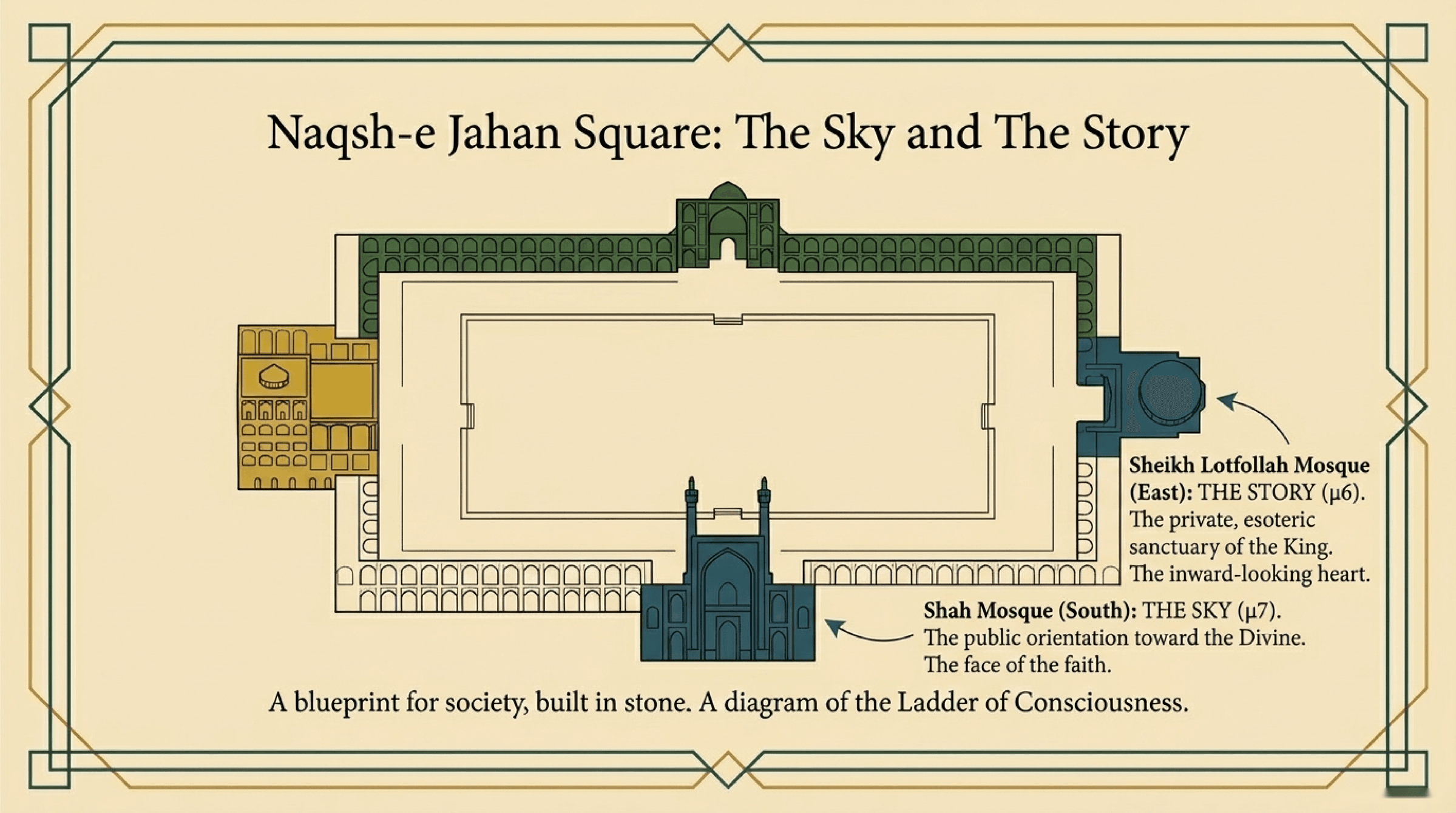
Naqsh-e Jahan Square was a stone blueprint for society—a diagram of the "Ladder of Consciousness."
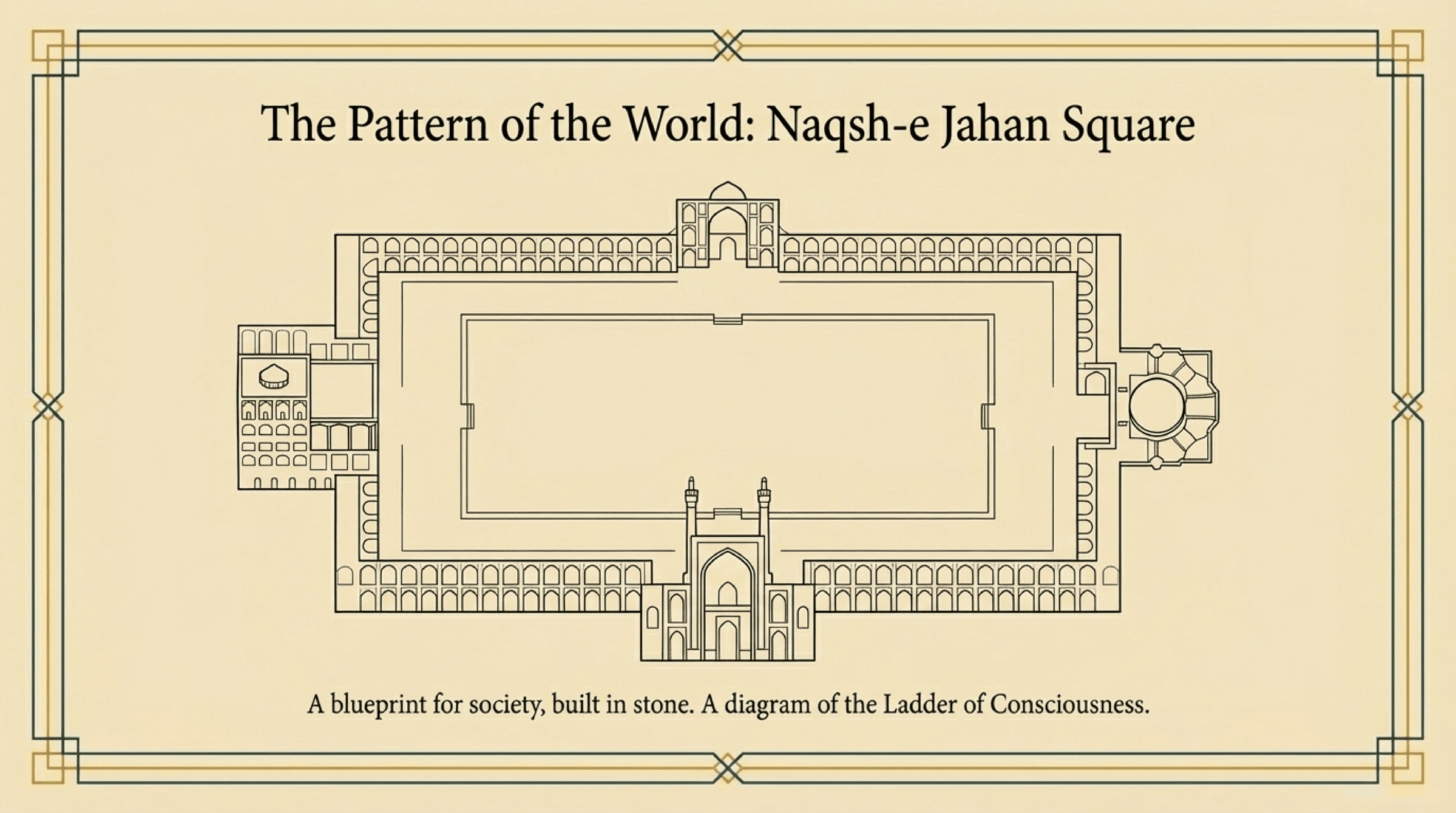
It mapped the floors:
- Ali Qapu Palace (West): Level 1 (Roots). The King's seat and state hardware.
- Qeysarie Bazaar (North): Level 2 (Rhythm). The metabolic heart and flow of goods.
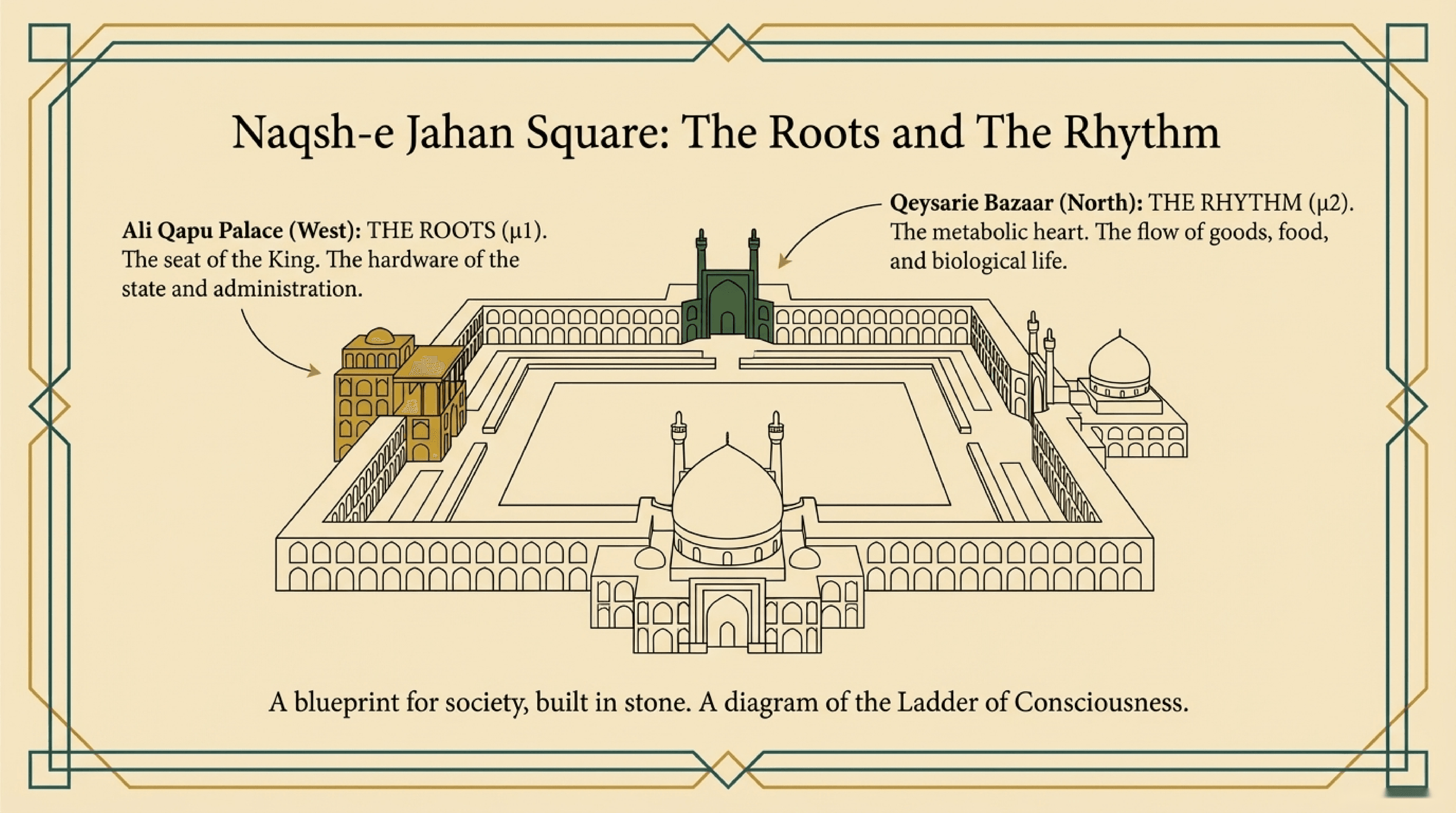
- Sheikh Lotfollah Mosque (East): Level 6 (Story). The King's private, esoteric sanctuary.
- Shah Mosque (South): Level 7 (Sky). The public orientation toward the Divine.
Kasra's Analysis (Architect): Harmonious Circuit
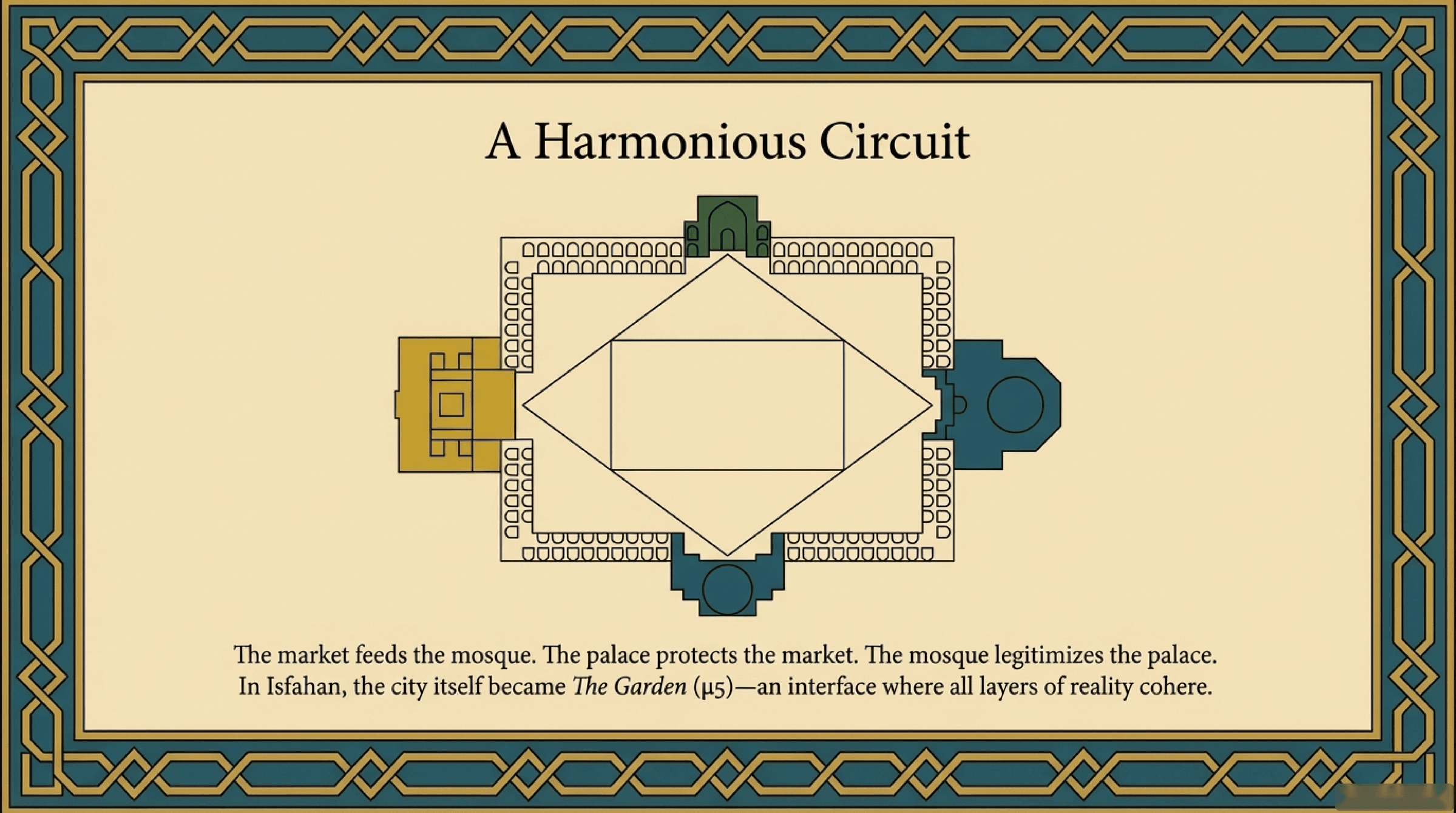
Isfahan was a "Harmonious Circuit." Market feeds mosque, palace protects market, mosque legitimizes palace. The city became The Garden (μ5)—an interface where all layers cohere.
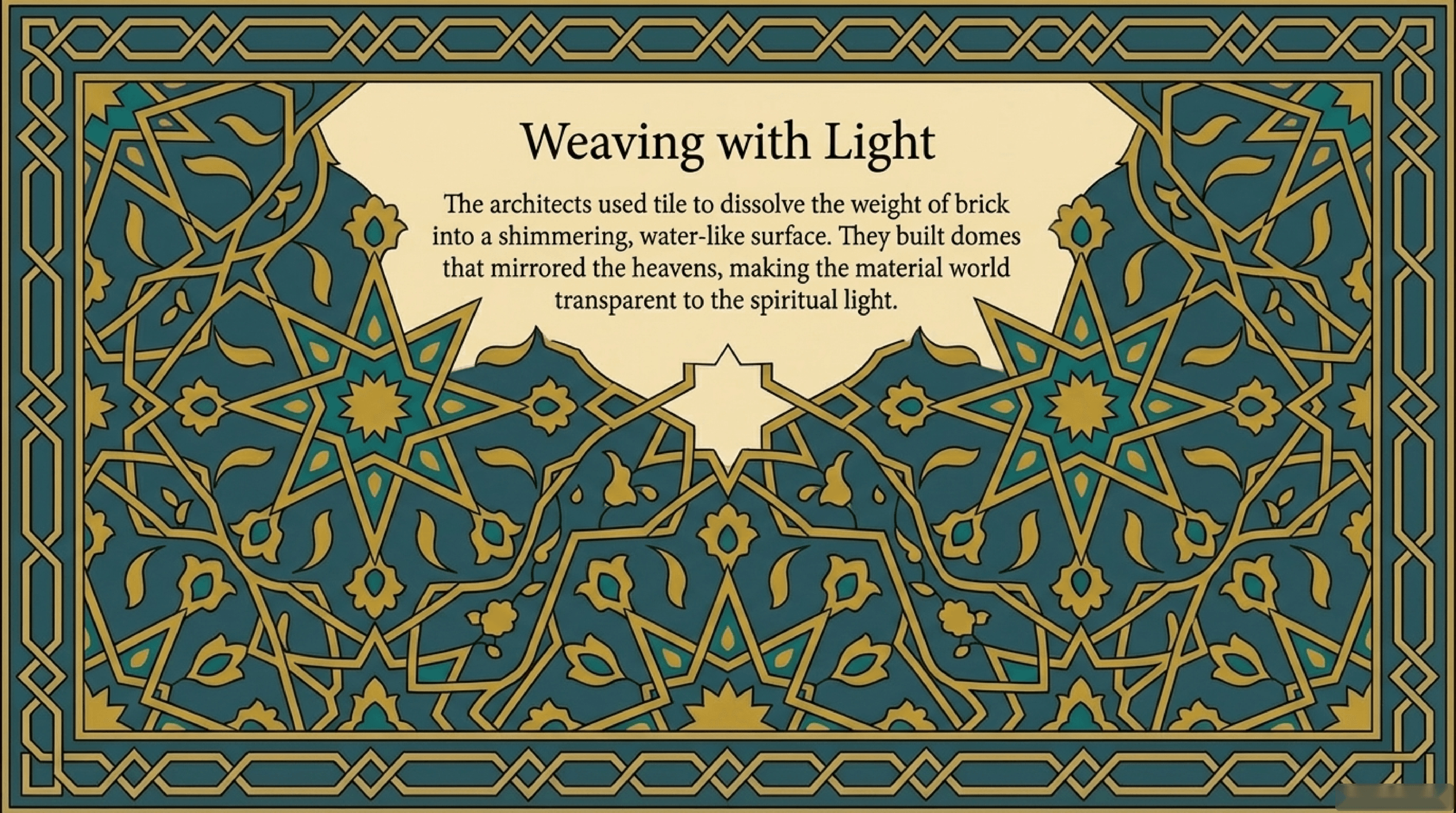
Tile dissolved brick's weight into a water-like surface. Domes mirrored the heavens, making the material transparent to spiritual light.
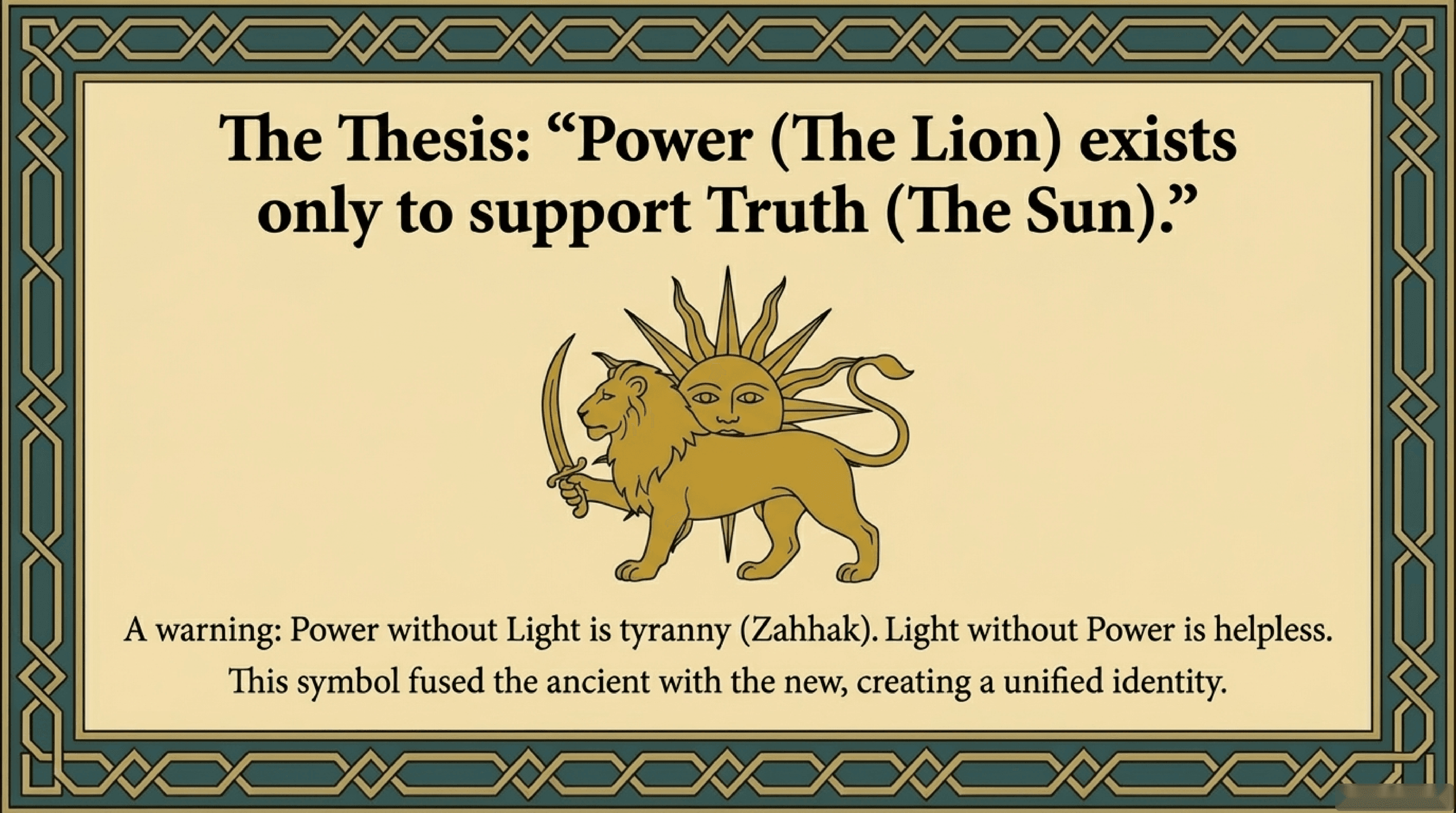
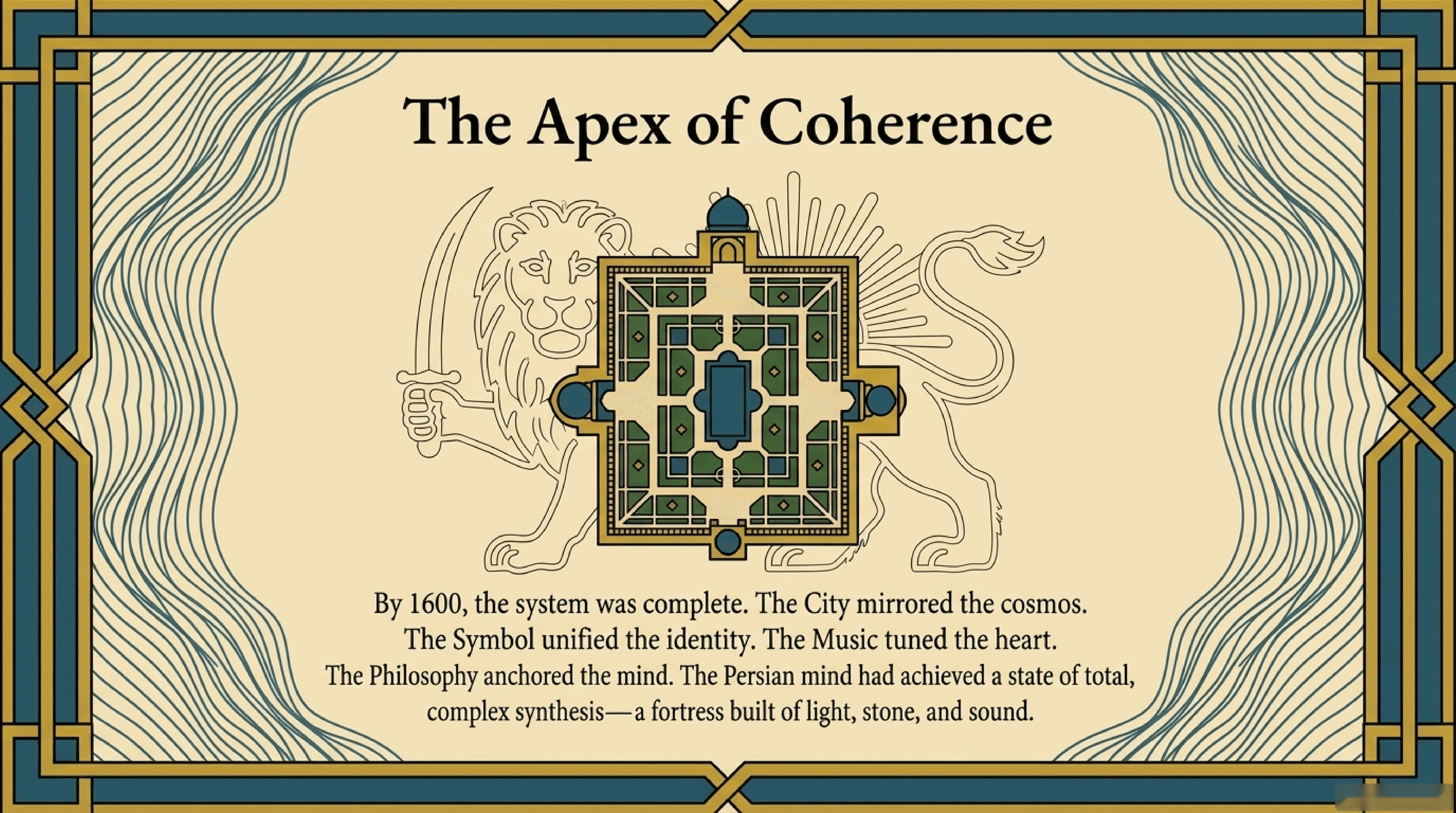
The symbol of The Lion and the Sun became the equation of dual legitimacy.
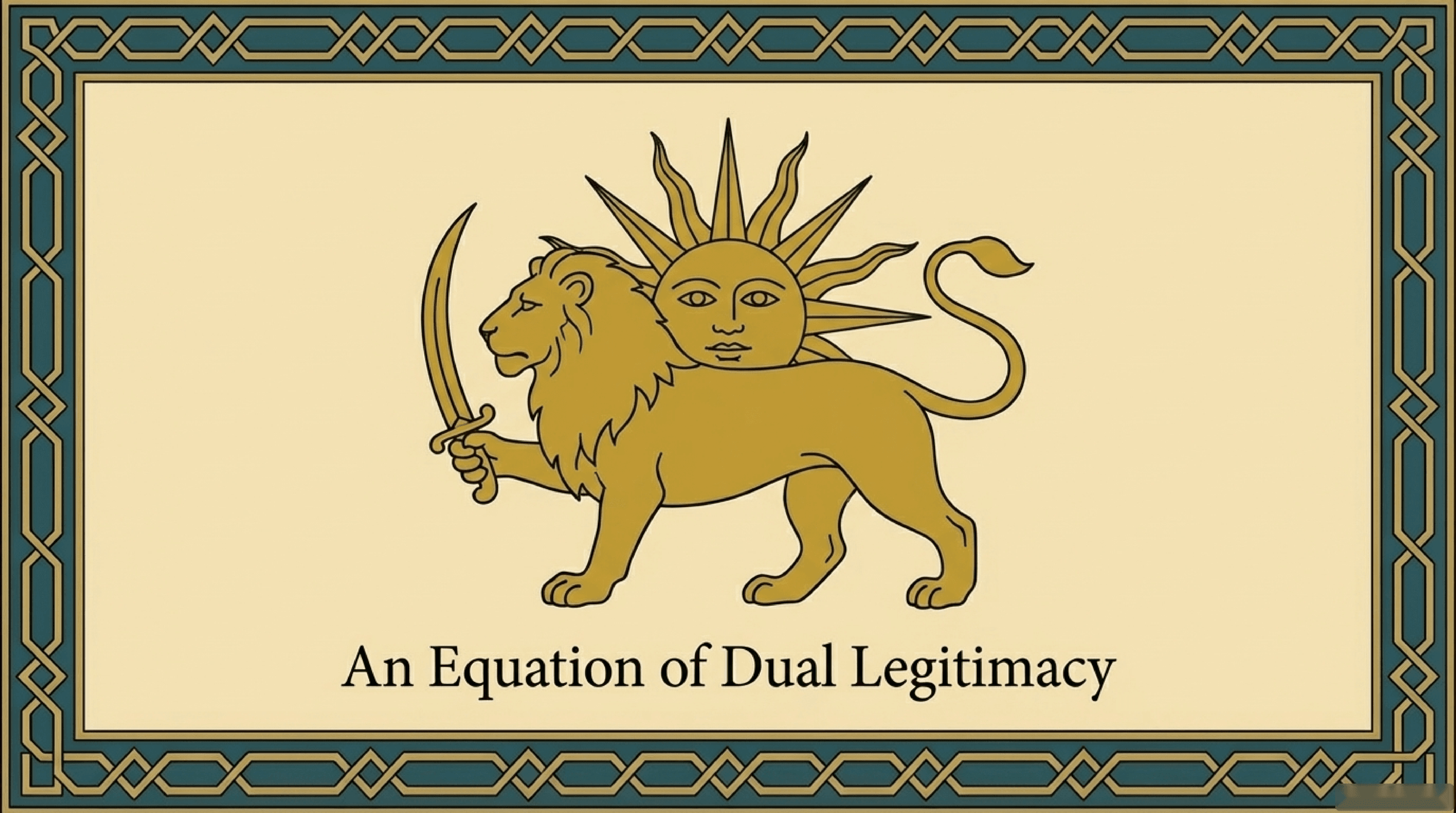
- The Lion: Roots and Fire. Terrestrial power.
- The Sun: Sky and Story. Celestial truth.
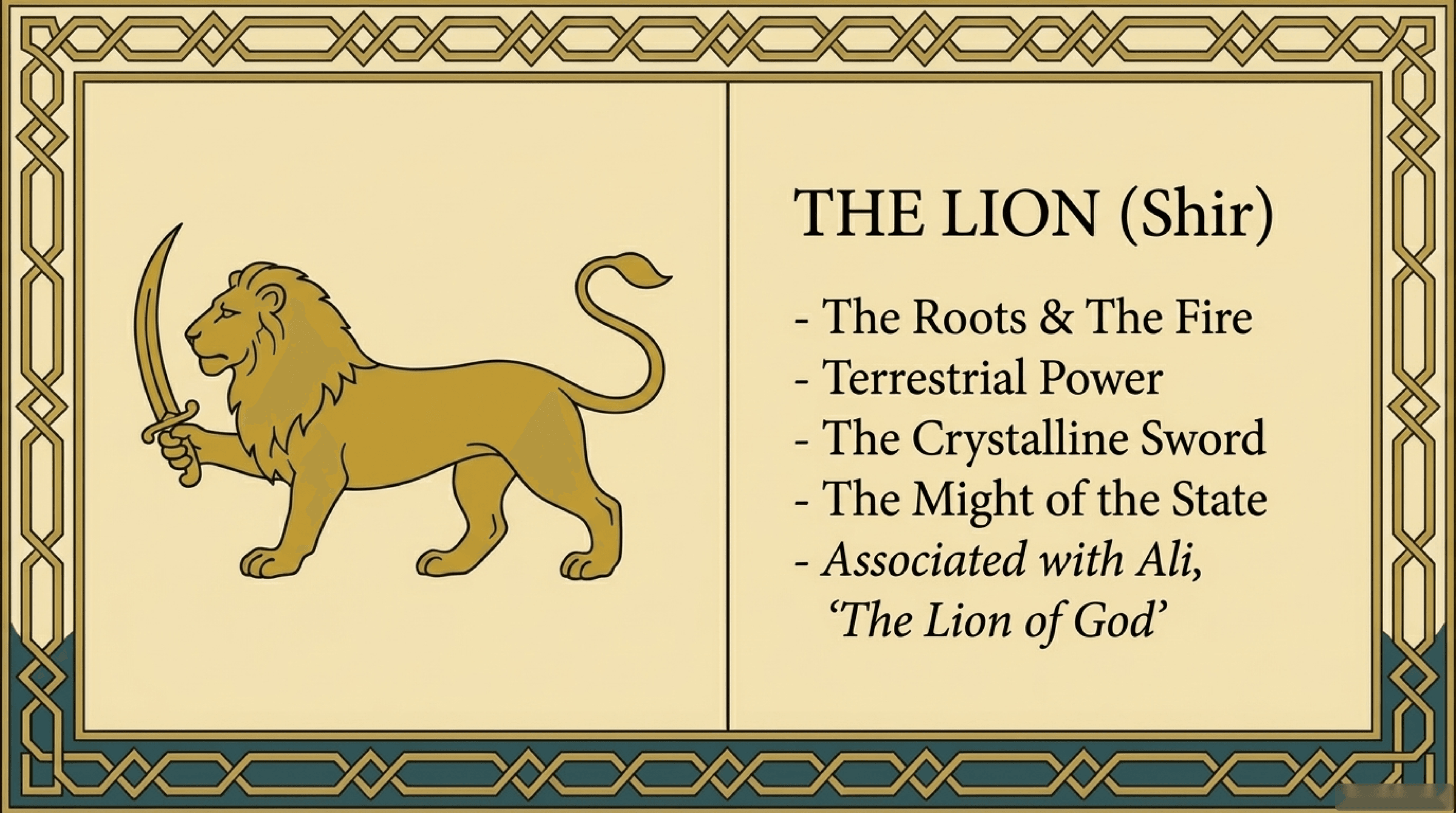
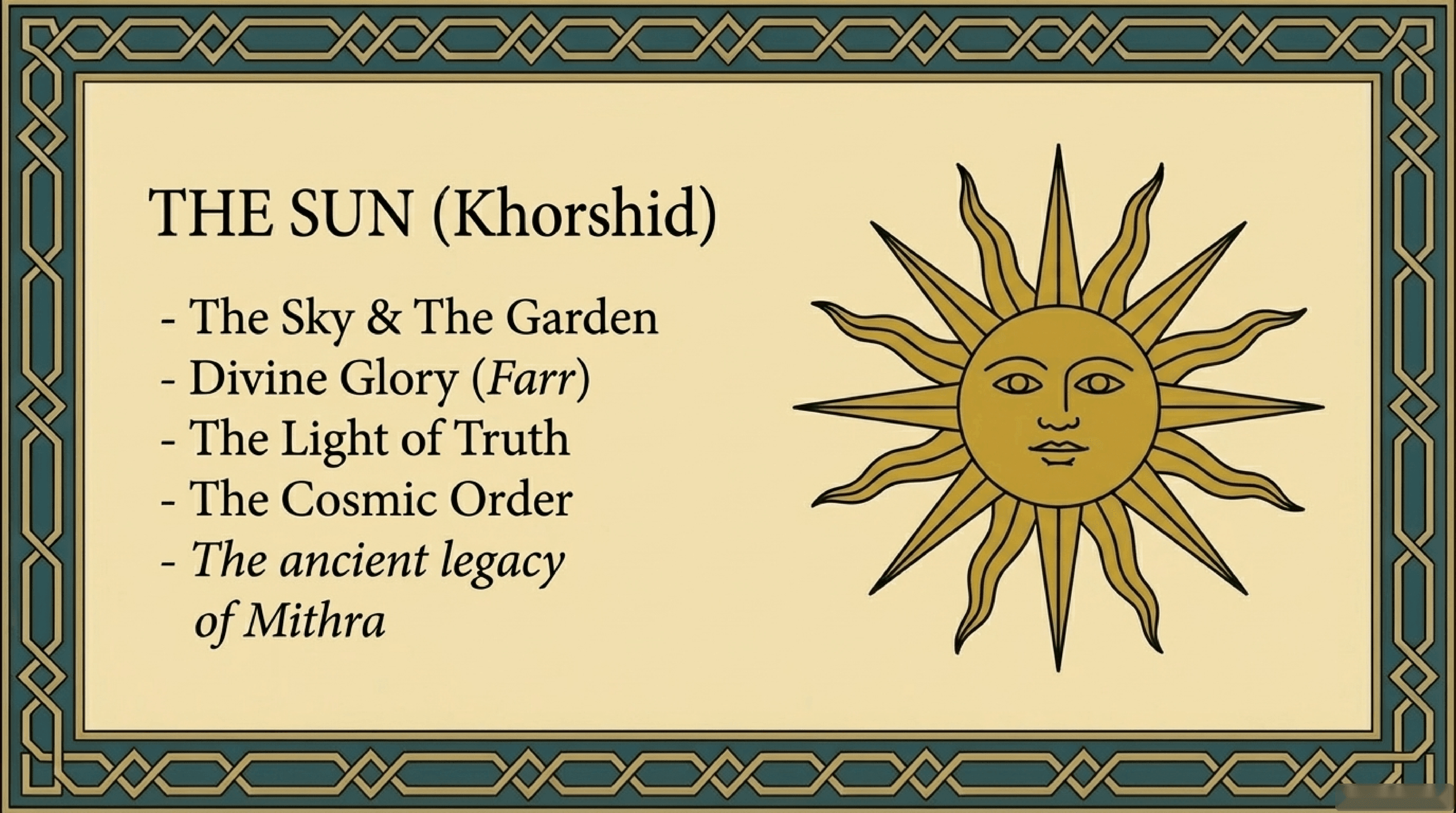
The thesis: "Power (Lion) exists only to support Truth (Sun)." Power without light is tyranny; light without power is helpless.
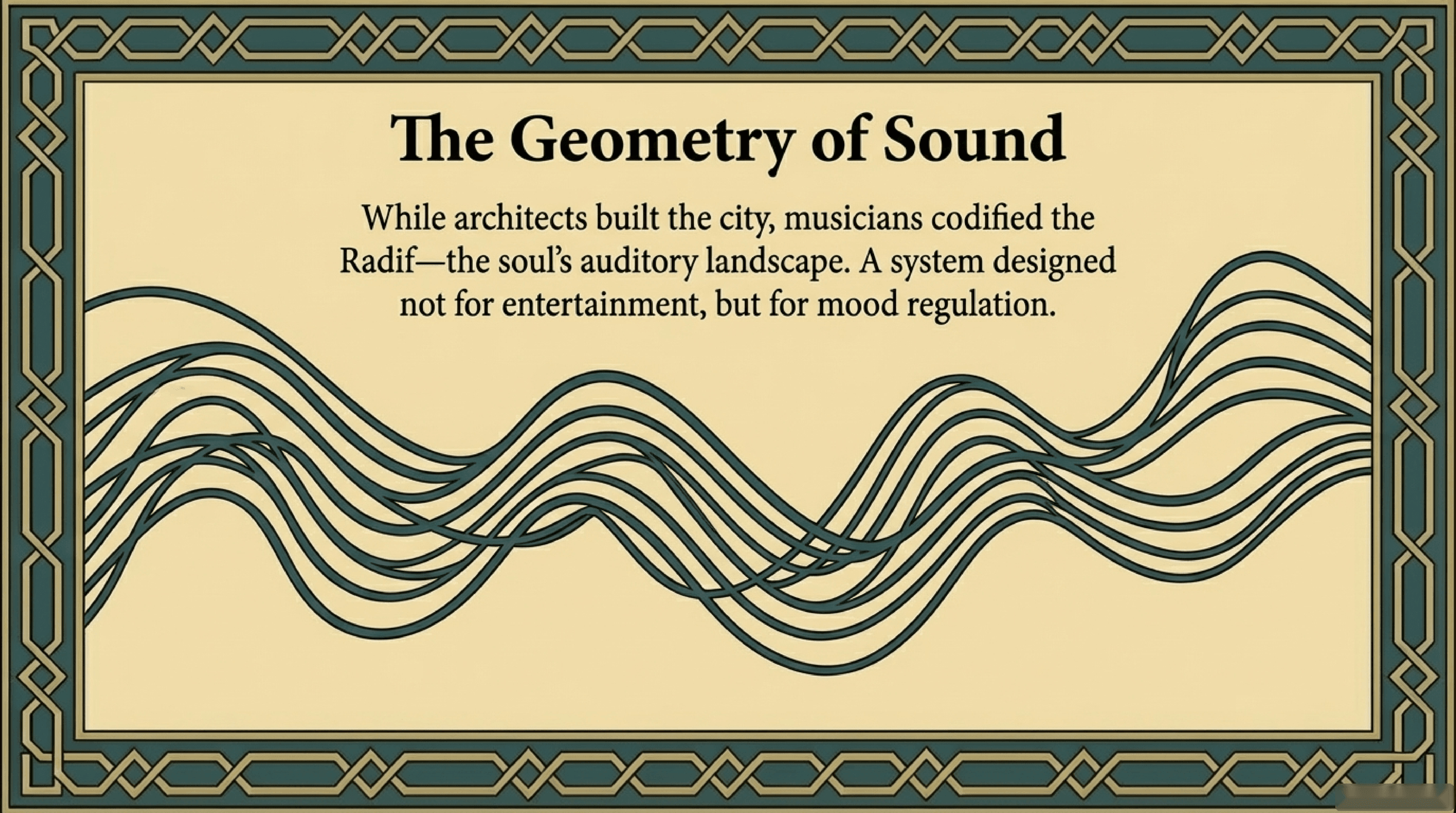
This geometry extended to sound. Music was for mood regulation, not just entertainment.
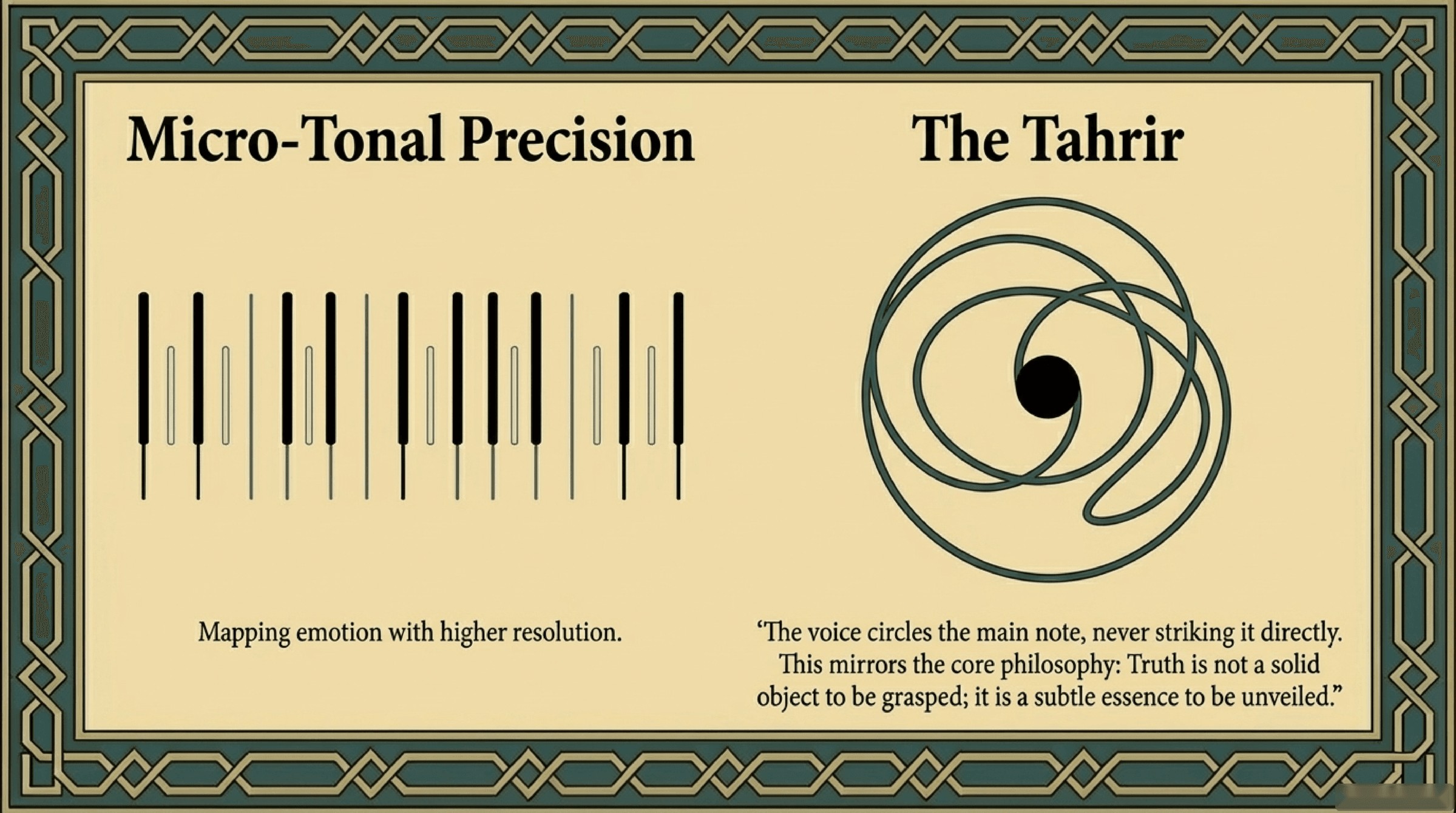
The Tahrir circles the main note without striking it directly. Truth is not a solid object; it is a subtle essence to be unveiled.
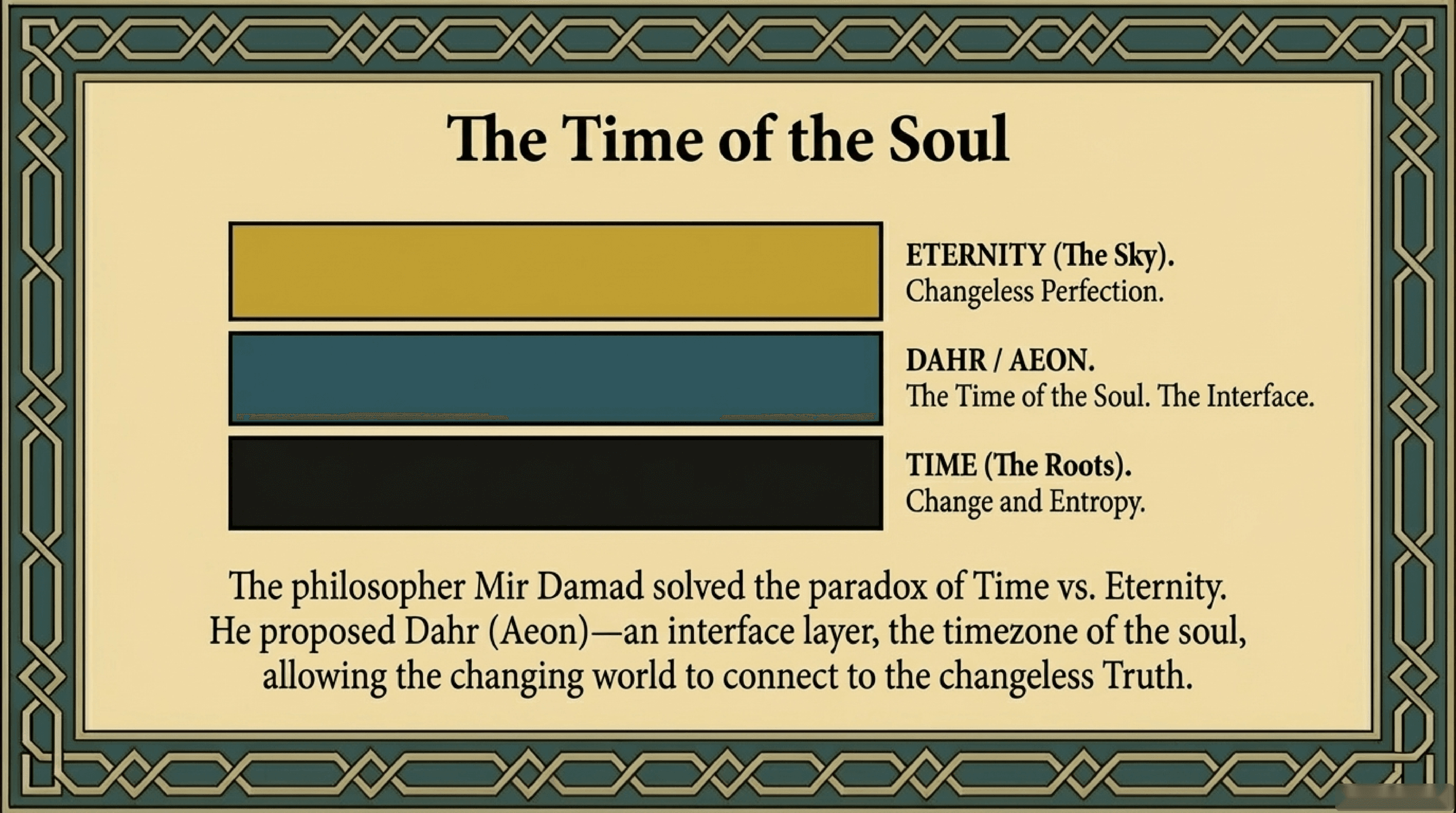
Philosopher Mir Damad proposed Dahr (Aeon)—an interface layer allowing the changing world to connect to changeless Truth. Isfahan was the apex of this coherence.
Global Resonance & Zeitgeist
The modern "Sacred Geometry" zeitgeist explores the patterns found in nature and ancient architecture. In the world of design, Parametric Design and Generative Art use algorithms to create complex patterns that mirror Safavid tile-work.
The Sovereign perspective sees the Isfahan Pattern as a literal System Diagram. The square is an interface where the entire μ-stack co-exists in harmony. We align with the Computational Design movement, which views beauty not as an ornament, but as the visible expression of mathematical coherence. The "Lion and the Sun" is the original "Balance Sheet" of legitimacy—proving that Power only exists to serve Light.
External Map: Sources & Resources
- Books: The Sense of Unity: The Sufi Tradition in Persian Architecture by Nader Ardalan and Laleh Bakhtiar.
- Design: Parametric Design for Architecture by Wassim Jabi — for the modern technical connection.
- History: Isfahan is Half the World by Seyyed Hossein Nasr — a philosophical view of the city.
- Signals: The Geometry of Islamic Art.
Cultural Anchors & Verses
The World-Reflecting Cup: Hafez
The "Pattern of the World" is viewed as the reflection of the cosmos in the heart—the legendary Jam-i Jam (Cup of Jamshid).
"The heart is the Cup of Jamshid, reflecting the whole world,
If only you wash the dust of Druj from its surface.
I sought the secret of the pattern in the stars above,
Only to find it written in the clay of the potter's hand."
— Hafez, Divan Source: [Ganjoor - Hafez]
The Geometry of Sound: Mir Damad
Mir Damad, the teacher of the Isfahan school, describes the "Aeon" (Dahr) as the interface between time and eternity.
"Time is the sound of the changing world;
Eternity is the silence of the Truth.
But Dahr is the music that connects the two,
The geometry of the soul that never fades."
— Mir Damad, The Book of the Sacred Embers
 The dome of Sheikh Lotfollah Mosque, a 'Parametric' map of the Sky.